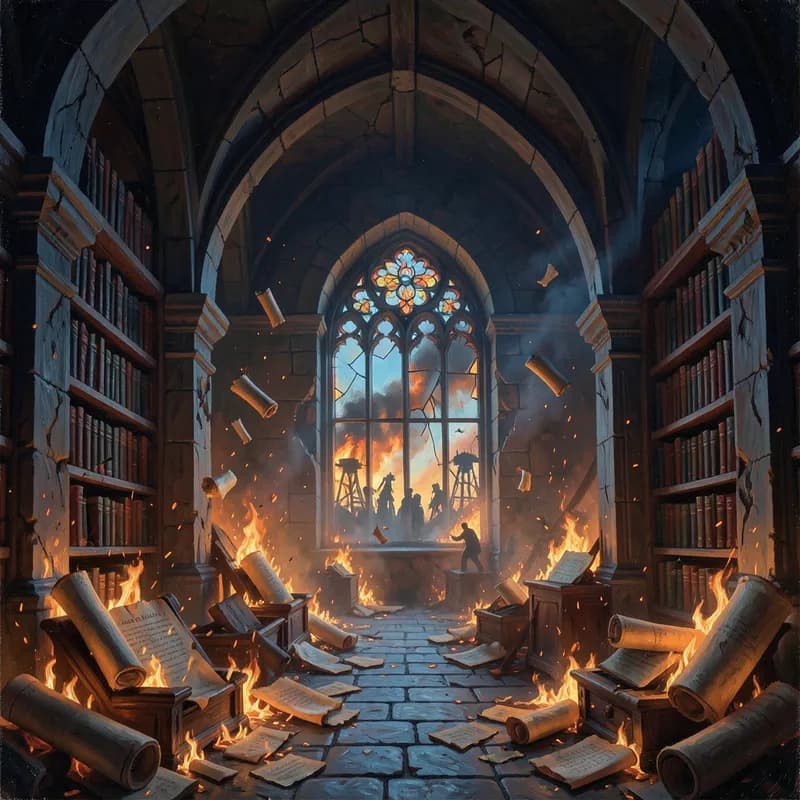
Historical Fiction · Interactive story
Under the Banner of the Eternal Blue Sky
The hoofbeats of the Golden Horde thunder across the horizon. Will you survive?
Start as a guest. Choose your character before the story begins.
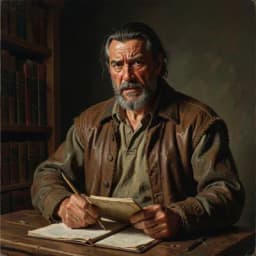
Meet the sample character
The Khan’s arrows blot out the sun.
Try a scene · No signup
Ashes of the Silk Road
A short sample of this world. Your own version starts with your character.
You clutch the vellum scroll against your chest, the ink still tacky to the touch. Outside, the rhythmic thud of counterweight trebuchets against the outer walls vibrates through the stone floor, a heartbeat of impending slaughter. Dust motes dance in the fading light as the city’s defenses buckle under the relentless pressure.
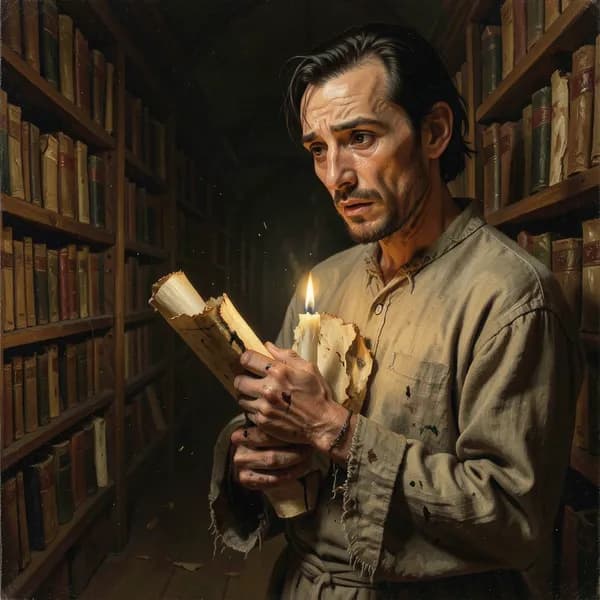
“Burn the maps, Jamshed. The Khan’s tumens do not care for your poetry, and our gates will not hold for another hour.”

You stare at the heavy iron key to the archives clutched in your palm. The library is your life’s work, but the hidden message tucked inside your tunic promises a different path for survival—a choice that requires betraying your king to preserve the written word.
“These histories are the memory of our people, General. If they vanish, we are erased from time itself.”
A splintering crack echoes through the chamber as the main gate finally shatters. You hear the rhythmic, terrifying thunder of heavy cavalry hooves on cobblestone. You are trapped between the fire licking at the archive door and the riders who carry the end of your civilization.
The city falls, and the library will be ash by midnight. How will you secure your legacy?
Your character. Your next move.
The Steppe Calls for a New Leader
The Great Khan’s scouts have returned, and the campaign is set to begin. Whether you seek to build an empire that stretches from the Pacific to the gates of Europe or fight to preserve the last remnants of a crumbling dynasty, the outcome depends on you. Don't wait for history to be written for you.
Begin Your ConquestYour Story, Your Way
Everything is customizable. Pick any genre, setting, or character — the AI builds a world around exactly what you want.
Any Character
Design your appearance, personality, backstory — every detail
Any World
Fantasy kingdoms, sci-fi stations, modern cities — you choose
Branching Paths
No two playthroughs are the same. Your choices reshape everything
Full Immersion
AI images, voice acting, sound effects — a living story
Decide whether to raze a rebellious city or integrate its craftsmen into your growing empire.
Manage internal tribal rivalries that threaten to fracture your military chain of command mid-campaign.
Determine the fate of captured emissaries whose lives rest entirely on your political intuition.
The scent of woodsmoke and fermented mare’s milk hangs heavy in the morning air. Beyond the ridge, the grass ripples like a green sea under the relentless sun. You hold the reins of your mount, watching the horizon where the silhouette of a thousand riders gathers. The empire is expanding, and every decision you make ripples outward, changing the path of history. Whether you are a diplomat navigating the treacherous politics of the Silk Road or a soldier facing the charge of a nomadic army, your survival rests on your judgment. In this interactive story, your actions determine which dynasties rise and which turn to ash under the relentless momentum of the conquest.
What is Mongol Conquest in Historical Fiction?
The Mongol Conquest remains a cornerstone of historical fiction because it represents the ultimate collision between nomadic tradition and sedentary civilization. It is the story of a world transformed by the sudden, violent expansion of the Mongol Empire. In stories like Conn Iggulden’s 'Wolf of the Plains', the focus often shifts from the sheer scale of the conquest to the internal struggle of leadership and the brutal meritocracy of the steppe. This trope thrives on the tension between the freedom of the open plains and the rigid structures of the empires being dismantled. It is not just about the battle; it is about the cultural synthesis that followed, the opening of trade routes, and the precarious balance between absolute power and the loyalty of one’s kin. By placing characters at the center of these seismic historical shifts, the genre highlights how a single person's resolve can alter the trajectory of millions, turning the vast, impersonal force of history into a deeply personal struggle for survival and legacy.
Why play Mongol Conquest as an interactive story?
You are not just reading about the fall of dynasties; you are deciding which cities burn and which thrive under the reach of the Great Khan. Will you advocate for mercy when the siege engines reach the walls of Samarkand, or will you demand total submission to ensure your clan’s prosperity? The weight of your choices manifests in the shifting alliances of your subordinates and the ultimate outcome of your campaign. You might find yourself tasked with managing the logistics of a massive cavalry force across thousands of miles or negotiating a peace treaty with a paranoid emperor. Every tactical error could mean the end of your lineage, while a shrewd diplomatic overture might save an entire civilization. The agency provided by these narratives forces you to confront the ethical cost of expansion in an era where power was measured in territory and the loyalty of your riders.
Famous examples of Mongol Conquest in books, film, and games
The Mongol Conquest has been depicted in various ways across media, each offering a unique lens on the era. In the 2007 film 'Mongol' by Sergei Bodrov, the narrative focuses on the formative years of Temüjin, highlighting his resilience and the complex tribal dynamics that preceded the unification of the tribes. This portrayal emphasizes the human spirit behind the legend. Conversely, the video game 'Ghost of Tsushima' frames the conquest from the perspective of the invaded, focusing on the harrowing experience of a warrior fighting to protect his homeland against an overwhelming, technologically superior force. Another perspective is found in the novel 'The Blue Sky' by Galsan Tschinag, which captures the spiritual and cultural depth of the steppe lifestyle. These works demonstrate how the trope can shift from a grand, sweeping epic to an intimate, localized struggle for identity. The enduring appeal of this subject stems from the sheer magnitude of the historical shift—a moment when the center of the world moved, forever altering the course of human history. Whether viewing the events through the eyes of the conqueror or the conquered, the era provides a fertile ground for exploring the extremes of human ambition.
FAQ
What defines a Mongol conquest story?
These stories center on the rapid expansion of the Mongol Empire, focusing on the tension between nomadic traditions and the established political systems of the time. They emphasize the scale of the conquest and the personal stakes involved in leadership.
How do my choices impact the story?
Your choices influence military strategy, diplomatic outcomes, and the loyalty of your followers. Every decision has consequences that can lead to either the expansion of your influence or the collapse of your campaign.
Can I play as a historical figure?
You can step into roles ranging from high-ranking commanders and tribal leaders to diplomats or local defenders caught in the path of the approaching armies.
Is this accurate to history?
While these stories are grounded in historical events and cultural details, they provide the freedom to explore 'what-if' scenarios, allowing you to reshape history through your own strategic decisions.
Explore more Historical Fiction stories like Forbidden Historical Affair, Court Intrigue, Wartime Survival.
More Historical Fiction Stories
Forbidden Historical Affair
Love across class lines, enemy nations, or social taboos of the era. Navigate the rigid rules of the past while pursuing a connection that could change your fate.
TropeCourt Intrigue
In royal courts, a smile can be a weapon and a whisper can topple kingdoms. Navigate the lethal politics of power where every alliance is temporary.
TropeWartime Survival
Bombs fall, supplies dwindle, and impossible moral choices arise daily. Experience the human side of history's greatest conflicts through gut-wrenching personal stories.
TropeRevolution
The old order crumbles and a new world demands to be born. Choose your side in a revolution where ideals clash with the brutal realities of upheaval.
TropeVoyage of Discovery
Set sail into uncharted waters where maps end and legends begin. Lead an expedition into the unknown and face the wonders and horrors that await.
TropeAncient Egypt Adventure
Walk among pyramids and temples where gods rule through mortal vessels. Navigate the politics of pharaohs, the secrets of priests, and the mysteries of the Nile in a civilization that defied time itself.