
Historical Fiction · Interactive story
Crown of the Sun: Rule as Hatshepsut
The priests whisper of tradition, but the gods demand a king. Will you obey?
Start as a guest. Choose your character before the story begins.
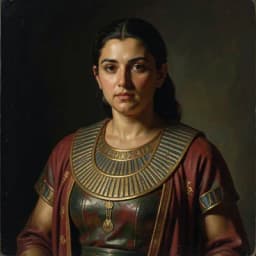
Meet the sample character
The throne is a gilded cage, and the desert gods are watching.
Try a scene · No signup
The Weight of the False Beard
A short sample of this world. Your own version starts with your character.
You stand in the shadows of the hypostyle hall at Karnak. The air is thick with the scent of kyphi incense and the sweat of the artisans. Your stepson, Thutmose III, watches you from across the court, his eyes wide and unblinking. The heavy gold of the uraeus headband presses into your brow, a constant reminder of the burden you are claiming.

“The gods wait for no woman, Majesty. If the crown is not placed upon your head by sunset, the people will see only hesitation.”

You look down at your hands. They are steady, despite the trembling of the court around you. Outside, the wind howls off the Nile, carrying the dust of a kingdom that expects a king, not a queen regent. The silence in the hall is suffocating, broken only by the rhythmic scraping of chisels on stone.
“Let them wait. The gods do not choose by gender, but by the strength to hold the crook and flail.”
The priests shuffle, their linen robes rustling like dry papyrus. You feel the heavy, cold weight of the ceremonial beard in your palm—a lie, perhaps, but a necessary one to bridge the gap between tradition and your ambition. Below, the city guards shift their spears, waiting for your signal. You have one chance to claim this moment before the high council turns against you.
The high priests are waiting for your command. How do you assert your rule?
Your character. Your next move.
The Throne Awaits Your Command
The desert sun is high, and your enemies are already whispering in the corridors of the palace. Will you be remembered as the pharaoh who brought prosperity to the Two Lands, or will your name be erased from the stone? Every choice you make in the court determines whether you secure your legacy or fall to the schemes of those who fear your power. Step into the sandals of the most powerful woman in history.
Ascend the Throne NowYour Story, Your Way
Everything is customizable. Pick any genre, setting, or character — the AI builds a world around exactly what you want.
Any Character
Design your appearance, personality, backstory — every detail
Any World
Fantasy kingdoms, sci-fi stations, modern cities — you choose
Branching Paths
No two playthroughs are the same. Your choices reshape everything
Full Immersion
AI images, voice acting, sound effects — a living story
Negotiate trade routes with the mysterious land of Punt to fill the royal treasury.
Choose your words carefully before the High Priest to maintain your claim to divine birth.
Command the construction of colossal obelisks to solidify your image as a god-king.
Decide the fate of your stepson, Thutmose III, balancing family loyalty against political survival.
The scent of frankincense clings to the limestone walls of the Karnak temple. You stand in the shadow of your father, Thutmose I, feeling the weight of the double crown pressing against your brow. Outside, the Nile floods the valley, a rhythm that has dictated life for millennia, but within the palace, the air is thick with the sharp metallic tang of impending betrayal. Courtiers with eyes like scorpions watch your every move, waiting for a single slip to undermine your authority. In this interactive story, the path to the throne is not paved with gold, but with the calculated risks you take. Every decree you issue and every alliance you forge shifts the stability of the Two Lands. You are not merely a queen regent; you are the living embodiment of Ma'at, and the survival of your dynasty rests entirely on your ability to outmaneuver those who believe a woman has no place holding the crook and flail.
What is Hatshepsut in Historical Fiction?
Hatshepsut remains one of history’s most formidable figures, a woman who broke the mold of dynastic succession to claim the title of Pharaoh. While traditional roles confined women to the domestic sphere, she donned the ceremonial false beard and took the throne, ruling for two decades of prosperity. She is a favorite subject for historical novelists, appearing in works like Stephanie Thornton’s 'Flame in the Mist' or Pauline Gedge’s 'Child of the Morning'. These stories often highlight the tension between her religious legitimacy and the political pushback from conservative factions. Unlike a static novel or a film where the viewer is a passive observer, engaging with this figure requires you to balance the demands of the priesthood, the military, and the royal family. You aren't just reading about a historical icon; you are making the hard decisions that kept the borders secure and the temple coffers full.
Why play Hatshepsut as an interactive story?
Playing as the female pharaoh means navigating a world where your gender is a weapon used against you by rivals. You will face dilemmas that require more than brute strength; you must exercise diplomatic finesse, economic strategy, and psychological warfare. Will you prioritize the construction of your mortuary temple at Deir el-Bahari to secure your legacy, or will you divert those resources to satisfy the generals clamoring for a new campaign in Nubia? Every choice has a cost. If you lean too heavily on your vizier, you risk losing control to a puppet master. If you act too impulsively, you provide ammunition to those who claim you have offended the gods. The tension comes from the constant threat of a coup and the reality that history is written by the survivors.
The literary legacy of Hatshepsut
Hatshepsut’s legacy is a fascinating study in erasure and recovery. After her death, her successor, Thutmose III, attempted to scrub her name from history, chiseling her image off temple walls. For centuries, she was a footnote, but modern archaeology and fiction have resurrected her as a symbol of female leadership. From the vivid, research-heavy prose of Christian Jacq’s 'Hatshepsut' series to her appearances in strategy games like 'Civilization', she has become an archetype of the rebel ruler. Writers and creators are drawn to her because she represents the ultimate underdog story: a woman who possessed the intellect and the will to reshape an entire civilization. She works today because her struggles—balancing public image, managing internal dissent, and securing a future for one's house—remain as relevant in the modern era as they were on the banks of the Nile three millennia ago.
FAQ
Can I change the outcome of historical events?
Yes, your decisions regarding trade, religion, and military strategy directly impact the prosperity and stability of your reign, allowing for diverse narrative outcomes.
How does the game handle the historical accuracy of Ancient Egypt?
The narrative draws on contemporary archaeological evidence to ground your choices in the reality of the 18th Dynasty, ensuring a period-authentic experience.
Is this a combat-focused game?
While military decisions are part of the experience, the primary focus is on court politics, diplomacy, and managing the internal power structure of the palace.
What happens if I make a mistake?
Missteps can lead to political instability, loss of favor with the priesthood, or even exile, forcing you to adapt your strategy to survive.
Explore more Historical Fiction stories like Forbidden Historical Affair, Court Intrigue, Wartime Survival.
More Historical Fiction Stories
Forbidden Historical Affair
Love across class lines, enemy nations, or social taboos of the era. Navigate the rigid rules of the past while pursuing a connection that could change your fate.
TropeCourt Intrigue
In royal courts, a smile can be a weapon and a whisper can topple kingdoms. Navigate the lethal politics of power where every alliance is temporary.
TropeWartime Survival
Bombs fall, supplies dwindle, and impossible moral choices arise daily. Experience the human side of history's greatest conflicts through gut-wrenching personal stories.
TropeRevolution
The old order crumbles and a new world demands to be born. Choose your side in a revolution where ideals clash with the brutal realities of upheaval.
TropeVoyage of Discovery
Set sail into uncharted waters where maps end and legends begin. Lead an expedition into the unknown and face the wonders and horrors that await.
TropeAncient Egypt Adventure
Walk among pyramids and temples where gods rule through mortal vessels. Navigate the politics of pharaohs, the secrets of priests, and the mysteries of the Nile in a civilization that defied time itself.