
Historical Fiction · Interactive story
Shadows of the Grand Bazaar: A City Within a City
The scent of cardamom, the glint of steel, and a fortune waiting to be stolen.
Start as a guest. Choose your character before the story begins.
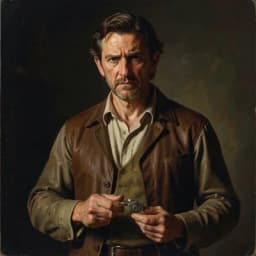
Meet the sample character
A debt paid in secrets
Try a scene · No signup
Copper and Clove
A short sample of this world. Your own version starts with your character.
The rhythmic clanging of hammers against metal fades as you duck into the shadowed corner of the spice district. Your palm sweats against the cold, jagged edge of the gold signet ring hidden in your tunic. Somewhere behind the wall of sacks filled with cardamom, the heavy boots of the Janissary guards echo against the cobblestones, moving closer to your position.

“You look pale, silversmith. Surely a man with such a heavy pocket has nothing to fear from the city watch?”

Emin leans forward, his robes smelling of dried cloves and old parchment. He knows exactly what you took, and more importantly, he knows exactly who you took it from. His eyes track the slight bulge in your tunic, a hungry glint flickering beneath his heavy eyelids. The guards' shouting grows louder, cutting through the ambient drone of the market.
“The ring is a burden I’d gladly trade for a safe passage out of the city gates, Emin. Name your price.”
Emin smiles, a thin, colorless line across his face. He points toward the back of his shop, where a small, rotted wooden door leads into the dark sewers of the Bazaar. Beyond that door lies an impossible choice: deliver the ring to the guards to save your own life, or disappear into the underworld to fulfill the merchant's dangerous errand.
How will you secure your escape before the guards round the corner?
Your character. Your next move.
The Sultan’s Ledger is Waiting to be Found
The gates of the Kapalıçarşı are closing for the evening, but your influence is only beginning. Will you leave the bazaar as a wealthy merchant prince, or will you be dragged into the dungeons for a deal gone wrong? Your path depends on the next trade you strike. Step into the labyrinth and claim your place in the capital.
Start Your Ottoman TaleYour Story, Your Way
Everything is customizable. Pick any genre, setting, or character — the AI builds a world around exactly what you want.
Any Character
Design your appearance, personality, backstory — every detail
Any World
Fantasy kingdoms, sci-fi stations, modern cities — you choose
Branching Paths
No two playthroughs are the same. Your choices reshape everything
Full Immersion
AI images, voice acting, sound effects — a living story
Negotiate trade routes that determine the prosperity of your family’s merchant guild.
Outmaneuver Ottoman secret police by blending into the dense, chaotic market crowds.
Decide whether to expose a corrupt vizier or blackmail him for personal gain.
Master the art of the deal to acquire rare artifacts before your rivals.
The air in the Kapalıçarşı is thick with the smell of roasting coffee and damp, imported silk. You push through the throngs of merchants and janissaries, your hand tight on the hilt of a hidden dagger. A merchant from Venice leans in, his whisper barely audible over the chaotic din of the market, offering a map that could either build your house or lead to your execution. You have to decide now: do you trust the stranger, or do you lose your only lead on the sultan’s missing ledger? This interactive story places your agency at the center of the Ottoman Empire’s most dangerous crossroads. Every decision you make ripples through the labyrinthine alleys, affecting the balance of power between the guilds and the throne. You are not just observing history; you are determining who emerges from the market with their life and who disappears into the shadows of the stone vaults.
What is The Grand Bazaar in Historical Fiction?
The Grand Bazaar, or Kapalıçarşı, is more than a commercial hub; it is a sprawling, vaulted city within a city. Established by Mehmed the Conqueror in 1455, it functioned as the economic lungs of the Ottoman Empire. In literature and film, such as the evocative scenes in 'The Ottoman Lieutenant' or the atmosphere captured in Orhan Pamuk’s 'My Name is Red,' the bazaar serves as a nexus of cultural exchange, espionage, and shifting loyalties. It is a place where silk merchants from Persia rub shoulders with Venetian spies and local artisans. Unlike a modern mall, this setting is defined by its verticality and endless complexity—thousands of shops, roof-top passages, and hidden cellars. It is a world where physical navigation is just as important as social maneuvering, creating a pressure cooker environment for any historical narrative. By utilizing this setting, stories gain an immediate sense of scale and danger, turning a simple transaction into a high-stakes encounter where the walls themselves seem to be listening.
Why play The Grand Bazaar as an interactive story?
Playing through the Grand Bazaar demands a sharp mind for trade and a steady hand for survival. You are not just watching a plot unfold; you are negotiating it. You might find yourself bribing a corrupt gatekeeper to smuggle in a forbidden manuscript or choosing between a lucrative deal that betrays your family guild or a path of poverty that keeps your honor intact. The tension comes from the lack of safety nets; if you offend the wrong guild leader, you might find yourself barred from the market entirely, cutting off your access to vital supplies. You will face dilemmas such as deciding whether to sell your family’s heirloom to pay off a debt or attempting to steal back the secrets of a rival merchant. Your reputation is your currency, and one bad choice can turn the bustling stalls into a trap. The interactive nature of the experience ensures that your survival depends on your ability to read the room, identify potential allies, and know when to keep your mouth shut.
What makes The Grand Bazaar work: the worldbuilding
The Grand Bazaar thrives on the friction between order and chaos. Architecturally, it is a maze of domes and stone arches, which naturally creates a sense of claustrophobia and hidden vantage points. This setting is a masterclass in tension because it forces characters into close proximity with those they would otherwise avoid. In 'The Janissary Tree' by Jason Goodwin, the market is treated as a living, breathing antagonist that hides as much as it reveals. Similarly, the atmosphere in the game 'Assassin’s Creed: Revelations' captures the verticality of the rooftops and the danger of the shadowed alleys. To build a compelling story here, you need to focus on the 'hidden.' Every shop has a backroom, and every alleyway leads to a connection. The character types are distinct: the weary caravanserai merchant, the ambitious diplomat, the street-smart urchin, and the disgraced courtier. The sensory details—the metallic clatter of copper beaters, the heavy scent of raw leather, the visual overload of patterned carpets—are not just background noise; they are the tools of the trade. If you are writing for this setting, focus on the transactional nature of human interaction. Nothing is given for free, and every conversation is a negotiation. The setting works because it is inherently grounded, yet it allows for grand, empire-spanning plots to hinge on the smallest of interactions.
FAQ
What is the Grand Bazaar in historical fiction?
The Grand Bazaar is a setting that represents the economic, political, and cultural heart of the Ottoman Empire. In stories, it acts as a claustrophobic, high-stakes environment where characters from all walks of life meet to trade, spy, and conspire.
How does the market environment affect storytelling?
The market's labyrinthine layout creates natural tension. It forces characters into close contact, provides endless hiding spots, and emphasizes the importance of reputation and local knowledge over brute force.
Is this setting suitable for political thrillers?
Absolutely. The bazaar was a hotbed for international espionage, where diplomats, spies, and merchants exchanged state secrets alongside spices and silks, making it perfect for complex political narratives.
Can I play as different character types in the bazaar?
Yes. Whether you are a cunning merchant looking to expand your empire, a rogue trying to survive the back alleys, or a courtier involved in palace intrigue, the setting adapts to your choices and motivations.
Explore more Historical Fiction stories like Forbidden Historical Affair, Court Intrigue, Wartime Survival.
More Historical Fiction Stories
Forbidden Historical Affair
Love across class lines, enemy nations, or social taboos of the era. Navigate the rigid rules of the past while pursuing a connection that could change your fate.
TropeCourt Intrigue
In royal courts, a smile can be a weapon and a whisper can topple kingdoms. Navigate the lethal politics of power where every alliance is temporary.
TropeWartime Survival
Bombs fall, supplies dwindle, and impossible moral choices arise daily. Experience the human side of history's greatest conflicts through gut-wrenching personal stories.
TropeRevolution
The old order crumbles and a new world demands to be born. Choose your side in a revolution where ideals clash with the brutal realities of upheaval.
TropeVoyage of Discovery
Set sail into uncharted waters where maps end and legends begin. Lead an expedition into the unknown and face the wonders and horrors that await.
TropeAncient Egypt Adventure
Walk among pyramids and temples where gods rule through mortal vessels. Navigate the politics of pharaohs, the secrets of priests, and the mysteries of the Nile in a civilization that defied time itself.