
Historical Fiction · Interactive story
Shadows of the Pylon: Power in the Temple of Amun
The scent of burning incense masks the metallic tang of blood on the altar.
Start as a guest. Choose your character before the story begins.
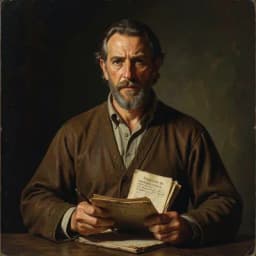
Meet the sample character
Truth is a dangerous offering beneath the stone gaze of Amun-Ra.
Try a scene · No signup
The Ledger of Stolen Breath
A short sample of this world. Your own version starts with your character.
The shadow of a massive lotus-bud column swallows you as you retreat deeper into the Karnak complex. Air here smells of stale resin and the iron tang of offerings gone cold. You clutch the stolen ledger to your chest, your knuckles white against the dry papyrus. Somewhere ahead, the rhythmic chanting of the evening rites falters, replaced by a sudden, jarring silence that makes the hairs on your neck stand upright.

“The gods do not demand perfection, scribe, they demand silence. Why do you linger where your ink has no business being?”

His voice echoes off the limestone, devoid of the warmth he shows the pharaoh. You freeze, the weight of the ledger feeling like a leaden block in your tunic. The flickering oil lamp in his hand casts elongated, jagged shadows against the wall, turning the hieroglyphs into shifting monsters. He steps closer, his sandals clicking against the flagstones with the precision of a predator stalking through the reeds.
“I only sought the records of the grain harvest, High Priest. Surely the accounts of the living are as vital as the hymns to the dead?”
He stops. His gaze drifts from your face to the slight bulge beneath your linen kilt, his eyes narrowing into slits that reflect the dancing flame. The temple's heavy silence is broken only by the distant, mournful lowing of a sacrificial bull. He raises his hand, gesturing to the two guards emerging from the darkness behind him, their bronze spears glinting with a hungry light. Time has run out.
The guards are closing the perimeter; how will you handle the High Priest's discovery?
Your character. Your next move.
Claim your place in the shadow of the gods.
The Pharaoh awaits your counsel, and the high priest is watching your every move. Will you preserve the ancient traditions or reshape the future of the dynasty? Your path through the Temple of Amun begins now. Make your first choice and see if you have the cunning to survive the inner sanctum.
Start Your Ancient StoryYour Story, Your Way
Everything is customizable. Pick any genre, setting, or character — the AI builds a world around exactly what you want.
Any Character
Design your appearance, personality, backstory — every detail
Any World
Fantasy kingdoms, sci-fi stations, modern cities — you choose
Branching Paths
No two playthroughs are the same. Your choices reshape everything
Full Immersion
AI images, voice acting, sound effects — a living story
Select which divine cult to align with, affecting your access to hidden temple archives.
Choose how to respond during high-stakes ritual ceremonies to maintain your standing among priests.
Decide whether to sabotage a rival's influence or build an alliance to survive palace intrigue.
Interpret ambiguous omens to sway the decisions of the Pharaoh regarding the Nile's harvest.
Dust motes dance in shafts of sunlight piercing the massive hypostyle hall. You stand before the inner sanctum, your linen robes heavy with the weight of expectation. Outside, the Nile floods its banks, but here, the air is stagnant, thick with the smell of lotus oil and old secrets. A high priest watches you from the periphery, his eyes cold and calculating. You hold a papyrus scroll that could either solidify the Pharaoh’s reign or invite chaos upon the dynasty. Every movement you make, every word you speak to the temple guard or the royal envoy, ripples through the rigid hierarchy of the priesthood. In this environment, your decisions dictate your fate. Whether you ascend to power as a trusted advisor or vanish into the desert sands, forgotten by time, depends entirely on which allegiances you forge and which gods you choose to appease.
What is an Egyptian Temple Complex in Historical Fiction?
An Egyptian temple complex serves as the epicenter of life, politics, and divine communication in the ancient world. It is not merely a place of worship, but a fortress of bureaucracy and a repository of immense wealth. These settings often feature sprawling courtyards, subterranean chambers, and massive pylon gates that separate the mundane life of the peasantry from the esoteric rituals of the elite. In literature and media, such as Mika Waltari’s novel 'The Egyptian' or the vibrant, recreative environment of 'Assassin's Creed: Origins,' the temple represents the tension between the mortal ruler and the unseen forces they claim to represent. Readers are often drawn to these settings because of the extreme stakes involved; a single misspoken prayer or a misplaced artifact can lead to execution or divine favor. Unlike modern settings, the temple operates under a strict code of silence and ritual. Understanding the power dynamics between the priesthood, the pharaoh, and the common people is essential to surviving the complex web of intrigue that defines this setting.
Why play an Egyptian Temple Complex as an interactive story?
Playing through a temple-based narrative forces you to weigh religious dogma against political reality. You are not a passive observer; you are a participant in the machinery of an empire. You might find yourself tasked with interpreting an omen that contradicts the Pharaoh's military strategy. Do you report the truth, knowing it could lead to your exile, or do you fabricate a vision that keeps your position secure? The tension arises from the constant threat of discovery. You must manage your reputation within the temple walls, ensuring that your peers see you as a loyal servant while you secretly gather intelligence or influence for your own ends. Each choice requires you to understand the local customs, as a social faux pas during a festival can result in immediate loss of status. You will face dilemmas such as deciding which deity to dedicate your loyalty to, whether to protect a fellow initiate from a brutal initiation rite, or how to handle the discovery of a theft in the sacred treasury.
What makes an Egyptian Temple Complex work: the worldbuilding
The effectiveness of an Egyptian temple setting lies in its sensory overload and the claustrophobic nature of its hierarchy. Writers who succeed here, such as those behind the 'Death on the Nile' adaptations or historical scholars, emphasize the contrast between the blinding, oppressive heat of the desert and the cool, shadowed interior of the stone sanctuaries. The architecture itself functions as a character; towering columns carved with hieroglyphs act as silent witnesses to your betrayals. The primary conflict in these stories usually stems from the friction between tradition and ambition. Priests are often portrayed as conservative gatekeepers, while younger characters—like the protagonist—must find ways to modernize or manipulate these ancient systems to ensure their own survival. To write or play this setting successfully, one must focus on the specificities of Egyptian life: the rhythmic cycle of the river, the precise measurements of grain, and the rigid social classes. The most compelling stories in this setting utilize the temple as a pressure cooker. By placing characters in a confined, sacred space where every gesture is scrutinized, the stakes of every conversation become life-or-death. The 'temple' is not just a building; it is a complex, living machine of statecraft and superstition. When building your own story here, look for the cracks in the stone. Where is the corruption? Who is being silenced? What secret lies beneath the altar? These questions drive the narrative forward and provide the friction necessary for a memorable experience.
FAQ
What is the role of a priest in these stories?
In this setting, a priest is often a political operator. They control the flow of information, interpret the will of the gods to influence state policy, and manage the vast wealth of the temple complex. You will find that your interactions with them are rarely just about religion; they are about power, leverage, and survival.
How do choices affect the outcome of the story?
Every major decision you make—whether to reveal a secret, support a specific faction, or follow a ritual protocol—alters your reputation and your political standing. These choices can lead to you becoming a high-ranking advisor, being banished to the outer provinces, or even facing trial for heresy.
Is this setting historically accurate?
The stories focus on authentic historical details, such as the social hierarchy, religious practices, and the architectural significance of the New Kingdom era. While the narrative is fictional, the environment is built on the foundation of real historical research to ensure the setting feels grounded and plausible.
Can I play as a character other than a priest?
Yes. You can step into the roles of a temple scribe, a royal guard, or even an ambitious noble seeking to influence the temple's decisions. Each archetype offers a unique perspective on the temple's internal politics and provides different ways to interact with the environment.
Explore more Historical Fiction stories like Forbidden Historical Affair, Court Intrigue, Wartime Survival.
More Historical Fiction Stories
Forbidden Historical Affair
Love across class lines, enemy nations, or social taboos of the era. Navigate the rigid rules of the past while pursuing a connection that could change your fate.
TropeCourt Intrigue
In royal courts, a smile can be a weapon and a whisper can topple kingdoms. Navigate the lethal politics of power where every alliance is temporary.
TropeWartime Survival
Bombs fall, supplies dwindle, and impossible moral choices arise daily. Experience the human side of history's greatest conflicts through gut-wrenching personal stories.
TropeRevolution
The old order crumbles and a new world demands to be born. Choose your side in a revolution where ideals clash with the brutal realities of upheaval.
TropeVoyage of Discovery
Set sail into uncharted waters where maps end and legends begin. Lead an expedition into the unknown and face the wonders and horrors that await.
TropeAncient Egypt Adventure
Walk among pyramids and temples where gods rule through mortal vessels. Navigate the politics of pharaohs, the secrets of priests, and the mysteries of the Nile in a civilization that defied time itself.