
Historical Fiction · Interactive story
The Cross and the Blade: Shaping the Holy Land
Faith demands everything. Will you sacrifice your honor for a crown in the dust?
Start as a guest. Choose your character before the story begins.
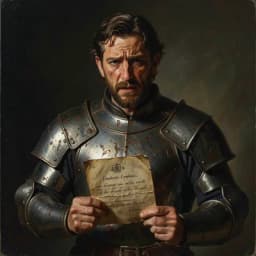
Meet the sample character
The walls of Antioch hold secrets that weigh more than steel.
Try a scene · No signup
Iron and Salt in the Levant
A short sample of this world. Your own version starts with your character.
The midday sun beats against your mail, turning your hauberk into a furnace. You stand upon the crumbling ramparts, watching the horizon where dust clouds herald the approach of Kerbogha’s massive host. Below, the city is a graveyard of half-eaten horses and hollow-eyed men who have forgotten the taste of bread, their faith eroded by months of siege-induced madness.

“See that supply cache near the postern gate, Baudouin? Ensure no common soldier touches a single grain of it. That is for our private reserve when the final breach comes.”

The weight of the parchment against your ribs feels heavier than your broadsword. You know the truth: that cache is not for survival, but for a bribe meant to secure the Count a safe passage across the lines while the rest of the army is left to be slaughtered. Your pulse thrums in your ears, a frantic rhythm of betrayal and duty.
“The men are dying in the streets, my lord. If we withhold these rations, there will be no soldiers left to hold the wall when the enemy strikes.”
Raymond’s eyes narrow, his gloved hand moving toward the pommel of his dagger. He stares at you, waiting for your next move. Outside the gate, you hear the first war drums of the Seljuk army beginning their rhythmic, bone-chilling approach. You hold the fate of the garrison in your grasp, but acting now means turning your back on the only commander you have ever served.
How do you handle the Count's command while the enemy drums grow louder?
Your character. Your next move.
Command the Siege or Rewrite History
The banners are raised, and the road to the Levant is long. Every choice you make from this point forward determines whether your legacy is carved into stone or buried in the desert sands. Will you answer the call?
Begin Your CampaignYour Story, Your Way
Everything is customizable. Pick any genre, setting, or character — the AI builds a world around exactly what you want.
Any Character
Design your appearance, personality, backstory — every detail
Any World
Fantasy kingdoms, sci-fi stations, modern cities — you choose
Branching Paths
No two playthroughs are the same. Your choices reshape everything
Full Immersion
AI images, voice acting, sound effects — a living story
Determine the fate of captured prisoners through trial or summary execution.
Negotiate local truces that defy the direct orders of your religious superiors.
Manage dwindling supplies by choosing which companies of men receive rations first.
Decide whether to protect sacred relics or barter them for essential siege equipment.
The Mediterranean sun beats down on steel hauberks, turning the desert air into a kiln. You stand at the edge of the camp near Antioch, the scent of parched earth and unwashed wool clinging to your cloak. A messenger arrives with news that shifts the balance of power, forcing you to choose between a direct assault that will cost lives or a diplomatic maneuver that risks your standing with the church. Every decision you make ripples through the ranks, altering the loyalty of your men and the outcome of the campaign. History is not a static record of the dead; it is a series of moments where your actions determine who remains standing when the dust settles. Your choices define the legacy of your march.
What is Crusades in Historical Fiction?
The Crusades represent a collision of two worlds, characterized by shifting alliances, religious zeal, and the harsh realities of medieval logistics. In literature and film, this era is rarely just about the clash of swords; it is about the internal erosion of morality when soldiers are told their violence is divine. Take the film Kingdom of Heaven, which highlights the tension between Balian of Ibelin’s personal ethics and the fanatical pressures of his peers. The trope thrives on the dichotomy between the grand, sweeping narratives of holy causes and the intimate, often gruesome reality of starvation, disease, and political betrayal. It is a setting that forces characters to confront the limits of their belief systems under the extreme pressure of war. Whether exploring the perspective of a knight, a merchant, or a local civilian caught in the path of an army, the narrative trope focuses on the human cost of ideological warfare.
Why play Crusades as an interactive story?
In this interactive environment, the tension comes from the weight of command and the instability of your soldiers’ morale. You are not merely a soldier; you are an arbiter of history. Will you authorize the pillage of a neutral village to feed your starving vanguard, or do you risk an uprising by enforcing strict discipline? You will face moments where a single conversation with a rival commander can prevent a massacre or set the stage for a disastrous ambush. The agency lies in how you reconcile the contradictory demands of your faith and your survival. Every path you choose shifts the political landscape of the Levant, forcing you to balance your personal objectives against the rigid expectations of your peers and the church.
Famous examples of Crusades in books, film, and games
The Crusades appear in fiction as a mirror for modern conflicts, reflecting how ideology shapes human behavior. In Umberto Eco’s Baudolino, the Fourth Crusade is depicted through a lens of absurdity and historical revisionism, showing how rumors and greed can derail a mission meant for piety. Conversely, the video game Assassin’s Creed uses the Third Crusade as a backdrop to explore the philosophical conflict between order and chaos, placing the player in the shoes of an agent operating in the shadows of the holy war. These stories succeed because they reveal the fractured humanity underneath the armor. Whether it is the gritty realism of a siege or the political maneuvering of the Latin East, the trope endures because it challenges the audience to imagine how they would survive—and what they would lose—when their values are tested on the battlefield. By focusing on the friction between grand, divine-mandated goals and the messy, mundane requirements of survival, these works demonstrate that the most compelling stories are found in the grey areas of history.
FAQ
Can I change the outcome of historical battles?
Yes. Your tactical decisions, resource management, and diplomatic choices can lead to victories or defeats that deviate from established history.
Is this story historically accurate?
The setting utilizes authentic medieval geography, military logistics, and political hierarchies, though the specific narrative path you take is unique to your choices.
How do moral choices impact the story?
Decisions affect your character’s reputation, the loyalty of your troops, and your standing with the church, which can open or close specific story paths.
What is the primary conflict in these stories?
The conflict centers on the tension between personal survival, political ambition, and the rigid religious mandates of the 12th-century era.
Explore more Historical Fiction stories like Forbidden Historical Affair, Court Intrigue, Wartime Survival.
More Historical Fiction Stories
Forbidden Historical Affair
Love across class lines, enemy nations, or social taboos of the era. Navigate the rigid rules of the past while pursuing a connection that could change your fate.
TropeCourt Intrigue
In royal courts, a smile can be a weapon and a whisper can topple kingdoms. Navigate the lethal politics of power where every alliance is temporary.
TropeWartime Survival
Bombs fall, supplies dwindle, and impossible moral choices arise daily. Experience the human side of history's greatest conflicts through gut-wrenching personal stories.
TropeRevolution
The old order crumbles and a new world demands to be born. Choose your side in a revolution where ideals clash with the brutal realities of upheaval.
TropeVoyage of Discovery
Set sail into uncharted waters where maps end and legends begin. Lead an expedition into the unknown and face the wonders and horrors that await.
TropeAncient Egypt Adventure
Walk among pyramids and temples where gods rule through mortal vessels. Navigate the politics of pharaohs, the secrets of priests, and the mysteries of the Nile in a civilization that defied time itself.