
Folk Horror · Interactive story
Where the Trees Remember Your Name
The canopy swallows the sun, and the roots crave a new sacrifice.
Start as a guest. Choose your character before the story begins.
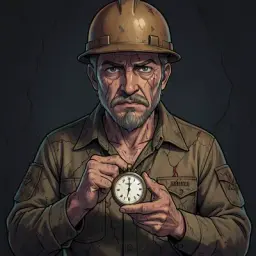
Meet the sample character
Some debts are not paid in coin.
Try a scene · No signup
The Thicket’s Tithe
A short sample of this world. Your own version starts with your character.
You press your machete against the wall of briars. It does not cut; it pulses. The light here is not filtered through leaves, but swallowed by them. Your compass needle spins in frantic, rhythmic circles, matching the heartbeat you feel vibrating through the soles of your boots. The forest is not merely growing; it is watching your every move.

“Don't bother with the brass toy, son. The trees don't care about North when they're hungry.”

Joren stands at the tree line, his hands stained with something darker than loam. He holds a bundle of knotted, black twine. The silence following his words is heavy, filled with the skittering of unseen things behind the bark. Your map, crumpled and damp in your jacket, feels like a heavy death warrant pressing against your ribs.
“I have a job to finish, Joren. If these woods have a master, tell them I'm not here for their soil.”
Joren chuckles, a sound like dry branches snapping underfoot. He tosses the twine at your feet; it coils like a waking snake, twitching toward your shadow. You realize with a sickening jolt that the path behind you has vanished, replaced by a wall of grey, weeping birch. You have to choose how to pay the toll for your trespass.
The forest demands a sacrifice to permit your passage. How do you respond to the old man's trap?
Your character. Your next move.
Will you leave these woods alive?
The sun is setting, and the trees are closing in. Every step you take draws you deeper into the ancient, whispering thicket. You have one chance to find the path out before the night rituals begin. Will you trust your instincts or succumb to the forest’s hunger?
Enter the dark woodsYour Story, Your Way
Everything is customizable. Pick any genre, setting, or character — the AI builds a world around exactly what you want.
Any Character
Design your appearance, personality, backstory — every detail
Any World
Fantasy kingdoms, sci-fi stations, modern cities — you choose
Branching Paths
No two playthroughs are the same. Your choices reshape everything
Full Immersion
AI images, voice acting, sound effects — a living story
Scour the forest floor for ritualistic artifacts that reveal the woods' true history.
Choose between following deceptive, shifting paths or carving your own dangerous, direct route.
Manage your dwindling supplies while hearing footsteps that mimic your own pace behind you.
Moss chokes the ancient standing stones, and the air smells of wet pine and copper. You step off the dirt track, intending to find a shortcut, but the map in your pocket is suddenly blank. Branches scrape against your skin like brittle fingers, and the path behind you has vanished into a wall of dense, shifting brambles. In this story, every decision you make determines whether you find your way home or become part of the forest floor’s history. The silence here is heavy, broken only by the rhythmic thumping of distant drums that shouldn’t exist in a place this remote. As the shadows lengthen, you realize the forest is not merely a collection of trees, but a living, breathing entity that has been waiting for someone exactly like you to wander into its reach.
What is Dark Forest in Folk Horror?
The Dark Forest is a staple of folk horror, serving as more than just a backdrop; it is a hostile, sentient entity. Unlike the enchanted woods of fairy tales that might offer magic, the folk horror forest offers only entropy and ancient ritual. Think of the suffocating, claustrophobic atmosphere in the film The Ritual (2017) or the way the woods in The Witch (2015) act as a boundary between civilization and the unknown. These settings are defined by their isolation, where the laws of nature bend to accommodate the needs of local cults or subterranean spirits. It is a place of perpetual twilight where the flora seems to participate in the malice of the landscape. Whether it is the gnarled roots of a black forest or the tangled, overgrown thickets of a forgotten village, the setting emphasizes the vulnerability of the individual against an uncaring, primeval force. The forest is a character with its own agenda—it wants to keep you, feed on your fear, and eventually, make you part of the soil.
Why play Dark Forest as an interactive story?
Playing through a dark woods choose your own adventure requires more than just luck; it demands a keen eye for subtle, unnatural patterns. You might find yourself deciding whether to follow a trail of marked trees—knowing they were placed by something inhuman—or hacking through the dense, thorny undergrowth. When the shadows begin to move independently of the light, do you stay still or run? Every choice carries the risk of alerting the things that dwell beneath the canopy. You will face moments of intense psychological pressure, such as choosing which offering to leave at a decaying shrine to appease a local forest spirit, or deciding whether to trust a stranger who claims to know the way out but smells of old graves. Your agency is your only defense against the inevitable, and every turn forces you to confront the cost of survival in a place that has forgotten the concept of mercy.
What makes Dark Forest work: the worldbuilding
The dark forest functions as a psychological mirror. In works like The Blair Witch Project or the game Darkwood, the forest is a crucible that strips away the protagonist's sanity. The most effective worldbuilding in this setting relies on sensory overload: the smell of damp decay, the sound of branches snapping in a pattern that mimics human speech, and the visual trickery of trees that seem to change positions when you blink. To write this effectively, one must treat the forest as a character with its own agenda. It does not want you to leave. The conflict is inherently man-versus-nature, but with a supernatural twist where nature is actively malevolent. The characters who survive are those who adapt to the forest's rules, acknowledging that their modern logic holds no power under the canopy. The woods are a space of transition where the boundary between the living and the dead is thin, often marked by effigies, cairns, or strange, non-Euclidean geometry that keeps the traveler circling back to the same terrifying location. By focusing on the visceral, earthly details—the texture of bark, the chill of the fog, the taste of bitter berries—the narrative creates a setting that feels grounded in reality while simultaneously feeling entirely wrong.
FAQ
What makes a dark forest in folk horror different from a regular forest?
In folk horror, the forest is an active, malevolent participant in the narrative. It isn't just trees; it's a sentient entity tied to ancient, often blood-soaked rituals that predate modern society.
How does the setting affect my choices?
The forest actively reacts to your presence. Choices are high-stakes, requiring you to balance resource management with psychological survival, as the environment shifts to punish hesitation or reward caution.
Can I actually find my way out of the woods?
Finding the path out is a central challenge. Success depends on your ability to interpret the forest’s signs, avoid its traps, and resist the temptation to succumb to the dread it cultivates.
Is this setting right for me?
If you prefer creeping dread, atmospheric tension, and stories where the environment is as dangerous as any monster, this setting will provide the exact kind of intensity you are looking for.
Explore more Folk Horror stories like Harvest Ritual, Outsider in the Village, Wicker Man Sacrifice.
More Folk Horror Stories
Harvest Ritual
The village celebrates the harvest with rituals that predate Christianity, and this year the crops demand more than grain. You must participate in traditions that grow darker with each passing hour and discover what the land truly hungers for.
TropeOutsider in the Village
You arrived seeking peace and found smiles that do not reach the eyes. The villagers welcome you warmly but their customs make no sense, and you are beginning to suspect that leaving was never part of their plan for you.
TropeWicker Man Sacrifice
A towering effigy looms at the edge of the field and someone must burn inside it. You must unravel the sacrificial logic of a community that believes blood is the only currency the old gods accept.
TropeGreen Man Awakening
The forest is growing where it should not and the faces in the bark are opening their eyes. You must confront the Green Man as nature reclaims the land with a sentience and fury that civilization cannot withstand.
TropeAncient Pact
Generations ago, your ancestors made a deal with something in the earth and the debt is coming due. You must honor or break a pact written in blood and bone, knowing that either choice carries a terrible price.
TropeFairy Ring Trap
You stepped inside the ring of mushrooms and now the world has shifted. Time moves differently here, the fae folk are watching, and finding your way back to the mortal world requires a deal you may regret for centuries.