
Fantasy · Interactive story
Shadows of a Fallen Empire
Dust settles on secrets that were never meant to be unearthed.
Start as a guest. Choose your character before the story begins.
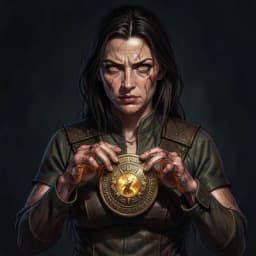
Meet the sample character
The silence of the stone is a lie.
Try a scene · No signup
Echoes of the Sunken Spire
A short sample of this world. Your own version starts with your character.
Your lantern light cuts through the stale air, illuminating carvings of forgotten kings etched into the basalt walls. You step over a skeletal hand still clutching a rusted spear, the bone snapping like a dry twig under your boot. The deeper you go, the more the silence feels heavy, as if the mountain itself is holding its breath.
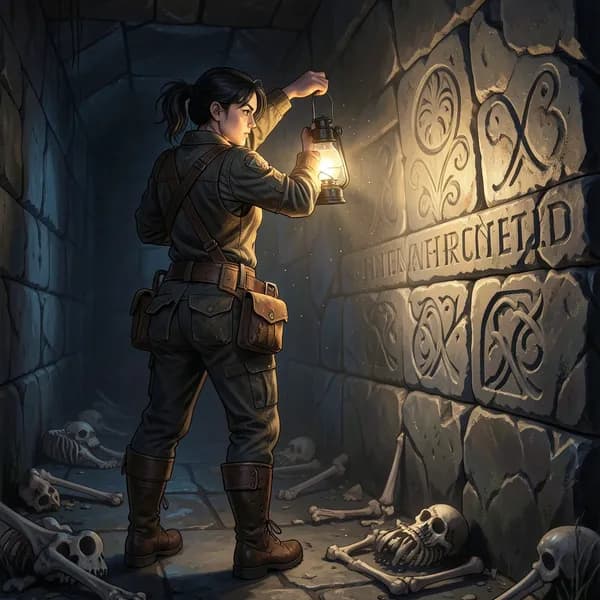
“Move faster, Hesper. That mechanism under your feet doesn't look like it wants us breathing much longer.”
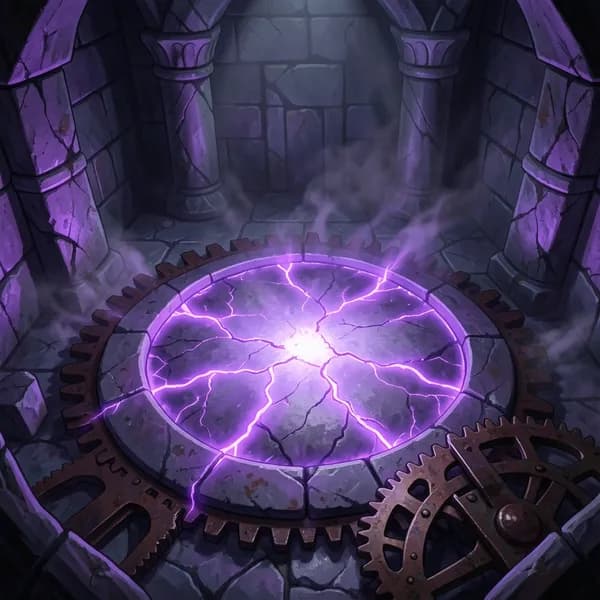
A sudden, grinding shudder rattles your teeth. The floor plate you just crossed sinks an inch, and the sound of heavy metal gears shifting echoes from the ceiling. A faint blue glow pulses from the cracks in the masonry, and you realize the entire room is a pressurized tomb, designed to crush whoever disturbed its long slumber.
“It’s a kinetic trap, Varek. If I pull my foot off, the ceiling comes down. If I stay, we’re sitting ducks for whatever else this place has waiting.”
Varek draws his blade, his eyes darting toward the shimmering altar at the end of the hall. He’s already calculating how much the core is worth if he leaves you behind. You feel the ground beneath you vibrate, the stone slab beneath your heel glowing a violent, impossible violet. You have seconds before the seal breaks.
The stone beneath your boot is burning with arcane heat. How do you force the trap open?
Your character. Your next move.
Claim the lost power of the Sun-Core.
The stone door is closing, and the relic pulses with a light that promises dominion over the elements. Will you claim it and risk the collapse of the mountain, or will you walk away to preserve the history buried beneath the floorboards? Your decision here is final, and the repercussions will echo across the kingdom.
Begin your descentYour Story, Your Way
Everything is customizable. Pick any genre, setting, or character — the AI builds a world around exactly what you want.
Any Character
Design your appearance, personality, backstory — every detail
Any World
Fantasy kingdoms, sci-fi stations, modern cities — you choose
Branching Paths
No two playthroughs are the same. Your choices reshape everything
Full Immersion
AI images, voice acting, sound effects — a living story
Decipher crumbling glyphs to unlock doors or trigger deadly, ancient magical alarms.
Manage limited resources while choosing between heavy relics and essential survival gear.
Decide whether to cleanse corrupted shrines or siphon their forbidden power for yourself.
Navigate shifting stone layouts that change based on your previous environmental interactions.
The air inside the Obsidian Ziggurat tastes like ozone and stale centuries. Your torchlight flickers against walls carved with warnings in a language that died before your grandfather was born. Behind you, the stone slab has sealed, leaving only the path forward into the dark. You are here for the Sun-Core, a relic said to power the floating cities of the ancients, but the floor ahead is riddled with pressure plates that hum with residual static. Every step you take defines whether you leave with a fortune or become part of the decor. In this interactive story, your choices dictate the outcome of this descent. You are not merely observing the past; you are trespassing upon it, and the architecture is waiting for a reason to collapse.
What is Ancient Ruins in Fantasy?
Ancient ruins serve as the graveyard of ambition. In fantasy storytelling, they represent the intersection of history and danger. They are not merely sets; they are characters that demand respect. Whether it is the decaying labyrinth found in The Legend of Zelda: Breath of the Wild or the cursed catacombs common in Dungeons & Dragons, ruins act as a physical manifestation of a civilization's hubris. They are spaces where you confront the remnants of gods or mad kings. The appeal lies in the tension: you are walking through the mistakes of others, hoping to scavenge their power without suffering their fate. These locations provide a sense of scale, reminding the protagonist—and the reader—that the world is older, larger, and far more dangerous than they initially believed. By exploring these sites, you peel back the layers of a world that existed long before you arrived, transforming from a simple traveler into an archaeologist of the arcane.
Why play Ancient Ruins as an interactive story?
Playing through an ancient ruins narrative forces you to weigh greed against survival. You might find a chest overflowing with gold, but the mechanism beneath it suggests a lethal trap. Do you risk the weight of your pack to retrieve the treasure, or do you leave it to keep your mobility? The agency here is visceral. You are not just reading a description; you are deciding which corridor to explore, which ancient inscriptions to trust, and whether to trigger a magical ward that might collapse the ceiling. The environment reacts to your curiosity. If you choose to ignore the warnings of a ghost-shade, the path behind you might vanish. If you choose to study the architecture, you might find a secret passage that bypasses the boss entirely. Every decision creates a ripple, turning your exploration into a high-stakes calculation where one wrong turn changes the entire trajectory of the quest.
Famous examples of Ancient Ruins in books, film, and games
Ancient ruins anchor the reader in a world that feels lived-in. In Tomb Raider, Lara Croft treats ruins as mechanical puzzles, emphasizing the physical cost of exploration—the scrapes, the falls, and the adrenaline of a collapsing bridge. Contrast this with the Dark Souls series, where ruins like Anor Londo are haunting reminders of a golden age turned to rot, where the environment tells the history of the world without a single line of dialogue. Then there is Indiana Jones, which treats ruins as a race against time, focusing on the cultural theft and the sheer audacity of looting a tomb. These examples show that the trope is versatile; it can be a playground for puzzles, a somber reflection on mortality, or an intense heist. The common thread is the atmosphere. We are drawn to ruins because they are the only places where we can touch the past and potentially reshape our own future. They represent the ultimate test of character: what do you do when you are face-to-face with the greatness of the dead?
FAQ
What makes an ancient ruins story different from a standard dungeon crawler?
While standard dungeon crawlers prioritize combat loops, ruin-focused narratives prioritize environmental mystery and the ethical weight of looting long-dead cultures. You aren't just fighting monsters; you are interpreting the history of the site to survive.
Can I interact with the artifacts I find?
Yes, every relic you discover holds potential power or cursed consequences. Your choice to keep, destroy, or study these items directly shifts the narrative trajectory and your character's standing in the world.
How do traps work in this setting?
Traps are treated as logical consequences of your choices. They appear as environmental hazards that respond to your movement, decision-making speed, and the knowledge you have gathered about the ruins.
Do I need to know the history of the world to succeed?
No, the history is revealed through your exploration. You learn as you go, and the pieces of lore you find provide the clues necessary to navigate the deeper, more dangerous levels of the ruins.
Explore more Fantasy stories like The Chosen One, Found Family, Hidden Heir.
More Fantasy Stories
The Chosen One
A prophecy names you as the one who will save or doom the world. But destiny is not fixed in this AI-driven story where your choices define what being chosen truly means.
TropeFound Family
Blood means nothing compared to the bonds you forge on the road. Assemble a band of misfits and build unbreakable loyalty through shared trials.
TropeHidden Heir
A secret bloodline, a stolen throne, and a truth that changes everything. Discover your royal heritage and decide whether to claim your birthright or reject it.
TropeDark Lord Rising
An ancient evil stirs and the world trembles. Stand against the darkness or consider its seductive offer of power in this epic fantasy interactive story.
TropeFae Bargain
The fae never lie, but their truths are sharper than any blade. Strike a deal with ancient, cunning beings and navigate consequences that twist every wish.
TropeMagical Academy
Enroll in a school of sorcery where every lesson could be your last. Master arcane arts, uncover ancient secrets, and forge alliances that shape the magical world.