
Family Saga · Interactive story
The Sins of the Fathers: Confronting Inherited Shadows
Will you repeat the mistakes of the past, or burn the legacy to the ground?
Start as a guest. Choose your character before the story begins.

Meet the sample character
Try a scene · No signup
The Ledger of Lost Blood
A short sample of this world. Your own version starts with your character.
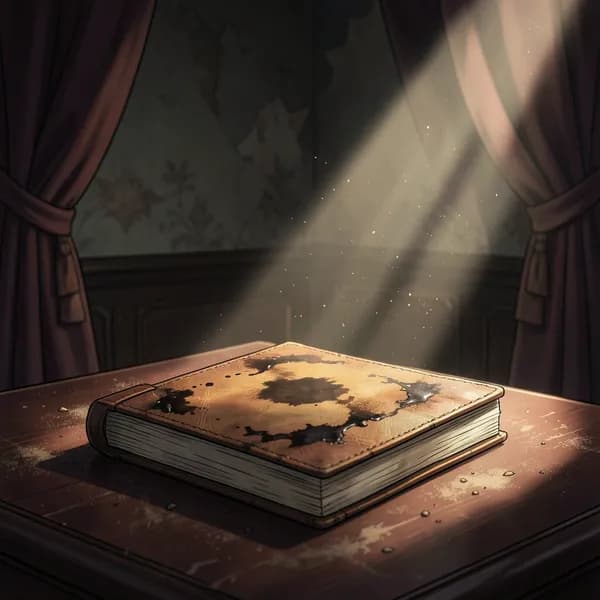
The air in the study tastes of oxidized copper and stale tobacco. You drag your sleeve across the mahogany desk, clearing a path through the dust that has settled since the funeral. Beneath a stack of unpaid tax notices, a leather-bound ledger sits tucked away—its pages stained with ink and something darker, like dried resin. Your fingers tremble as you trace the name scrawled on the inside cover.
“Some ghosts prefer to stay in the cellar, Julian. Do not invite them up for tea.”

The floorboards groan beneath your feet, echoing the hollowness in your own chest. You feel the weight of your grandmother's gaze—a stare that has controlled this family since before you were born. You know that if you open this book, you are accepting the inheritance of every secret, every debt, and every violent mistake your father ever made.
“I’ve lived in this cellar my whole life, Evelyn. It’s time I saw what was keeping us down here.”
She steps forward, her cane clicking sharply against the hardwood, and places a gloved hand over the ledger. The room goes deadly quiet. Outside, the Georgia heat presses against the glass, suffocating and thick. You can either shove her hand aside and read the accounts of your family's collapse, or yield to the silence and bury the evidence forever.
The ledger is within reach, but Evelyn stands between you and the truth. How will you claim your legacy?
Your character. Your next move.
Will you break the cycle or keep the secret?
Your family’s history is a map of pitfalls and potential. Every word you speak to your estranged father or every secret you choose to keep from your siblings shapes the future of the estate. The weight is yours to carry. Start your own saga and see if you have the strength to rewrite your family's destiny.
Rewrite Your LegacyYour Story, Your Way
Everything is customizable. Pick any genre, setting, or character — the AI builds a world around exactly what you want.
Any Character
Design your appearance, personality, backstory — every detail
Any World
Fantasy kingdoms, sci-fi stations, modern cities — you choose
Branching Paths
No two playthroughs are the same. Your choices reshape everything
Full Immersion
AI images, voice acting, sound effects — a living story
Confront aging relatives to extract truths about the family’s hidden, decades-old financial ruin.
Decide whether to uphold a toxic family tradition or face total ostracization from siblings.
Balance the pressure of preserving a family legacy against your own desperate need for independence.
A heavy silence fills the study. Your father’s portrait hangs above the mantle, its eyes tracking your every move as if waiting for you to stumble. In your hands lies a leather-bound journal, its pages filled with his cramped, frantic handwriting. It details a betrayal buried forty years ago—a secret that cost your grandfather his reputation and your mother her sanity. You stand at the threshold of a decision that will either mend these fractured bonds or shatter them entirely. In this interactive story, your choices ripple through time, dictating whether you will carry the burden of your ancestors or finally set it down.
What is Generational Trauma in Family Saga?
Generational trauma describes the transmission of psychological or emotional wounds from one generation to the next. In literature and film, it manifests as the ghosts that haunt a family—unspoken rules, toxic patterns, and suppressed memories that dictate how characters interact. Think of the brooding, isolated dynamics in The Glass Castle by Jeannette Walls, where the erratic behavior of parents leaves a permanent mark on their children's adult lives. It is not just about bad memories; it is about the inherited survival mechanisms that become traps. When a character reacts to a situation with irrational anger or paralyzing fear, they are often echoing a struggle they never personally lived through. This trope forces characters to confront the reality that they are not blank slates. They are products of their bloodline’s history, tasked with identifying which parts of that history are worth preserving and which are toxic enough to destroy. It is a slow-burn conflict, often played out in quiet rooms and heated arguments, where the real enemy is not an external villain, but the habits etched into the family foundation.
Why play Generational Trauma as an interactive story?
Playing through a family saga centered on trauma turns the act of reading into an act of excavation. You are not just observing a protagonist; you are managing their internal dialogue as they face the ghosts of their upbringing. You might choose to confront a cold-hearted matriarch during a holiday dinner, risking your inheritance to expose a hidden debt, or you might opt for silence, hoping to maintain a fragile peace at the cost of your own integrity. The tension lies in the consequences: a choice made in the first chapter regarding a childhood secret might resurface years later when you are trying to build your own family. You will encounter moments where you must decide whether to forgive a parent for their failures or to cut ties permanently. Every interaction with a sibling or relative is colored by the unspoken history of the family, forcing you to weigh long-held grudges against the potential for healing.
Famous examples of Generational Trauma in books, film, and games
Generational trauma acts as the engine for some of the most compelling narratives in modern media. In the film Hereditary, the horror is not just supernatural; it is the inevitable, suffocating weight of a family history that the protagonist cannot escape, no matter how hard they try. The film uses the trope to show that some bloodlines are poisoned at the source, creating a sense of dread that spans generations. Conversely, the show Succession frames generational trauma through the lens of corporate power. The Roy children are hollowed out by their father’s emotional abuse, turning their interactions into a cold, calculated game of survival. They repeat his cruelty because it is the only language they know. Finally, in the manga Attack on Titan, the trauma is literalized as historical events that force descendants to fight the wars of their ancestors. The characters struggle to break a cycle of hatred that has persisted for centuries. What makes this trope endure is its universality. Most people recognize the struggle of inheriting traits, fears, and biases from their parents. By placing these dynamics into a narrative, stories allow us to analyze the why behind the pain, offering a safe space to explore the possibility of healing or the tragedy of repeating the past.
FAQ
How does the story track my choices over time?
The narrative engine remembers your past decisions and key interactions. If you choose to forgive a parent early on, that choice will influence how NPCs interact with you in later chapters, potentially changing the outcome of high-stakes family meetings.
Can I actually break the cycle, or is the ending fixed?
You have full agency to determine the trajectory of your character. While the family's history provides the starting point, your actions dictate the ending. You can choose to break the cycle completely, perpetuate it, or find a new, complicated path forward.
Is this genre too dark for casual reading?
While the subject matter is heavy and grounded in emotional reality, these stories provide a cathartic experience. They allow you to explore complex human dynamics in a safe, controlled environment where you are the architect of the resolution.
What makes a family saga different from a standard drama?
A family saga spans decades or generations, focusing on the lineage and the long-term impact of decisions. Unlike a standard drama that might focus on a specific event, a saga highlights how the past is never truly dead, but remains a constant presence in the present.
Explore more Family Saga stories like Inheritance Battle, Family Reunion Secrets, Prodigal Child Returns.
More Family Saga Stories
Inheritance Battle
The patriarch is dead and the will is a bombshell that turns siblings into enemies. You'll fight for what you believe is rightfully yours while discovering that the real inheritance is a lifetime of buried resentments.
TropeFamily Reunion Secrets
Everyone gathers under one roof wearing their best smiles, but the cracks show before the first toast is finished. You'll watch decades of secrets spill out over one explosive weekend that redefines your entire family.
TropeProdigal Child Returns
You left years ago and swore you'd never come back. But something has pulled you home—a death, a crisis, a phone call in the middle of the night—and nothing about the family you left behind is what you remember.
TropeFamily Business Succession
The family business needs a new leader, and every sibling thinks they're the one. You'll navigate power plays, loyalty tests, and the question of whether the business that built your family will be the thing that tears it apart.
TropeWedding That Tears Family Apart
The wedding is supposed to unite two families, but instead it detonates every unspoken grievance. You'll watch alliances form and shatter over seating charts, speeches, and the question of who deserves a place at the table.
TropeSibling Rivalry
You and your sibling have been competing since the cradle, and the stakes have only gotten higher. Every achievement is measured against theirs, every failure is amplified, and the love underneath the rivalry makes it hurt even more.