
Fairy Tale · Interactive story
The Spinning Room: A Bargain Struck in Gold
The gold is a lie, but the price is absolute. What will you trade?
Start as a guest. Choose your character before the story begins.
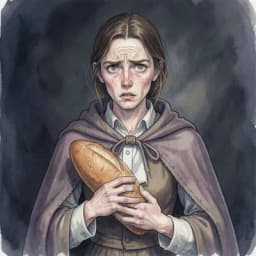
Meet the sample character
A deal struck in the dark carries a weight you cannot yet see.
Try a scene · No signup
The Price of Golden Straw
A short sample of this world. Your own version starts with your character.
The iron bolt slams home, echoing through the tower room. You stand before a mountain of brittle, yellow straw that reaches your waist. The King’s decree was simple: spin it into gold by dawn, or face the chopping block. Outside, the wind howls like a starving wolf, reminding you exactly how much time you have left.

“Such a lovely pile of rubbish, and yet you look at it as if it might bite. Shall I do the work for you, little miller?”

The creature steps from the shadows, his limbs long and jointed like a cricket’s. He smells of wet earth and ancient iron. You grip the wooden frame of the spinning wheel, your knuckles white, heart hammering against your ribs like a trapped bird. He waits for your answer, his head tilted at an impossible angle.
“I did not invite you here, spirit. If you want a bargain, state the terms plainly or be gone.”
He taps his long, jagged nail against the wheel, and the wood groans under his touch. His eyes glow with a sickly, pale light, reflecting the golden promise of the morning. He leans closer, his breath cold against your ear, leaving you to decide if survival is worth the unknown toll he demands.
The creature waits for your submission. How do you respond to this supernatural invitation?
Your character. Your next move.
The straw waits. How will you pay?
The sun is setting, and the King expects a miracle. Don't let your story end in the dark of the tower. Step into the spinning room, strike a bargain, and decide your own fate before the final thread is pulled.
Begin Your BargainYour Story, Your Way
Everything is customizable. Pick any genre, setting, or character — the AI builds a world around exactly what you want.
Any Character
Design your appearance, personality, backstory — every detail
Any World
Fantasy kingdoms, sci-fi stations, modern cities — you choose
Branching Paths
No two playthroughs are the same. Your choices reshape everything
Full Immersion
AI images, voice acting, sound effects — a living story
Negotiate complex, binding contracts with supernatural entities for impossible favors.
Manage dwindling resources while the King’s deadline looms closer each hour.
Choose to honor your word or find a clever way to break the bargain.
Influence the character of the entity helping you through your dialogue and actions.
The moonlight cuts through the high, barred window, illuminating a mountain of brittle, golden-yellow straw. You are not a weaver, yet the King promises your head if the room is not filled with spun gold by dawn. A shadow shifts in the corner, a creature with eyes like polished coal, holding a spindle that hums with a low, unnatural vibration. Your choices dictate whether you escape this tower with your life or become another ghost in the stone walls. In this interactive story, the consequences of your agreements follow you long after the sun rises.
What is The Spinning Room in Fairy Tale?
The Spinning Room archetype centers on the impossible mandate. It is the classic Rumpelstiltskin motif—a character trapped by a royal decree, forced to perform a task that defies human capability. It functions as a crucible for desperation. Whether it is the Grimm brothers' original cautionary tale, the darker, more industrial take seen in the Once Upon a Time television series, or the magical realism found in Naomi Novik's Spinning Silver, the room itself acts as a character. It represents the intersection of greed, poverty, and supernatural intervention. The room is never just a storage space; it is a pressure cooker. It forces a decision between survival and morality. When you engage with this setting, you are stepping into a narrative where the environment is designed to break you, and the only way out is to negotiate with forces that do not have your best interests at heart.
Why play The Spinning Room as an interactive story?
Playing through the Spinning Room means living the tension of the bargain. You are not just observing a character make a mistake; you are the one deciding how much you are willing to lose to survive the night. Will you offer a necklace, a secret, or a promise that binds your future? The agency here changes the nature of the entity in the room. Are they a victim of their own curse, or a predator waiting for a slip-up? You will face moments where the King’s guards are at the door, the straw is still raw, and the stranger is demanding a payment you aren't sure you can afford. The tension builds as you balance the reality of the task against the hidden cost of the magic. Every choice you make alters the power dynamic, determining if you end the story as a ruler, a prisoner, or something else entirely.
What makes The Spinning Room work: the worldbuilding
The Spinning Room relies on the claustrophobia of the setting. It is isolated, cold, and smells of dry grass and impending doom. The conflict is always transactional—a bargain struck in the dark. In The Tenth Kingdom, the setting is used to highlight the absurdity of fairy tale logic, while in newer retellings, authors focus on the psychological toll of the bargain. The friction comes from the Price. If you do not have gold, what do you offer? A memory? Your firstborn? Your ability to speak? The most effective stories here use the sensory details of the wheel's rotation—the rhythmic clack-clack-clack that counts down the seconds until sunrise. Character types often include the Desperate Innocent, the Greedy Monarch, and the Trickster Entity. The setting thrives when the player realizes that the gold is the least important part of the transaction. Success is not about finishing the work; it is about surviving the debt. By focusing on the weight of the objects in the room and the shifting shadows of the stranger, the narrative forces you to confront the reality of greed. The room is a physical manifestation of a trap, and the story is about how you choose to dismantle it.
FAQ
Can I refuse the stranger's help?
Refusing the stranger changes the stakes immediately. You might find a different way to solve the puzzle, or you might find yourself facing the King empty-handed. Every decision ripples through the narrative.
How does the bargaining mechanic work?
The stranger demands payment. You might have to sacrifice items, secrets, or future favors. The more you give, the more the power dynamic shifts in the stranger's favor.
Is the story always about the same fairy tale?
The setting uses the bones of the classic tale but allows for total deviation. You are not playing a script; you are defining the outcome of the trade.
What happens if I fail to produce the gold?
Failure leads to unique consequences based on your earlier choices. The King’s wrath is only one potential outcome; the stranger may have their own plans for a failed debtor.
Explore more Fairy Tale stories like Cursed Princess, Beast Transformation, Wicked Stepmother.
More Fairy Tale Stories
Cursed Princess
A terrible curse transforms the princess into something monstrous, and the kingdom has given up hope. Only your choices can unravel the enchantment and reveal whether breaking the curse requires sacrifice, love, or something no one expects.
TropeBeast Transformation
A handsome prince trapped in a monstrous form, a curse that only deepens with time — your compassion and choices determine whether the beast within is tamed or unleashed forever.
TropeWicked Stepmother
She smiles sweetly while plotting your ruin, and no one believes she is anything but kind. Outsmart the wicked stepmother whose cruelty hides behind a mask of maternal concern in a tale where survival depends on your wits.
TropeFairy Godmother Twist
Your fairy godmother arrives with a wave of her wand, but her gifts come with conditions you did not read in the fine print. Discover that magical help always has a price in a story where wishes are never quite what they seem.
TropeEnchanted Sleep
A magical slumber descends, and the whole kingdom falls silent. Race against time to find the cure before the spell becomes permanent, choosing between dangerous shortcuts and the longer path that might save everyone.
TropeImpossible Tasks
Sort a mountain of grain by dawn, spin straw into gold, or fetch water from the edge of the world. You are given tasks that seem impossible, but cleverness, unexpected allies, and bold choices can achieve the unachievable.