
Dungeon Crawler · Interactive story
The Shadowed Mentor: Surviving the Dungeon’s Edge
The map is useless. The stranger in the shadows holds the only way out.
Start as a guest. Choose your character before the story begins.
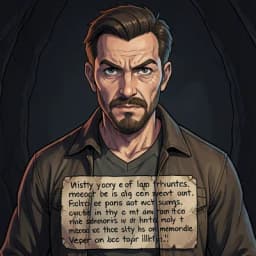
Meet the sample character
Truth is a luxury you cannot afford in the Maw.
Try a scene · No signup
The Architect's Ledger
A short sample of this world. Your own version starts with your character.
You are standing in the Choking Corridor of the Obsidian Maw. Dust clogs your throat, and your torchlight flickers against walls that seem to pulse with a faint, rhythmic heartbeat. You are down to your last two rations. If you do not find the vault before your gear fails, you will become just another pile of bones for the next fool to step over.

“Three paces to the left, Bram. The pressure plate beneath your boot is calibrated for exactly your weight.”

Vesper stands in the alcove, his fingers tracing patterns on the cold stone. He should not be here; you saw him fall into the Pit of Spikes three levels up, yet here he is, clean-shaven and mocking. The air grows heavy with the smell of ozone and wet copper. Your hand tightens on your shortsword.
“How are you alive, Vesper? And why does this hallway feel like it is waiting for you to tell it what to do?”
He offers a thin, mirthless smile, pointing toward two diverging tunnels. To the left, a path slick with a strange, bioluminescent slime that pulses in time with the walls. To the right, a staircase ascending into absolute, unnatural silence. Behind you, the sound of grinding stone signals that the corridor you just traversed is sealing shut forever.
The wall behind you is closing fast. Which path do you trust when your guide is clearly a ghost?
Your character. Your next move.
Will you trust the stranger in the dark?
The Ironspire is shifting, and your torch is dying. The cloaked figure at the end of the hall has the map you need, but their smile doesn't reach their eyes. Do you offer them your gold for the truth, or do you force them to lead the way at the point of your blade? Your choices define your survival.
Start your dungeon crawlYour Story, Your Way
Everything is customizable. Pick any genre, setting, or character — the AI builds a world around exactly what you want.
Any Character
Design your appearance, personality, backstory — every detail
Any World
Fantasy kingdoms, sci-fi stations, modern cities — you choose
Branching Paths
No two playthroughs are the same. Your choices reshape everything
Full Immersion
AI images, voice acting, sound effects — a living story
Interrogate the guide to reveal hidden motives behind their specific, dangerous advice.
Choose to follow or ignore cryptic warnings before triggering lethal dungeon traps.
Trade precious loot for information that could bypass entire boss encounters.
Decide whether to protect your guide or sacrifice them to ensure your own escape.
Your torch sputters against the suffocating black of the Ironspire depths. You are out of rations, your blade is notched, and the path forward is a maze of shifting walls. A cloaked figure leans against a crumbling pillar, eyes glinting with a familiarity that feels wrong. They offer a map—or perhaps a lie. Every word they speak alters your survival odds. In this interactive story, your choices dictate whether this stranger leads you to the dragon’s hoard or directly into a spiked pit. You must decide if their advice is a lifeline or a calculated push toward your demise. One wrong turn, one misplaced trust, and the dungeon claims another soul. The damp air smells of ozone and ancient decay, and the only person who knows why is watching you with a cold, unblinking intensity.
What is The NPC Guide in Dungeon Crawler?
The NPC Guide is a staple of the genre, functioning as both an asset and a liability. This character archetype typically possesses knowledge that the player lacks, creating a power imbalance that drives the narrative forward. Think of Mimir from God of War, who provides essential lore and guidance while hanging from your belt, or the enigmatic merchants in Dark Souls who hint at the dangers ahead while selling you the very gear you need to survive. The guide is rarely altruistic. They are often tied to the dungeon itself, either as a former prisoner, a cursed spirit, or a rival adventurer who lost their party and their sanity. Their usefulness is their primary defense against your blade, but their hidden agendas keep the tension high. In a dungeon crawler, information is more valuable than gold. If you find a character who seems to know exactly where the traps are hidden, you have to ask yourself why they are telling you. Are they trying to clear the path, or are they using you as a living shield to trip the mechanisms they cannot bypass themselves?
Why play The NPC Guide as an interactive story?
Playing with an NPC guide transforms the game into a high-stakes psychological test. You aren't just managing inventory or health; you are managing a relationship with a potentially treacherous source of truth. Every piece of advice you receive acts as a fork in the road. If the guide tells you to take the left passage because the right is 'cursed,' do you believe them? Or do you suspect they want you away from a secret treasure they intend to claim later? Agency is the ultimate weapon here. You can choose to interrogate them, ignore them, or even threaten them to extract the truth. The tension comes from the limited visibility of the dungeon. When the game engine forces you to rely on a character whose motives are obscured, the stakes feel immediate. A simple dialogue choice can be the difference between finding a legendary relic and walking into a wall of poison darts. You define the boundary between caution and reckless trust.
The psychology of The NPC Guide: why readers fall for this character
The appeal of the NPC guide lies in the fundamental human desire for a mentor combined with the deep-seated fear of betrayal. We want to believe there is someone who knows the way, someone who can keep us safe in the dark. This archetype taps into that vulnerability, making the inevitable moment of betrayal—or revelation—that much more impactful. Consider the Merchant in Resident Evil 4; he is a constant presence in a hostile environment, providing upgrades and weapons. He is essential, yet his complete lack of backstory makes him unsettling. He represents the survivalist’s bargain: you accept help from a stranger because the alternative is certain death. This archetype also serves as a mirror for the player’s own morality. If you treat the guide with suspicion and cruelty, the story shifts, potentially causing them to withhold information or actively sabotage your progress. If you build a rapport, they might become your most loyal ally. The interaction isn't just about gameplay mechanics; it is a study in trust. Why do we trust the stranger in the hood? Because the dungeon is too large to face alone. We crave the security of knowledge, even when that knowledge comes from someone who might be planning our ruin. Whether they are a tragic figure trapped by a curse or a cunning opportunist, their presence forces us to confront our own paranoia. In the quiet moments between battles, when the only sound is the drip of water on stone, the guide becomes the most important character in your story.
FAQ
Can I kill the NPC guide if I don't trust them?
Yes. You have full agency to act on your suspicions. However, be aware that killing your only source of information might leave you blind in a room full of traps or unable to decipher the dungeon's complex puzzles.
How does the NPC guide's knowledge affect my survival?
Their knowledge acts as a modifier for your choices. Following their advice can reveal secret passages or hidden loot, but if their motives are hostile, that same advice could be a direct path to a boss encounter you are not yet prepared to handle.
What makes this character type different from a standard quest giver?
A standard quest giver usually offers a static objective. An NPC guide in this genre is reactive; they exist within the dungeon with you, changing their behavior based on your actions, your health status, and the loot you carry.
Is this story format difficult for beginners?
It is designed for those who enjoy high-tension decision-making. If you prefer a guided experience, you can lean on the NPC for hints, but the risk of deception remains a constant factor in every interaction.
Explore more Dungeon Crawler stories like First Dungeon Dive, Boss Room, Loot Drop.
More Dungeon Crawler Stories
First Dungeon Dive
You stand at the dungeon entrance for the first time, torch in hand and heart hammering. Every corridor is unknown, every shadow could hide a trap or a monster, and the thrill of discovery is matched only by the very real possibility that you will not make it back to the surface.
TropeBoss Room
The door ahead is larger, heavier, and more ornate than anything you have passed. Beyond it waits the floor guardian, a creature of immense power that has crushed every party that came before. You check your gear, signal your team, and push through into the fight of your life.
TropeLoot Drop
The chest glows with an inner light and the lock clicks open to reveal gear that changes everything. You sift through enchanted weapons, rare armor, and mysterious artifacts, knowing that the best loot always comes from the most dangerous rooms and that greed has killed more adventurers than any monster.
TropeTrap Corridor
The corridor ahead is suspiciously clean and symmetrical. You spot pressure plates, tripwires, and slots in the walls designed to fire projectiles, and you must navigate a gauntlet of lethal mechanisms using reflexes, intelligence, or brute-force sacrifice of resources.
TropeDungeon Puzzle
The way forward is sealed behind a mechanism that demands wit rather than weapons. You decipher runes, rotate stone dials, and arrange artifacts in patterns that unlock doors, knowing that a wrong solution might reset the puzzle or trigger something far worse.
TropeParty Wipe
Your healer is down, your tank is bleeding out, and the monster is still standing. The party wipe is imminent and your last decision will determine whether anyone survives: do you fight to the last, attempt a desperate retreat, or sacrifice yourself so the others can escape?