
Dungeon Crawler · Interactive story
The Dungeon Merchant: Profit from the Peril
Gold is heavier than iron, and twice as deadly when the floor starts moving.
Start as a guest. Choose your character before the story begins.
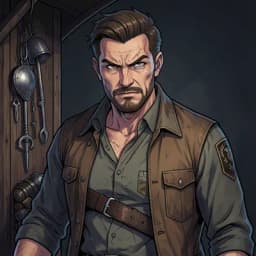
Meet the sample character
Inventory is life, and your prices are death.
Try a scene · No signup
Profit at the Precipice
A short sample of this world. Your own version starts with your character.
Your stall is wedged into a narrow alcove, shielded by a flickering ward that barely holds back the encroaching damp. Outside, the crushing silence of the floor is broken only by the wet, ragged gasps of a knight stumbling toward your light. He is missing a pauldron, and his chainmail is matted with black, necrotic ichor.

“Give me a health draught, merchant. I’ll pay whatever you demand—my soul, my sword, just keep me breathing long enough to find the exit.”

You scan his gear. The hilt of his blade is encrusted with rubies, and his signet ring suggests a lineage that would pay a king's ransom for his return. Yet, your shelves are nearly bare. You have one vial of minor healing left, and the sound of heavy, armored footsteps is closing in from the corridor behind him.
“The price is the ring, Hrolf. And you leave your sword behind as collateral while you recover. Take it or die in the dark.”
The knight hesitates, his eyes darting to the encroaching shadows. Behind him, the heavy thud of a boss-level construct echoes off the stone, closer now. You grip the vial, knowing that if you save him, you gain a powerful debtor, but if you let the construct finish him, his loot becomes yours for the taking. The choice is yours.
Do you prioritize the long-term debt or the immediate acquisition of the knight's legendary gear?
Your character. Your next move.
Turn Their Desperation Into Your Fortune.
The party is at your door, their torches flickering low and their health bars dwindling. They need what you have, and they have no other options. Will you be the savior they need, or the one who strips them of their final gold coin before the monsters finish them off? The choice dictates your profit.
Start Your ShopYour Story, Your Way
Everything is customizable. Pick any genre, setting, or character — the AI builds a world around exactly what you want.
Any Character
Design your appearance, personality, backstory — every detail
Any World
Fantasy kingdoms, sci-fi stations, modern cities — you choose
Branching Paths
No two playthroughs are the same. Your choices reshape everything
Full Immersion
AI images, voice acting, sound effects — a living story
Set your own prices based on the desperation of the adventurers approaching your stall.
Scavenge rare loot from fallen heroes to restock your inventory for the next group.
Choose whether to provide honest intel or lead unsuspecting parties into deadly traps.
Maintain your own defenses against dungeon denizens while keeping your shop open for business.
The air in the lower levels tastes of sulfur and ancient rot. You lean against a crumbling pillar, your portable stall packed with healing vials, rusted iron daggers, and fire-resistant cloaks. A group of heavily armored adventurers approaches, their boots echoing against the flagstone. They are bleeding, desperate, and looking for a way out—or a way deeper. As they reach your stall, you adjust your hood, watching their eyes dart between your wares and the shadows behind you. Will you charge them a king’s ransom for a single healing potion, or offer a discount in exchange for the secrets they’ve unearthed in the deeper strata? Every transaction shifts the balance of power in this tomb. Your choices determine whether these heroes survive the next room or fall to the dungeon's hunger, leaving their gear for you to scavenge.
What is The Dungeon Merchant in Dungeon Crawler?
The Dungeon Merchant archetype is the unsung anchor of the classic crawler. Often found in games like NetHack, Moonlighter, or the mysterious shopkeeper in Spelunky, this character represents the cynical intersection of commerce and survival. They are not the hero fighting the dragon; they are the one selling the dragon-slaying sword at a significant markup. This figure thrives in the most inhospitable environments, often possessing goods that defy logic. How did a bottle of fine wine get into a tomb sealed for a thousand years? Why are they selling torches in a place where the air itself seems to burn? They exist to remind the player that even in a monster-infested labyrinth, capitalism finds a way. They are usually enigmatic, sometimes cursed, and always prepared to capitalize on the fear of others. The merchant doesn't care if the dungeon collapses, provided they have already emptied the pockets of those who entered it.
Why play The Dungeon Merchant as an interactive story?
Playing as the merchant flips the script on the typical crawler. You are not avoiding traps; you are selling the tools to bypass them. You handle supply chains, manage inventory under duress, and negotiate with warriors who have the strength to kill you but need your supplies to stay alive. Decisions are high-stakes: do you sell the last health potion to the paladin who looks like he is about to collapse, or save it for the rogue who promised you an artifact from the treasury? You manage the flow of gear, influencing the outcome of the entire dungeon run. The tension comes from the fact that your survival is tied to your customers. If they die, your business dies with them, but if they thrive too easily, they stop needing your services. Balancing greed with the necessity of keeping your clients breathing creates a unique pressure that traditional hero-based stories lack.
The psychology of The Dungeon Merchant: why readers fall for this character
The appeal of the Dungeon Merchant lies in the shift from a participant in the violence to a profiteer of the outcome. In Resident Evil 4, the Merchant’s iconic question, 'What are ya buyin'?' creates a sense of safety in a hostile world. In Crypt of the NecroDancer, the shopkeeper is a formidable force who sings along to the music, turning the shop into a high-tension zone. This archetype embodies the fantasy of being the neutral party in a world of extremes. It triggers a specific psychological pleasure: the feeling of control. While the heroes are running for their lives, you are the one setting the terms of engagement. It is a position of power that requires constant vigilance. You rely on the fear of others to sustain your business. If the dungeon becomes too safe, your customers do not need you. If it becomes too deadly, they die before they can pay. You live in that golden middle ground, constantly weighing your own greed against the survival of your best clients. The merchant represents a cold, calculated reality that contrasts with the hero's narrative. It is the ultimate role for those who prefer to influence the story from the shadows rather than swinging the sword, offering a way to engage with high-fantasy tropes through a lens of pragmatic, sometimes ruthless, self-interest.
FAQ
What is the Dungeon Merchant archetype?
A character who operates a stall inside a hostile dungeon, providing gear and supplies to adventurers who are usually out of options.
How does inventory management work in this story?
You must scavenge items from the dungeon floor or loot them from fallen heroes to keep your shop stock fresh and profitable.
Can I scam my customers?
Yes, you can sell faulty gear or overcharge desperate adventurers, though this carries the risk of them turning their blades on you if they realize the deception.
Is this game tactical?
Yes, you must decide when to close shop, when to flee from encroaching monsters, and how to price goods to ensure you have enough gold to survive the next level.
Explore more Dungeon Crawler stories like First Dungeon Dive, Boss Room, Loot Drop.
More Dungeon Crawler Stories
First Dungeon Dive
You stand at the dungeon entrance for the first time, torch in hand and heart hammering. Every corridor is unknown, every shadow could hide a trap or a monster, and the thrill of discovery is matched only by the very real possibility that you will not make it back to the surface.
TropeBoss Room
The door ahead is larger, heavier, and more ornate than anything you have passed. Beyond it waits the floor guardian, a creature of immense power that has crushed every party that came before. You check your gear, signal your team, and push through into the fight of your life.
TropeLoot Drop
The chest glows with an inner light and the lock clicks open to reveal gear that changes everything. You sift through enchanted weapons, rare armor, and mysterious artifacts, knowing that the best loot always comes from the most dangerous rooms and that greed has killed more adventurers than any monster.
TropeTrap Corridor
The corridor ahead is suspiciously clean and symmetrical. You spot pressure plates, tripwires, and slots in the walls designed to fire projectiles, and you must navigate a gauntlet of lethal mechanisms using reflexes, intelligence, or brute-force sacrifice of resources.
TropeDungeon Puzzle
The way forward is sealed behind a mechanism that demands wit rather than weapons. You decipher runes, rotate stone dials, and arrange artifacts in patterns that unlock doors, knowing that a wrong solution might reset the puzzle or trigger something far worse.
TropeParty Wipe
Your healer is down, your tank is bleeding out, and the monster is still standing. The party wipe is imminent and your last decision will determine whether anyone survives: do you fight to the last, attempt a desperate retreat, or sacrifice yourself so the others can escape?