
Dungeon Crawler · Interactive story
Death Is Only the First Lesson
The blade finds your neck, but the stone remembers. Will you survive the return?
Start as a guest. Choose your character before the story begins.
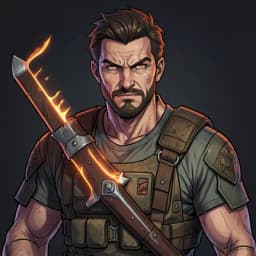
Meet the sample character
Death is just a reset button on your ambition.
Try a scene · No signup
The Iron Spire's Echo
A short sample of this world. Your own version starts with your character.
You cough, tasting copper and ozone as your lungs struggle to catch their first breath. You lie on the cold, obsidian slab of the checkpoint pedestal. The blue light fades from the runic carvings, signaling your resurrection. Your armor is repaired, your wounds sealed by the dungeon's cruel magic, but your satchel is empty. Everything you gathered—the scrap, the gears, the map—is gone, abandoned back at the crusher traps where your previous life ended.

“Back so soon, scav? I told you the pressure plates on the west wing don't care about your combat training.”

You push yourself upright, your muscles protesting the phantom ache of your recent death. The weight of your gear is missing, and the humiliation of failure burns hotter than your last wound. You look toward the dark corridor, where the heavy grinding of gears marks the path to the loot you lost. You know the exact sequence of the traps now, but the dungeon is shifting, and the machinery grows faster with every reset.
“I know exactly where I went wrong. This time, I’m taking the vents.”
You stand, gripping your rusted dagger. The corridor ahead remains silent, save for the rhythmic grinding of the massive brass gears ahead. You know those teeth will mince you in seconds if you don't time your run perfectly. A flicker of light catches your eye—something shiny caught in the grate. Is it the gold you dropped, or a lure left by the Spire to draw you back into the grinder?
The grinding gears pause for a heartbeat. How do you advance?
Your character. Your next move.
Conquer the dungeon, one death at a time.
The trap is waiting, and the shadow-beast is hungry. You know exactly where they are this time. Will you walk into the same mistake, or will you use your knowledge to claim the treasure? Your next life starts at the checkpoint.
Start your dungeon runYour Story, Your Way
Everything is customizable. Pick any genre, setting, or character — the AI builds a world around exactly what you want.
Any Character
Design your appearance, personality, backstory — every detail
Any World
Fantasy kingdoms, sci-fi stations, modern cities — you choose
Branching Paths
No two playthroughs are the same. Your choices reshape everything
Full Immersion
AI images, voice acting, sound effects — a living story
Analyze the death screen to identify the specific trap or enemy pattern that killed you.
Modify your loadout or spell selection to counter the threat you failed against previously.
Choose branching paths to bypass the room where your previous attempt ended in failure.
Retain currency or key items found during your failed run to buy better gear.
The iron portcullis slams shut, and the shadow-beast’s claws find your throat. Blood pools on the cold stone floor, and your vision fades to black. Then, the hum begins. You are not dead—not permanently. You snap awake at the last glowing rune, your armor repaired but your pride shattered. This is the rhythm of the depths. Every time you fall, the dungeon keeps your secrets, but it demands you master its mechanics. In this interactive story, your choices dictate whether you overcome the trap that claimed your life or walk blindly into a new one. The stone remembers your failure; it is up to you to ensure the next attempt is the one that breaks the cycle.
What is Respawn Checkpoint in Dungeon Crawler?
The respawn checkpoint is a narrative device that turns failure into a tactical advantage. Instead of ending the story, death acts as a reset button that returns the protagonist to a specific point of safety. This trope is a staple in high-stakes dungeon crawlers because it forces the player to treat every room as a puzzle. In titles like 'Hades,' the protagonist Zagreus faces constant death, yet each return to the House of Hades provides new dialogue and growth. Similarly, the 'Dark Souls' series utilizes bonfires as checkpoints, turning the fear of death into a calculated risk-reward system. By placing the player back at a checkpoint, the story shifts from a linear path to a loop of refinement. You are not just trying to survive; you are gathering information about enemy placements, trap triggers, and boss attack patterns. The checkpoint allows you to experiment with different approaches without losing your overall objective. It turns the dungeon into a laboratory where the only variable that truly changes is your strategy.
Why play Respawn Checkpoint as an interactive story?
Playing with a respawn mechanic adds a layer of grit to your decision-making. When you know that a wrong turn means repeating a grueling sequence, every choice carries weight. You might decide to conserve your health potions in the first three rooms, knowing a boss awaits, or you might choose to risk a high-damage curse to unlock a shortcut. The tension comes from the memory of your previous failure. When you step back into that hallway where you died, you are armed with the knowledge of what lies ahead. Should you test the pressure plate again, or take the riskier path through the crumbling wall? The narrative reacts to your repeated attempts, acknowledging your persistence or mocking your repeated mistakes. Your agency lies in the ability to adapt your build, your gear, and your tactics based on the specific threat that ended your last run.
Famous examples of Respawn Checkpoint in books, film, and games
The respawn checkpoint trope has evolved across various media, each using the concept to highlight different aspects of human persistence. In the film 'Edge of Tomorrow,' the protagonist Cage is caught in a time loop, forced to relive the same beach assault hundreds of times. The film uses this to show how he transforms from a terrified soldier into a lethal tactician, as he learns the exact timing of every alien attack. In the manga and anime 'Re:Zero,' Subaru Natsuki experiences 'Return by Death,' a cruel version of the checkpoint trope where he must endure immense physical and psychological pain to change the outcome for those he cares about. Unlike the more empowering versions in games like 'Hades,' this highlights the trauma of constant resets. These examples demonstrate that the trope is not just about gameplay mechanics; it is about the cost of knowledge. Whether it is a tactical advantage or a psychological burden, the checkpoint remains a powerful tool because it forces the protagonist to confront their own limitations. It endures because we all want the chance to correct our mistakes and prove that we can succeed if given one more try.
FAQ
Is death truly the end in this story?
No. Death is a narrative reset. You will wake up at the last discovered checkpoint, usually with your equipment intact, allowing you to try a different strategy.
How does the AI track my progress after a respawn?
The AI remembers your previous attempts. If you died to a specific trap, the narrative will often provide subtle clues or different options to help you avoid that same fate on your next run.
Can I change my character build at the checkpoint?
Yes. Before you head back into the dungeon after a death, you are often given the opportunity to swap weapons, change your spells, or adjust your tactics based on the enemies you encountered.
Is this system right for someone who prefers a linear story?
If you enjoy high-stakes tension, yes. While the story is not linear, it offers a deep, reactive narrative where your persistence directly impacts how the dungeon evolves.
Explore more Dungeon Crawler stories like First Dungeon Dive, Boss Room, Loot Drop.
More Dungeon Crawler Stories
First Dungeon Dive
You stand at the dungeon entrance for the first time, torch in hand and heart hammering. Every corridor is unknown, every shadow could hide a trap or a monster, and the thrill of discovery is matched only by the very real possibility that you will not make it back to the surface.
TropeBoss Room
The door ahead is larger, heavier, and more ornate than anything you have passed. Beyond it waits the floor guardian, a creature of immense power that has crushed every party that came before. You check your gear, signal your team, and push through into the fight of your life.
TropeLoot Drop
The chest glows with an inner light and the lock clicks open to reveal gear that changes everything. You sift through enchanted weapons, rare armor, and mysterious artifacts, knowing that the best loot always comes from the most dangerous rooms and that greed has killed more adventurers than any monster.
TropeTrap Corridor
The corridor ahead is suspiciously clean and symmetrical. You spot pressure plates, tripwires, and slots in the walls designed to fire projectiles, and you must navigate a gauntlet of lethal mechanisms using reflexes, intelligence, or brute-force sacrifice of resources.
TropeDungeon Puzzle
The way forward is sealed behind a mechanism that demands wit rather than weapons. You decipher runes, rotate stone dials, and arrange artifacts in patterns that unlock doors, knowing that a wrong solution might reset the puzzle or trigger something far worse.
TropeParty Wipe
Your healer is down, your tank is bleeding out, and the monster is still standing. The party wipe is imminent and your last decision will determine whether anyone survives: do you fight to the last, attempt a desperate retreat, or sacrifice yourself so the others can escape?