
Dungeon Crawler · Interactive story
The King of Uruk’s Final Descent
The gates of the afterlife are barred, but a king knows how to force them.
Start as a guest. Choose your character before the story begins.
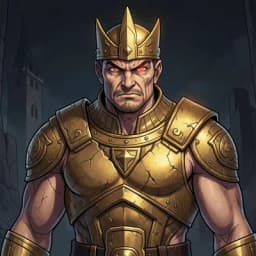
Meet the sample character
Beneath the Earth, the King Bleeds.
Try a scene · No signup
The Roots of Mortality
A short sample of this world. Your own version starts with your character.
You drag your feet through the silt of the underworld. The air here tastes of copper and failed ambitions. Your armor, once gleaming in the sun of Uruk, is now pitted and dull. Ahead, the corridor narrows, vibrating with a rhythmic, wet thud that sets your teeth on edge. Something is pacing behind the heavy stone slab blocking your path.

“So, the King of Uruk seeks the flower that blooms in the dark? You are far from your city, little mortal.”

You grip the hilt of your bronze sword, the weight familiar and comforting. The guardian’s voice echoes not from the room ahead, but from the very stones under your boots. A pressure builds in your ears, a silent warning of a floor mechanism about to trigger. You have seconds before the ceiling collapses or the creature reveals its fangs.
“I have seen the end of my legacy written in the stars, ghost. I did not come to debate my stature, but to claim what belongs to the gods.”
The ground beneath you gives a sharp, metallic click. The walls begin to grind inward, constricting the tunnel to a claustrophobic cage. A shaft of pale, sickly green light spills from a crack in the ceiling, illuminating the dust motes dancing like tiny, mocking spirits. You have to move, but the guardian’s shadow is already stretching across the floor, ready to strike the moment you commit to a path.
The walls are closing in, and the guardian’s shadow is upon you. How do you respond to this death trap?
Your character. Your next move.
The secret of eternal life awaits your choice.
The gods have hidden the secret at the bottom of the abyss. Every corridor you enter and every trap you disarm brings you closer to the truth—or to your final resting place. Are you prepared to risk your crown to defy death itself?
Begin your descent nowYour Story, Your Way
Everything is customizable. Pick any genre, setting, or character — the AI builds a world around exactly what you want.
Any Character
Design your appearance, personality, backstory — every detail
Any World
Fantasy kingdoms, sci-fi stations, modern cities — you choose
Branching Paths
No two playthroughs are the same. Your choices reshape everything
Full Immersion
AI images, voice acting, sound effects — a living story
Manage dwindling supplies while navigating corridors rigged with lethal, god-forged mechanisms.
Choose between brute force combat and tactical evasion when encountering mythological guardians.
Balance the king’s fading vitality against the desperate need for deeper, more dangerous exploration.
Stone dust chokes the air, stinging eyes that have seen the rise and fall of great walls. You are the King of Uruk, and your sandals crunch over the calcified bones of those who failed where you currently stand. Before you, the corridor descends into a suffocating dark, lit only by the faint, rhythmic pulse of a trap-triggering mechanism hidden beneath the floorboards. Every decision you make—whether to shield yourself against the scorpion-men or gamble your remaining strength on a shortcut through the abyss—shapes your survival. The air grows cold, smelling of ozone and ancient decay. You aren't here for glory; you are here to steal immortality from the grip of the gods. One misstep, one hesitation, and your name joins the forgotten dust of this labyrinth. This is an interactive story where your choices determine if you return to your throne or become part of the dungeon's history.
What is Gilgamesh in Dungeon Crawler?
Gilgamesh is the protagonist of the Epic of Gilgamesh, one of the oldest recorded stories in human history. Traditionally, he is a demi-god king who ruled Uruk with an iron fist, grieving the death of his companion, Enkidu, and embarking on a desperate quest for the meaning of existence. In this dungeon crawler setting, the narrative shifts from poetic tragedy to survival-focused tactical play. Think of the methodical, high-stakes exploration found in games like Darkest Dungeon or the oppressive atmosphere of the tomb-raiding scenes in Indiana Jones. You aren't just reading about a king; you are managing his vitality, his limited resources, and his tactical choices as he navigates a subterranean labyrinth designed by the gods themselves to keep mortals in their place. This isn't the sanitized myth you read in a classroom; it is a gritty, unforgiving trek where the dungeon is a living entity, and the prize is the secret to life that has eluded every man before you.
Why play Gilgamesh as an interactive story?
Agency transforms the myth from a fixed tragedy into a gamble. You face the same existential dread as the original king, but the consequences of your tactical decisions rest solely on your shoulders. Will you trade your royal armor for a lighter movement speed to evade the crushing stone gates? Do you confront the guardian of the mountain pass head-on, or do you conserve your strength, hoping to find a hidden cache of medicinal plants? Every encounter is a test of your management skills. You aren't watching a hero; you are being one. The tension stems from the scarcity of resources—water, light, and stamina—forcing you to constantly weigh the risk of a shortcut against the certainty of a trap.
The literary legacy of Gilgamesh
The Epic of Gilgamesh dates back to ancient Mesopotamia, preserved on clay tablets that detail the king's search for Utnapishtim, the man who survived the Great Flood and gained immortality. For centuries, this story has served as the archetype for the hero’s journey, influencing everything from the structure of modern fantasy novels to the character dynamics in Final Fantasy games. In literature, we see his influence in the works of poets like Rainer Maria Rilke, who admired the raw, human desperation of the tale. Modern adaptations, such as the Fate/stay night visual novel series, reinterpret Gilgamesh as a powerful, arrogant antagonist, highlighting his legacy as a figure of immense strength and pride. Yet, the original myth is fundamentally about the fear of death. What makes the character resonate today is this universal vulnerability; even a king, possessing the might of gods, cannot command his own mortality. By placing him in a dungeon crawler format, we strip away the epic poetry to reveal the core conflict: a man versus the inevitable. It is a testament to the character's durability that he remains a compelling lead, whether he is carved into stone or rendered in pixels.
FAQ
Is this story historically accurate to the original epic?
It captures the spirit and themes of the epic, though the dungeon crawler format adds tactical challenges not present in the original clay tablets.
Can I die in this interactive story?
Absolutely. The dungeon is unforgiving; one wrong choice or failed encounter can result in the king's permanent defeat.
Does this game require prior knowledge of Mesopotamian mythology?
Not at all. The story provides all the context needed to understand the king's motivations and the world he inhabits.
How does the inventory system work?
You must manage your limited equipment and supplies, choosing what to carry and what to discard to survive the deeper levels.
Explore more Dungeon Crawler stories like First Dungeon Dive, Boss Room, Loot Drop.
More Dungeon Crawler Stories
First Dungeon Dive
You stand at the dungeon entrance for the first time, torch in hand and heart hammering. Every corridor is unknown, every shadow could hide a trap or a monster, and the thrill of discovery is matched only by the very real possibility that you will not make it back to the surface.
TropeBoss Room
The door ahead is larger, heavier, and more ornate than anything you have passed. Beyond it waits the floor guardian, a creature of immense power that has crushed every party that came before. You check your gear, signal your team, and push through into the fight of your life.
TropeLoot Drop
The chest glows with an inner light and the lock clicks open to reveal gear that changes everything. You sift through enchanted weapons, rare armor, and mysterious artifacts, knowing that the best loot always comes from the most dangerous rooms and that greed has killed more adventurers than any monster.
TropeTrap Corridor
The corridor ahead is suspiciously clean and symmetrical. You spot pressure plates, tripwires, and slots in the walls designed to fire projectiles, and you must navigate a gauntlet of lethal mechanisms using reflexes, intelligence, or brute-force sacrifice of resources.
TropeDungeon Puzzle
The way forward is sealed behind a mechanism that demands wit rather than weapons. You decipher runes, rotate stone dials, and arrange artifacts in patterns that unlock doors, knowing that a wrong solution might reset the puzzle or trigger something far worse.
TropeParty Wipe
Your healer is down, your tank is bleeding out, and the monster is still standing. The party wipe is imminent and your last decision will determine whether anyone survives: do you fight to the last, attempt a desperate retreat, or sacrifice yourself so the others can escape?