
Dungeon Crawler · Interactive story
The Threshold of Ruin
Your torch flickers. The stone gate groans. Do you step forward or turn back?
Start as a guest. Choose your character before the story begins.
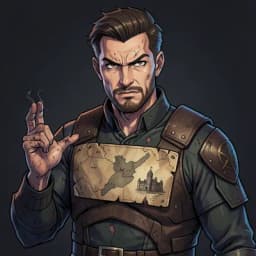
Meet the sample character
The cost of gold is written in blood.
Try a scene · No signup
Maw of the Sunken King
A short sample of this world. Your own version starts with your character.
The hillside entrance yawns like a jagged, broken throat. Cold air exhales from the darkness, carrying the scent of dry earth and old, copper-rich blood. Your boots crunch on loose shale, the final remnants of sunlight dying behind you as the stone archway looms. You tighten your grip on your rusted shortsword; the weight of the steel is the only thing keeping your pulse steady.

“The air down there is stagnant, Gunter. Nobody comes back from the first floor with more than a cracked skull.”

You ignore her, adjusting the leather strap of your pack. Your fingers graze the stolen parchment tucked against your ribs—the key to the king’s vault. The shadows inside seem to pulse, rhythmic and heavy, as if the mountain itself breathes. You check your oil lantern one last time; if the wick fails, you are blind in a tomb designed to kill.
“I didn't come for the scenery, Mina. If you're afraid of the dark, stay in the grass and wait for the wolves.”
The stone slab beneath your feet shudders, emitting a low, grinding groan that vibrates through your marrow. Dust falls from the ceiling of the archway, settling on your shoulders like snow. A faint, metallic clicking sounds from the staircase ahead—a pressure plate or a guardian stirring. You have seconds before the mechanism resets or the door seals permanently. The choice is yours.
The stone threshold begins to slide shut. How do you respond to the mechanical threat?
Your character. Your next move.
Steel your nerves and cross the threshold.
The sun is setting behind the ridge, and the shadows in the stone maw are lengthening. You have one chance to check your gear and secure your path. Will you enter with your sword drawn or your eyes peeled for hidden traps? The abyss is waiting for your move.
Descend into the darkYour Story, Your Way
Everything is customizable. Pick any genre, setting, or character — the AI builds a world around exactly what you want.
Any Character
Design your appearance, personality, backstory — every detail
Any World
Fantasy kingdoms, sci-fi stations, modern cities — you choose
Branching Paths
No two playthroughs are the same. Your choices reshape everything
Full Immersion
AI images, voice acting, sound effects — a living story
Survey the crumbling masonry for tripwires before crossing the threshold into the dark.
Decide whether to extinguish your light to ambush the waiting sentries near the gate.
Inventory your supplies to ensure you have enough rations for a deep-level crawl.
Choose your entry formation to protect your glass-cannon mage from early-game ambushes.
The scent of damp earth and ancient rot wafts from the gaping maw in the hillside. Moss clings to the crumbling stone archway, hiding runes that pulse with a faint, sickly light. You adjust your gear, the weight of your pack a comforting reminder of the steel and supplies you have brought for this descent. The sun feels distant, a fading memory as the shadows stretch long and hungry from the dark tunnel ahead. This is the point of no return. You decide how to approach the entry, whether to scout for traps or charge in with steel drawn. Every decision you make here ripples through the tunnels below, changing the loot you find and the monsters that hunt you. The dark does not care if you live or die, but your preparation might. You stand at the threshold of a forgotten tomb, and the silence is waiting for you to break it.
What is Dungeon Entrance in Dungeon Crawler?
The dungeon entrance serves as the boundary between safety and the unknown. In classics like Dark Souls or the original Wizardry, the entrance is not merely a transition point; it is a test of inventory management and resolve. It is the gatehouse where you decide if you have enough oil for your lantern or if your blades are sharp enough for the horrors waiting in the dark. In films like The Descent, the entrance is where the dread settles in, marking the shift from a physical journey to a claustrophobic fight for survival. It acts as a gatekeeper, demanding players acknowledge the risk before they forfeit the ability to retreat easily. Whether it is a jagged hole in a cliffside or a heavy, iron-bound gate, the entrance sets the tone for the entire crawl, forcing you to weigh your current strength against the potential for legendary rewards. It is the moment where the game stops being a theory and becomes a brutal reality.
Why play Dungeon Entrance as an interactive story?
Entering the dungeon is the first tactical decision you face. You are not just walking into a room; you are deciding your strategy. Do you check for pressure plates hidden beneath the threshold? Do you sacrifice a torch to light the path, or move in silence to avoid alerting the guards? Your choices at the gate influence your survival rate immediately. The agency here is visceral; if you trigger a collapse at the entrance, you might seal your own exit before you even find your first chest. You will decide how to handle the initial environmental hazards, determine your scouting formation, and manage your stress levels before the first encounter. The tension of the doorway is that you are always one poor decision away from a trap that could end your run before it begins.
What makes Dungeon Entrance work: the worldbuilding
The dungeon entrance serves as the narrative filter for the entire experience. It establishes the rules of the space—is this a tomb of the undead, an abandoned mining operation, or a wizard’s trapped laboratory? The most successful crawls, like those found in the Diablo series or Dungeon Master, use the entrance to establish the atmosphere of decay. Sensory details are crucial here: the metallic tang of blood, the sound of scurrying claws behind the masonry, or the absolute, suffocating silence of a place long forgotten. Conflict arises naturally from the mismatch between the player’s greed and the dungeon’s defenses. Characters who rely on brute force often find the entrance a wall of iron, while those who prioritize observation can bypass the initial traps. By focusing on the threshold, you create a sense of scale. The mines of Moria from The Lord of the Rings demonstrate this perfectly; the entrance is not just a door, it is a warning. The narrative tension is sustained by the knowledge that the world outside is gone, leaving you with only what you brought and your wits. A well-designed entrance forces you to choose between the safety of the known and the riches of the abyss.
FAQ
Can I turn back after entering?
Yes, but the dungeon is a living system. Leaving often means losing your progress or facing new, more difficult traps when you return to the entrance.
How do traps work at the entrance?
They are context-aware. If you rush in, you might trigger a collapse. If you inspect the masonry, you might uncover a secret lever or a hidden path.
What gear should I prioritize at the gate?
Always prioritize light sources and lockpicks. The entrance is where you discover if your preparation matches the mission's difficulty level.
Is every dungeon entrance the same?
No, the entrance reflects the theme. A necromancer’s lair feels cold and smells of ozone, while a goblin cave is cramped and reeks of refuse.
Explore more Dungeon Crawler stories like First Dungeon Dive, Boss Room, Loot Drop.
More Dungeon Crawler Stories
First Dungeon Dive
You stand at the dungeon entrance for the first time, torch in hand and heart hammering. Every corridor is unknown, every shadow could hide a trap or a monster, and the thrill of discovery is matched only by the very real possibility that you will not make it back to the surface.
TropeBoss Room
The door ahead is larger, heavier, and more ornate than anything you have passed. Beyond it waits the floor guardian, a creature of immense power that has crushed every party that came before. You check your gear, signal your team, and push through into the fight of your life.
TropeLoot Drop
The chest glows with an inner light and the lock clicks open to reveal gear that changes everything. You sift through enchanted weapons, rare armor, and mysterious artifacts, knowing that the best loot always comes from the most dangerous rooms and that greed has killed more adventurers than any monster.
TropeTrap Corridor
The corridor ahead is suspiciously clean and symmetrical. You spot pressure plates, tripwires, and slots in the walls designed to fire projectiles, and you must navigate a gauntlet of lethal mechanisms using reflexes, intelligence, or brute-force sacrifice of resources.
TropeDungeon Puzzle
The way forward is sealed behind a mechanism that demands wit rather than weapons. You decipher runes, rotate stone dials, and arrange artifacts in patterns that unlock doors, knowing that a wrong solution might reset the puzzle or trigger something far worse.
TropeParty Wipe
Your healer is down, your tank is bleeding out, and the monster is still standing. The party wipe is imminent and your last decision will determine whether anyone survives: do you fight to the last, attempt a desperate retreat, or sacrifice yourself so the others can escape?