
Dungeon Crawler · Interactive story
The Boss Chamber: Where Only One Leaves
The iron gate slams shut. Your blade trembles. The true test begins now.
Start as a guest. Choose your character before the story begins.

Meet the sample character
No gold is worth this much blood.
Try a scene · No signup
The Gilded Maw of Oros
A short sample of this world. Your own version starts with your character.
The heavy iron portcullis slams shut behind you with a finality that vibrates in your marrow. Dust cascades from the vaulted ceiling, coating your boots in fine grey ash. Before you stretches an expanse of cracked flagstones, each etched with faint, glowing runes that pulse in rhythmic decay. You adjust your grip on your shortsword, feeling the sweat slick on your palms as the air grows unnaturally cold.
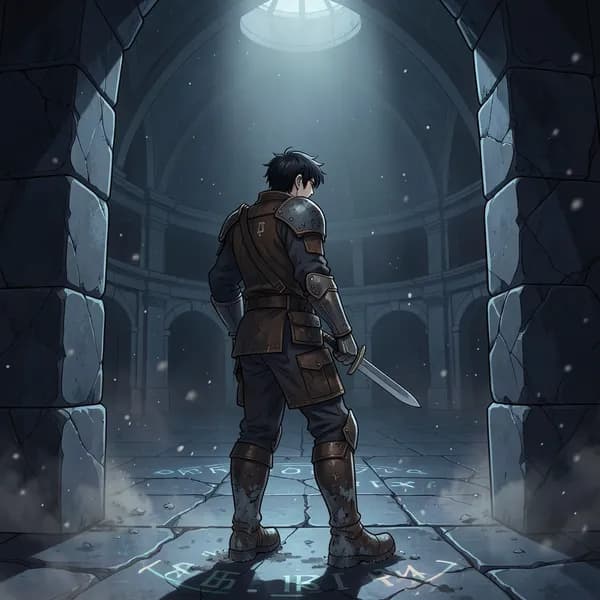
“Stay near the pillars, you fool! The center floor is a death trap rigged to drop you into the furnace below.”
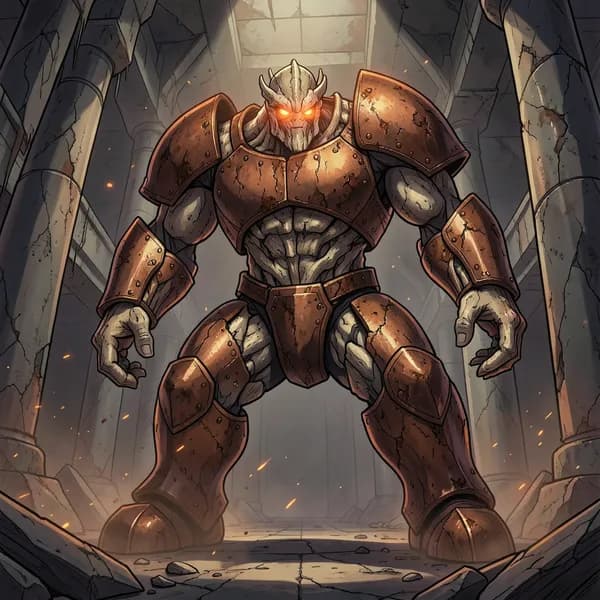
You ignore the warning, eyes fixed on the far end of the arena. A hulking mass of rusted bronze and fused, calcified bone pulls itself from the shadows. It is a construct of impossible scale, its eyes burning with a sickly, flicker-light orange glow. As it steps forward, the floor groans under its weight, and it raises a serrated greatblade that drips with the dried gore of previous intruders.
“If I can disable the power core, the floor traps won't matter. I'm going for the knee joint.”
The construct lets out a sound like grinding tectonic plates. It ignores your movement, instead tilting its head as if listening to a frequency you cannot hear. Its blade descends in a slow, calculated arc, aiming for the pillar you are currently using as cover. You have seconds before the stone is pulverized and you are pinned beneath the weight of three tons of ancient, enchanted misery.
The blade is inches from shattering your cover. How do you respond to the incoming strike?
Your character. Your next move.
The gate is locked. Are you ready?
The roar echoes, and the beast is closing in. Every choice you make in the arena will define your legacy. Will you find the weakness in its armor, or will you fall beneath its claws? Start your boss fight now.
Enter the Boss ChamberYour Story, Your Way
Everything is customizable. Pick any genre, setting, or character — the AI builds a world around exactly what you want.
Any Character
Design your appearance, personality, backstory — every detail
Any World
Fantasy kingdoms, sci-fi stations, modern cities — you choose
Branching Paths
No two playthroughs are the same. Your choices reshape everything
Full Immersion
AI images, voice acting, sound effects — a living story
Select specific combat stances to counter the boss's unique physical attacks and reach.
Scavenge the arena for environmental hazards to turn the tide against superior strength.
Manage dwindling stamina and health supplies during the heat of a multi-phase fight.
Choose between aggressive strikes or defensive positioning to bait the enemy into mistakes.
Dust cascades from the vaulted ceiling as the heavy stone portcullis drops, sealing the exit with a deafening boom. You stand in the center of a circular arena, the floor slick with moss and ancient debris. At the far end, a pair of glowing eyes snap open in the darkness, followed by a low, guttural vibration that rattles your teeth. Here, there are no corridors to retreat into and no corners to hide behind. Your next heartbeat is a tactical decision—will you rush forward to exploit a weakness, or hold your ground to study the creature’s movement? In this interactive story, your survival depends on identifying the rhythm of the combat before your stamina runs dry. Every choice you make dictates whether you walk out with the relic or become another skeleton decorating the arena floor.
What is a Boss Chamber in a Dungeon Crawler?
A boss chamber acts as the ultimate pressure cooker in a dungeon crawler. Unlike the winding, trap-filled corridors that precede it, the chamber is a contained space designed specifically for a climactic confrontation. It strips away the comfort of exploration and forces a singular, high-stakes focus on combat and pattern recognition. Think of the iconic Ornstein and Smough encounter in the original Dark Souls or the colossal arena battles in Shadow of the Colossus; these spaces are architectural extensions of the threat itself. The environment often contains hazards, such as crumbling pillars, shifting terrain, or environmental triggers that require precise timing to activate. In a boss arena AI game, the chamber serves as the final barrier between the protagonist and their objective. It is an area where the stakes are absolute, the pacing is frantic, and the narrative consequences of failure are permanent. Players must leverage their equipment, environmental surroundings, and personal skill to survive the encounter, making the room itself as much an adversary as the beast waiting within.
Why play a Boss Chamber as an interactive story?
Playing through a boss chamber as an interactive story transforms the combat from a simple stat check into a tense, calculated puzzle. Agency is your most valuable resource; you decide how to manage your remaining resources while the creature stalks the arena. Will you sacrifice your shield to deliver a final, desperate strike, or prioritize evasion to learn the boss's attack patterns? The tension arises from the weight of your decisions. A split-second choice to roll left instead of right can be the difference between victory and a swift end. You encounter moments that test your nerves: the boss charges, the floor begins to crack, and you must choose whether to stand your ground or risk a risky maneuver to reach a piece of cover. This format highlights the brutality of a dungeon crawl, forcing you to think like a survivor rather than just a combatant. Every action carries the threat of consequence, making every successful hit feel earned and every narrow escape feel like a triumph.
What makes a Boss Chamber work: the worldbuilding
The effectiveness of a boss chamber relies on its ability to communicate a sense of dread before the fight even begins. It acts as a narrative climax, a place where the history of the dungeon converges into a single, lethal point. Effective arenas utilize verticality and environmental storytelling to ground the battle. When a player enters, the layout should tell a story: broken weapons from previous challengers, scorched walls, or ancient carvings that hint at the creature's origin. These details provide necessary context that informs the player’s strategy. In games like God of War or Elden Ring, the arena is never just a flat surface; it is a dynamic participant in the fight. The architecture should challenge the player’s movement and force them to adapt. A well-designed chamber creates a specific sensory atmosphere—the smell of sulfur, the sound of rhythmic breathing, or the sight of shifting shadows. These details build anticipation and focus the player's attention on the imminent threat. The conflict is simple—survive or die—but the execution requires a deep understanding of pacing. By controlling the environment, the narrator forces the player to constantly reassess their situation, ensuring that the tension never dissipates until the final blow is struck.
FAQ
How does the boss arena change my survival odds?
The arena limits your movement, preventing retreat. Your survival depends on using the specific layout of the room, such as pillars for cover or traps to damage the boss, rather than just relying on raw combat stats.
Can I use the environment to defeat a stronger boss?
Yes. Interactive stories in this setting often allow you to trigger environmental hazards. Searching the room for levers, loose debris, or structural weaknesses can provide a critical advantage against a boss that is otherwise too powerful to defeat head-on.
What happens if I make a wrong choice during the fight?
In this genre, a single wrong choice can lead to immediate failure. The story will reflect the consequences of your tactical errors, which may result in a loss of gear, severe injury, or the end of your character’s run.
Is this experience suitable for someone new to dungeon crawlers?
It is a challenging entry point. The focus on tactical decision-making makes it a great way to learn the mechanics of high-stakes combat, provided you are willing to learn from your mistakes and adapt your strategy.
Explore more Dungeon Crawler stories like First Dungeon Dive, Boss Room, Loot Drop.
More Dungeon Crawler Stories
First Dungeon Dive
You stand at the dungeon entrance for the first time, torch in hand and heart hammering. Every corridor is unknown, every shadow could hide a trap or a monster, and the thrill of discovery is matched only by the very real possibility that you will not make it back to the surface.
TropeBoss Room
The door ahead is larger, heavier, and more ornate than anything you have passed. Beyond it waits the floor guardian, a creature of immense power that has crushed every party that came before. You check your gear, signal your team, and push through into the fight of your life.
TropeLoot Drop
The chest glows with an inner light and the lock clicks open to reveal gear that changes everything. You sift through enchanted weapons, rare armor, and mysterious artifacts, knowing that the best loot always comes from the most dangerous rooms and that greed has killed more adventurers than any monster.
TropeTrap Corridor
The corridor ahead is suspiciously clean and symmetrical. You spot pressure plates, tripwires, and slots in the walls designed to fire projectiles, and you must navigate a gauntlet of lethal mechanisms using reflexes, intelligence, or brute-force sacrifice of resources.
TropeDungeon Puzzle
The way forward is sealed behind a mechanism that demands wit rather than weapons. You decipher runes, rotate stone dials, and arrange artifacts in patterns that unlock doors, knowing that a wrong solution might reset the puzzle or trigger something far worse.
TropeParty Wipe
Your healer is down, your tank is bleeding out, and the monster is still standing. The party wipe is imminent and your last decision will determine whether anyone survives: do you fight to the last, attempt a desperate retreat, or sacrifice yourself so the others can escape?