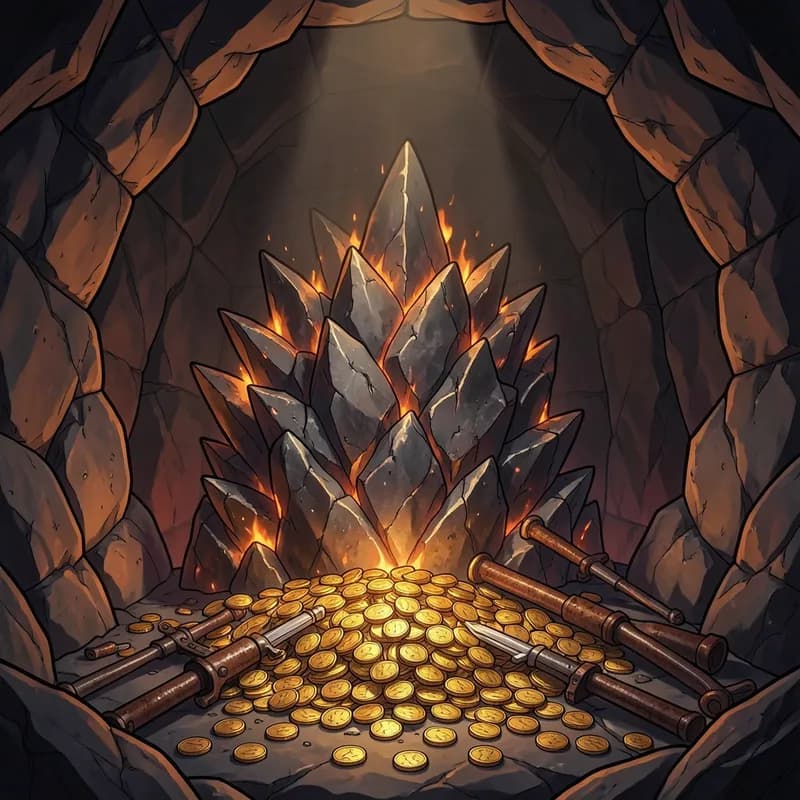
Dragon Fiction · Interactive story
Shadows in the Gold
One coin missing from the pile is enough to wake the mountain.
Start as a guest. Choose your character before the story begins.

Meet the sample character
Some treasures demand a price paid in blood, not gold.
Try a scene · No signup
The Weight of Gilded Scales
A short sample of this world. Your own version starts with your character.
You kneel on a mound of tarnished coins, the heat from the slumbering mass before you stinging your skin. The dragon’s scales are jagged obsidian, shifting like tectonic plates as it breathes. Each exhale releases a puff of sulfurous smoke that curls around the cavern vaults. Your pulse is a frantic drum against your ribs; you came for the Sun-Shard, and it sits just inches from the creature's massive, hooked claw.
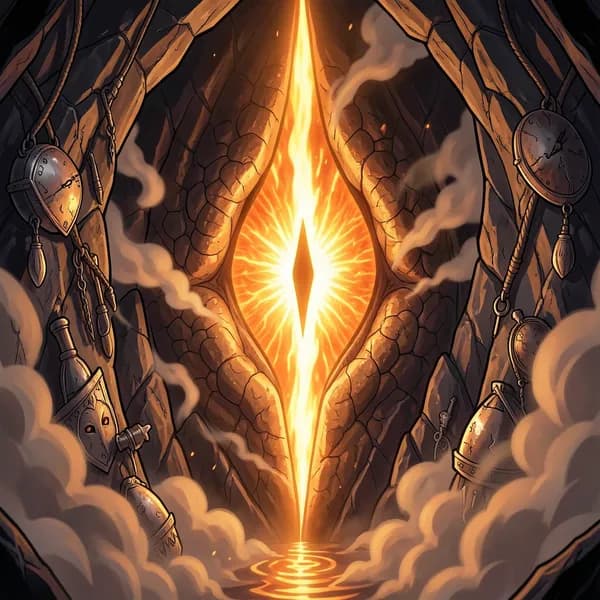
“The gold does not belong to you, little scavenger. Why do you covet the shine of dead kingdoms?”

The dragon’s eye snaps open—a molten slit of vertical amber that pins you to the floor. You freeze, your fingers hovering over the glowing crystal, the heat of it radiating through your reinforced leather glove. The air grows heavy, ionized by the static of incoming flame. You realize too late that the dragon was not sleeping; it was waiting for you to get close enough to ignite.
“I do not care for your gold, beast. I need the shard to mend what your fire destroyed in the lowlands.”
A low rumble begins in the dragon's chest, shaking the very foundation of the mountain. It tilts its head, considering your words, while a lick of flame illuminates the piles of silver and bronze behind you. You have one heartbeat to act before that heat transforms from a threat into a funeral pyre. The exit is narrow, but the dragon’s neck is poised to strike with lethal precision.
The dragon's jaw opens, revealing a glow that promises annihilation. How do you survive the next ten seconds?
Your character. Your next move.
Claim the Gold or Face the Flame
You are standing at the threshold of the deepest, darkest cavern in the kingdom. The dragon’s rhythmic breathing warns you that time is running out. Will you reach for the dragon’s crown, or will you listen for the telltale sound of shifting scales? Your choices define the outcome of this heist.
Enter the Dragon's LairYour Story, Your Way
Everything is customizable. Pick any genre, setting, or character — the AI builds a world around exactly what you want.
Any Character
Design your appearance, personality, backstory — every detail
Any World
Fantasy kingdoms, sci-fi stations, modern cities — you choose
Branching Paths
No two playthroughs are the same. Your choices reshape everything
Full Immersion
AI images, voice acting, sound effects — a living story
Decide whether to trade a stolen artifact for information or keep it for personal gain.
Navigate the dragon’s shifting wakefulness by choosing when to move and when to hold breath.
Attempt a high-stakes negotiation with a creature that views you as an insignificant, buzzing fly.
Manage your inventory weight, knowing that every stolen item slows your escape from the cavern.
The air in the cavern tastes of sulfur and cold, unspent gold. Your torchlight flickers against mountains of minted coins, rusted crowns, and relics from kingdoms long turned to ash. Above you, a massive, obsidian-scaled shape shifts, its breathing a rhythmic rumble that vibrates through the soles of your boots. Every step you take is a gamble against a creature that measures wealth by the heartbeat. Your next move decides whether you leave with a king’s ransom or become just another trinket in a collection that spans centuries. In this story, your choices determine which path you take.
What is Dragon Hoard in Dragon Fiction?
A dragon’s hoard is more than a pile of loot; it is a manifestation of the creature’s ego, memory, and territorial dominance. In folklore and modern fantasy, the hoard functions as a psychological anchor. When Smaug guards his mountain in J.R.R. Tolkien’s The Hobbit, the gold is not just currency—it is a physical representation of his pride and his claim over the Lonely Mountain. The dragon knows every item, every chalice, and every chipped coin. If you dare to touch it, you are not just stealing gold; you are violating a sacred, dangerous boundary. Other media, such as the Dungeons & Dragons tabletop modules, emphasize that the hoard is often trapped or cursed, reflecting the dragon's paranoia. The trope centers on the tension between the protagonist’s greed or necessity and the overwhelming, primal power of the guardian. Whether the dragon is a talkative, manipulative beast like Glaurung or a mindless, fire-breathing engine of destruction, the hoard acts as the ultimate test of wit, stealth, and sheer nerve for any would-be thief.
Why play Dragon Hoard as an interactive story?
Playing through a dragon hoard heist means balancing the weight of your pack against the speed of your escape. You are not just reading a description; you are deciding whether to greedily grab the enchanted crown or prioritize the safety of your companion. You will face moments where the dragon’s eyes snap open, forcing you to choose between freezing in place, attempting a desperate bribe, or drawing your blade to fight a creature ten times your size. The tension comes from the dragon’s intelligence. Will it toy with you, letting you think you have escaped with the loot only to track you down later? Or will you attempt to outsmart the beast by playing on its vanity? Every decision changes the dragon's behavior, turning the hoard from a static room into a shifting, reactive trap.
Famous examples of Dragon Hoard in books, film, and games
The dragon hoard trope has evolved significantly across different media. In J.R.R. Tolkien’s The Hobbit, the hoard is central to the narrative arc, forcing the protagonist, Bilbo, to confront his own courage and the seductive nature of wealth. Smaug’s obsession with his treasure creates a sense of dread that permeates the entire mountain. Conversely, in the film Dragonheart, the hoard is reimagined as a place of refuge and history, focusing less on the greed of the dragon and more on the tragedy of its existence. The dragon Draco keeps his treasure as a memory of a dying race rather than a pile of stolen loot. Meanwhile, in the Skyrim video game series, dragon lairs serve as environmental puzzles and combat arenas, where the hoard is the ultimate reward for surviving a boss fight, emphasizing the slayer aspect of the trope. What makes this trope endure is the primal conflict between humanity’s desire for security and the overwhelming power of the natural world. It forces characters to confront the value of their lives against the value of gold, a moral dilemma that never loses its bite.
FAQ
Can I negotiate with the dragon instead of fighting?
Yes. Many paths allow you to use diplomacy, deception, or even bribery to secure what you need without drawing steel. The dragon’s personality, however, will dictate how it reacts to your words.
Do the treasures I steal have actual gameplay effects?
They do. Certain artifacts might grant you special abilities or unlock unique dialogue choices later in the story, while others might simply make you a target for those who know the dragon’s secrets.
What happens if the dragon wakes up while I am in the hoard?
If you fail a stealth check or make too much noise, you are forced into an immediate, high-stakes encounter. You will have to decide whether to flee, fight, or attempt a final, desperate plea for your life.
Is every hoard guarded by the same kind of dragon?
No. Each story features dragons with unique traits. Some are ancient and cunning, preferring to trade in riddles, while others are feral and territorial, reacting to any intrusion with instant fire.
Explore more Dragon Fiction stories like Dragon Rider Bond, Dragon Egg Discovery, Dragon Shifter Romance.
More Dragon Fiction Stories
Dragon Rider Bond
A living thread of fire and thought connects you to your dragon. Feel every wingbeat, share every scar, and discover that this bond will demand more from you than any oath ever could.
TropeDragon Egg Discovery
You find an egg that pulses with inner heat and an unmistakable heartbeat. Protect it, hatch it, and raise a creature that will change the balance of power in your world forever.
TropeDragon Shifter Romance
They walk among mortals in human skin, but fire smolders behind their eyes. Navigate a passionate, dangerous romance with a being whose true form could level a city.
TropeDragon War
Armies of dragonriders darken the sky and the ground shakes with fire. Choose your side, command your mount, and turn the tide of a conflict that will reshape continents.
TropeLast Dragon
The final dragon draws breath in a world that hunted its kind to extinction. Decide whether to reveal it, protect it, or let its flame die — and face the consequences of a world without dragons.
TropeDragon Taming
A wild dragon answers to no one, and earning its trust could cost you everything. Approach with patience, courage, and respect — or risk being reduced to ash in the attempt.