
Dark Fantasy · Interactive story
Hunger at the Golden Hall: Become the Shadow
The mead hall is loud with laughter, but you bring the silence of the swamp.
Start as a guest. Choose your character before the story begins.
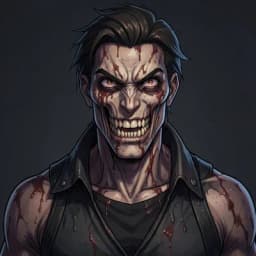
Meet the sample character
The song of iron and bone
Try a scene · No signup
Shadows Within the Mead-Hall Rafters
A short sample of this world. Your own version starts with your character.
You press your palm against the heavy timber of Heorot’s wall, feeling the vibration of their laughter echoing through the grain. It is a nauseating frequency, a joyous rhythm that mocks the silent, freezing sludge of your home. You smell roasted boar and stale mead, scents that ignite a primal, itching hatred beneath your thickened hide.

“Drink deep, men of the North! The night is cold, but the fire of our brotherhood burns brighter than any shadow.”

The king's voice is a jagged blade in your ear. You shift your weight, your elongated claws sinking into the wood like needles into flesh. The iron nails holding the hall together groan under your grip. Every beat of their hearts is a drum calling for your intervention, a rhythm you are destined to silence.
“Brotherhood is a fragile lie built on the bones of the beasts you call monsters.”
You heave, the oak beams screaming as you rip a gap between the planks. A sliver of golden light bleeds onto your face, revealing the terror-struck eyes of a drunken guard. He drops his horn, his face draining of color as he recognizes the shape of the nightmare he thought was merely a campfire tale.
The guard reaches for his spear, his hand trembling as the light catches your jagged silhouette. How do you silence his scream?
Your character. Your next move.
Claim your territory in the golden hall.
The warriors are feasting, unaware that the shadow at the door is yours to control. Will you be the terror that ends their reign, or will you find a different path through the marshes? Your hunger is the only law that matters now. Step into the darkness of the mere and write your own version of the epic.
Begin your hunt nowYour Story, Your Way
Everything is customizable. Pick any genre, setting, or character — the AI builds a world around exactly what you want.
Any Character
Design your appearance, personality, backstory — every detail
Any World
Fantasy kingdoms, sci-fi stations, modern cities — you choose
Branching Paths
No two playthroughs are the same. Your choices reshape everything
Full Immersion
AI images, voice acting, sound effects — a living story
Stalk the halls of Heorot using stealth to pick off guards one by one.
Choose between displays of raw brutality or psychological warfare to break human spirits.
Interact with Hrothgar's court to exploit political weaknesses and sow deep-seated paranoia.
Manage your hunger and rage levels to unlock unique, devastating combat abilities.
The scent of roasted meat and spilled ale drifts across the marsh, a taunting perfume that burns your nostrils. You crouch in the tall, biting reeds, your claws sinking into the mud as the golden light of Heorot flickers in the distance. King Hrothgar’s men boast of their strength, their voices echoing off the timber walls, unaware that the darkness has eyes. You are the outcast, the exile, the creature born of ancient, forgotten bloodlines. Hunger gnaws at your gut, a sharp, physical pain that demands blood for payment. Every choice you make from this moment—whether to stalk the perimeter, strike with sudden violence, or whisper madness into their dreams—will determine if you remain a myth or become the end of their era. This is a story where your decisions write the history of the mere. The iron-clad warriors expect a beast, but they have no idea what level of cunning waits outside their gates.
What is Grendel in Dark Fantasy?
Grendel is the original monster of English literature, first appearing in the anonymous Old English epic poem, Beowulf. In the poem, he is a descendant of Cain, a creature cursed by God and driven by an insatiable, envious rage against the joy found in the human hall of Heorot. He is not merely a mindless brute; he is a sentient, lonely, and deeply bitter character who embodies the horror of the unknown. In dark fantasy, Grendel serves as the archetype for the 'misunderstood monster' or the 'existential antagonist.' Authors like John Gardner famously humanized him in the 1971 novel Grendel, which explores the beast's nihilistic philosophy and his complex relationship with the humans he terrorizes. Modern adaptations, such as the 2007 Robert Zemeckis film, continue to play with the idea that the 'hero' and the 'monster' are two sides of the same coin. By placing Grendel at the center of the narrative, players move away from the traditional hero's journey and instead explore the darkness of a creature who has been pushed to the fringes of society. It is a genre that favors the perspective of the predator, asking what happens when the monster has a voice, a history, and a very specific, bloody objective.
Why play Grendel as an interactive story?
Playing as Grendel shifts the power dynamic of the Beowulf myth entirely. Instead of fighting against an unstoppable force, you are that force. The tension comes from your agency: do you terrorize the men slowly to break their morale, or do you strike with overwhelming speed before the warriors can reach for their swords? You will face decisions that test your monstrous resolve. Will you spare a scout to spread fear through the kingdom, or leave no witnesses to your encroachment? Perhaps you choose to manipulate the political instability of Hrothgar's court, using the terror you inspire to destabilize the king’s rule from within. The game tracks your reputation among the humans—are you a ghost story told to frighten children, or a physical reality that forces the kingdom to its knees? Every interaction with the environment, from the iron gates of the hall to the cold waters of your swamp, provides new tactical opportunities. You are not just a static villain in a fixed script; you are a dynamic presence capable of changing the trajectory of the entire epic.
The literary legacy of Grendel
The figure of Grendel has fascinated writers for over a thousand years. Originating as a nameless 'fiend out of hell' in the Beowulf manuscript, he represented the literal and figurative darkness that threatened the early medieval Germanic social order. He was the antithesis of the comitatus—the bond of loyalty between a lord and his warriors. Without Grendel, Beowulf has no challenge; the monster is the crucible in which the hero is forged. The evolution of Grendel from a mindless beast to a philosophical character reached its peak in John Gardner's 1971 work, which gave the monster his own voice and an existential crisis that mirrors the human condition. Gardner’s Grendel is a poet of the void, observing the humans with a mixture of hatred and fascination, which transformed the character from a simple antagonist into a complex tragic figure. Other reinterpretations, such as the graphic novel adaptations or the various film versions, often lean into the 'monster as a victim of fate' narrative. This character works today because he represents the ultimate outsider. In a modern context, Grendel speaks to the feeling of being alienated from society, of watching others find joy and security while you are left in the cold. Whether he is a literal monster or a metaphor for societal collapse, he remains one of the most potent symbols in literature. By putting the player in his skin, the narrative forces a confrontation with the nature of evil and the thin line between being a protector and a predator.
FAQ
What makes playing as Grendel different from traditional Beowulf stories?
Traditional adaptations focus on the hero's triumph over the monster. By playing as Grendel, you control the monster's motivations and methods. You are not trying to save the world; you are trying to survive, claim your territory, or exact revenge. This changes the game from a test of valor to a test of survival, cunning, and dark ambition.
Can I choose not to kill the warriors in the hall?
Yes. While violence is a core part of the character, you have the agency to choose your approach. You might decide to focus on psychological terror, sabotage, or evasion. Your choices influence how the human kingdom reacts to your presence and can lead to vastly different story outcomes.
Does this story follow the original Beowulf poem exactly?
The story uses the setting and key characters of the original poem as a foundation, but it is a reimagining. Your actions can deviate from the source material, allowing you to rewrite history and potentially change the fate of Heorot and its inhabitants entirely.
Is this game suitable for those who love dark fantasy?
If you enjoy morally gray narratives, high-stakes decision-making, and atmospheric, brutal settings, this is designed for you. The focus is on the gritty, visceral nature of the dark ages and the internal world of a creature existing on the margins of humanity.
Explore more Dark Fantasy stories like Grimdark Quest, Morally Gray Hero, Blood Magic.
More Dark Fantasy Stories
Grimdark Quest
There are no shining heroes here — only survivors. You embark on a brutal quest where every victory costs something precious and the line between savior and monster blurs with each bloody mile.
TropeMorally Gray Hero
You do terrible things for complicated reasons, and the world refuses to sort neatly into good and evil. Every choice stains your hands a little darker, but someone has to make the hard calls.
TropeBlood Magic
Power flows through veins, and the strongest spells demand the highest price. You wield a forbidden art that grows more potent with every sacrifice — but the magic is hungry, and it's starting to feed on you.
TropeFallen Kingdom
The kingdom that once stood as a beacon of civilization lies in ashes, its people scattered and its throne cursed. You walk its ruins seeking something worth salvaging from the wreckage of an empire.
TropeDark Prophecy
The seers spoke of an age of ruin, and every omen points to you as its catalyst. You can try to defy the prophecy, embrace it, or twist its words — but fate has teeth and it knows your name.
TropeMonster Pact
Desperation drove you to bargain with something ancient and terrible. The power it grants is immense but the terms of the contract grow more horrifying as you read the fine print written in your own blood.