Dark Fantasy · Interactive story
Blood, Steel, and the Assassin's Guild
Your blade is sharp, but your conscience is the real liability in this underworld.
Start as a guest. Choose your character before the story begins.

Meet the sample character
Mercy is a liability the guild cannot afford.
Try a scene · No signup
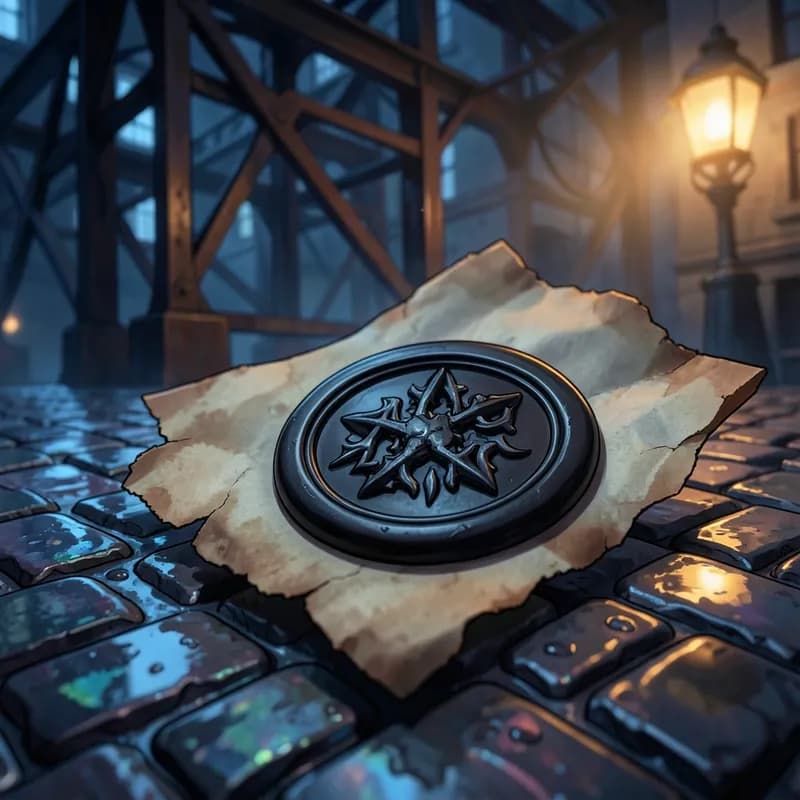
The Weight of Black Wax
A short sample of this world. Your own version starts with your character.
The rain turns the soot on your cloak into a thick, black paste. You stand on the rusted fire escape of the guild’s sanctum, the hem of your mask damp against your chin. Between your gloved fingers, the letter vibrates with the weight of the guild’s black wax seal—a mark that signals a death sentence for your target, and potentially, for you if you hesitate.

“Break the wax, Joran. The client doesn't care for sentiment, and neither does the blade.”

You snap the seal. The parchment is heavy, vellum cured in salt. Your eyes scan the ink—a name, a location, and a familiar crest. The target is not some corrupt merchant or a rival noble; it is your younger brother, long presumed dead, now rising through the ranks of the very Inquisition the guild is paid to dismantle.
“If I kill him, I sever the last tie to the man I used to be. If I refuse, the guild will ensure I never leave this district alive.”
Vespera’s hand rests on the hilt of her dagger, her eyes tracking your pulse point at your throat. She knows. You have seconds to commit to the contract or declare your betrayal in the most final way possible. The rain intensifies, drumming against the iron grating, drowning out the heartbeat thrumming in your ears.
How do you respond to the order to execute your kin?
Your character. Your next move.
The contract is signed. Will you fulfill it?
The ink is drying on your latest order, and the target is waiting in the shadows. Every choice you make from this moment forward defines your legacy within the guild—or your death warrant. Do you have the resolve to see the mission through, or will you challenge the masters who own your life?
Accept the ContractYour Story, Your Way
Everything is customizable. Pick any genre, setting, or character — the AI builds a world around exactly what you want.
Any Character
Design your appearance, personality, backstory — every detail
Any World
Fantasy kingdoms, sci-fi stations, modern cities — you choose
Branching Paths
No two playthroughs are the same. Your choices reshape everything
Full Immersion
AI images, voice acting, sound effects — a living story
Choose your weapon and approach, from silent poisons to public, messy executions.
Navigate complex guild politics where betraying your mentor might be the only way to survive.
Decide whether to uphold the brotherhood's code or risk everything by defying a contract.
Rain slicks the cobblestones of Oakhaven, reflecting the dim glow of lanterns as you wait for the target. Your fingers trace the cold iron of a dagger, a familiar weight that has become an extension of your own arm. The guild’s mark—a jagged obsidian shard—is etched into your forearm, a permanent reminder that your life belongs to the brotherhood. Tonight’s contract is different; the target is not a corrupt merchant or a rival nobleman, but someone who knows your true name. You weigh the consequences of defying the order, knowing that the shadows themselves are watching for any sign of hesitation. In this interactive story, your decisions determine whether you remain a loyal instrument of death or carve a path through the guild’s ranks. Silence is your best friend, but in this city, even the walls have ears.
What is Assassin's Guild in Dark Fantasy?
An Assassin’s Guild serves as the ultimate engine for conflict in dark fantasy. It is an organization built on cold efficiency, internal hierarchy, and the brutal necessity of violence. Unlike the lone wolf archetype, a guild introduces a web of politics, quotas, and strict codes of conduct. You are never just a killer; you are a cog in a machine that demands blood to keep turning. In the world of The Witcher, the School of the Viper functions as a grim iteration of this, where mercenaries are trained to be emotionless tools for those with enough gold. The guild provides a backdrop of institutionalized cruelty, where loyalty is bought with coin and enforced with a blade to the throat. It forces the protagonist to ask difficult questions about the value of a life and the cost of survival. When the guild acts as both employer and jailer, the narrative tension shifts from simple combat to the claustrophobic struggle of trying to hold onto one's humanity while surrounded by those who have long since traded theirs for power. It is a setting that thrives on the friction between duty and moral decay.
Why play Assassin's Guild as an interactive story?
Playing through an assassin's guild narrative places the weight of the kill directly on your shoulders. You aren't just reading about a contract; you are calculating the entry points, analyzing the target’s habits, and choosing the precise moment to strike. The agency here is visceral. Do you poison the wine, knowing the target’s young daughter might accidentally drink it? Do you frame a political rival to climb the guild's hierarchy, or do you sabotage your own mission to protect an innocent? The tension comes from the fact that every action has a ripple effect. If you spare a life, the guild will notice. If you follow orders to the letter, you lose a piece of your soul. You will face moments where the correct choice is a matter of perspective, and the consequences range from losing your status to becoming the next target of the guild’s executioners.
Famous examples of Assassin's Guild in books, film, and games
The Assassin’s Guild is a staple of dark fantasy because it creates an immediate, high-stakes environment where morality is secondary to the mission. In The Assassin’s Apprentice by Robin Hobb, the training of FitzChivalry Farseer highlights the psychological toll of being a state-sanctioned killer, showing that the real burden is not the blade, but the isolation. Contrast this with the Dishonored video game series, where the protagonist is framed and forced to operate outside the law, turning the guild’s own tactics against them. In Akame ga Kill!, the Night Raid group operates as a rogue assassin guild with a cause, illustrating how even those who kill for a purpose must grapple with the blood on their hands. These stories endure because they explore the concept of the necessary evil. They force the audience to identify with characters who are inherently flawed, making the reader question if they would behave differently if their life depended on the next strike. The guild acts as a mirror, reflecting the corruption of the society that requires its services, proving that the true villain is often the one who pays the gold, not the one who draws the steel.
FAQ
Can I choose to leave the guild in this story?
Yes, but desertion is a capital offense. The guild has eyes everywhere, and leaving requires navigating a web of betrayal and high-stakes survival.
Is the combat in this story turn-based or descriptive?
The narrative focuses on the tension of the moment. You make strategic choices about your approach, and the outcome is determined by your preparation and resolve.
What happens if I fail a contract?
Failure is not the end, but it changes the world state. The guild may send an enforcer to deal with you, or you may find yourself hunted by the very targets you failed to eliminate.
Does the story focus more on stealth or action?
You decide. You can play as a phantom who leaves no trace or a ruthless blade who makes every kill a statement.
Explore more Dark Fantasy stories like Grimdark Quest, Morally Gray Hero, Blood Magic.
More Dark Fantasy Stories
Grimdark Quest
There are no shining heroes here — only survivors. You embark on a brutal quest where every victory costs something precious and the line between savior and monster blurs with each bloody mile.
TropeMorally Gray Hero
You do terrible things for complicated reasons, and the world refuses to sort neatly into good and evil. Every choice stains your hands a little darker, but someone has to make the hard calls.
TropeBlood Magic
Power flows through veins, and the strongest spells demand the highest price. You wield a forbidden art that grows more potent with every sacrifice — but the magic is hungry, and it's starting to feed on you.
TropeFallen Kingdom
The kingdom that once stood as a beacon of civilization lies in ashes, its people scattered and its throne cursed. You walk its ruins seeking something worth salvaging from the wreckage of an empire.
TropeDark Prophecy
The seers spoke of an age of ruin, and every omen points to you as its catalyst. You can try to defy the prophecy, embrace it, or twist its words — but fate has teeth and it knows your name.
TropeMonster Pact
Desperation drove you to bargain with something ancient and terrible. The power it grants is immense but the terms of the contract grow more horrifying as you read the fine print written in your own blood.