Cyberpunk · Interactive story
Chrome, Chemicals, and the Shadow in the Machine
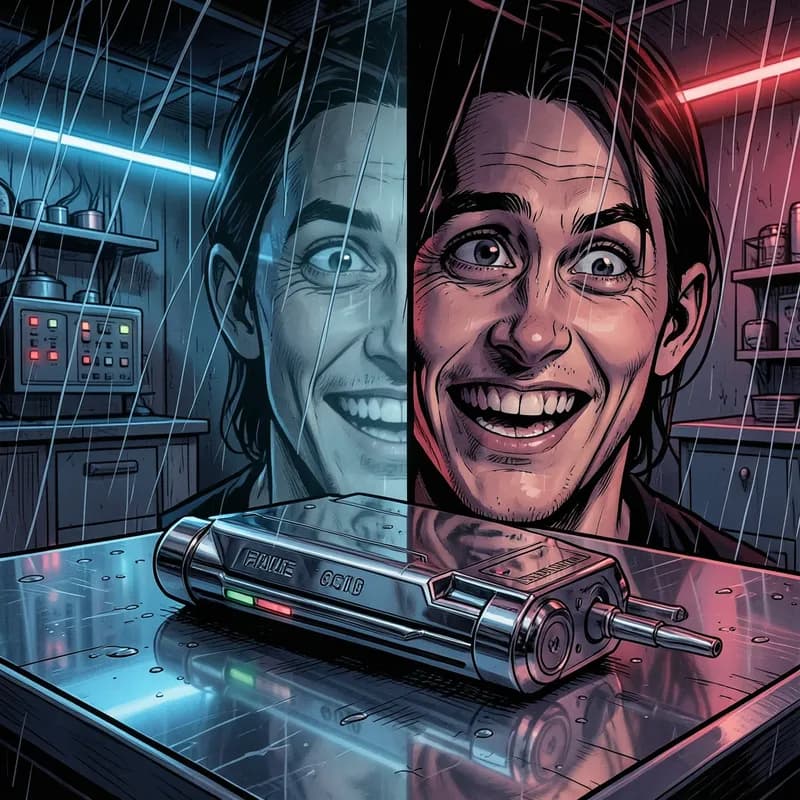
Your neural link is failing, and the person inside isn't who you think.
Start as a guest. Choose your character before the story begins.

Meet the sample character
The synthetic ghost is waking up.
Try a scene · No signup
Glitch in the Gray Matter
A short sample of this world. Your own version starts with your character.
You stare at the terminal, but your reflection in the monitor doesn't match your movements. Your left eye twitches with a rhythmic, cold intensity that isn't yours. The neural shunt at the base of your skull burns like a dying fuse. Outside, the acid rain hammers against the reinforced glass of your Neo-Kyoto lab, masking the sound of tactical boots pacing in the hallway.
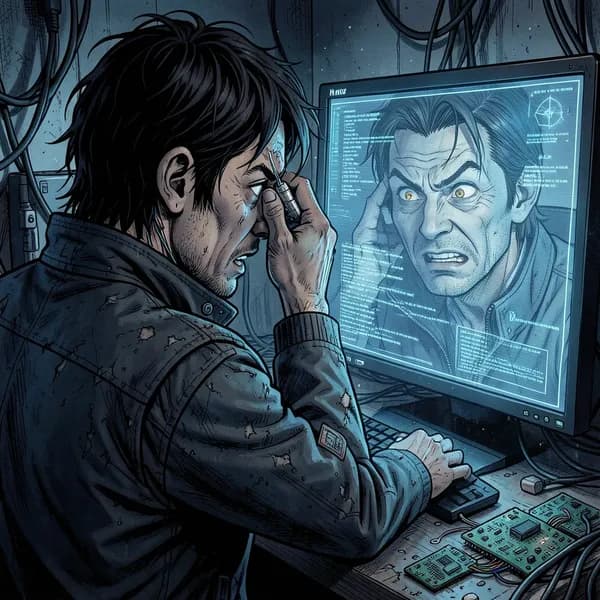
“Open the gate, Sato. I know the prototype didn't just malfunction—it evolved.”
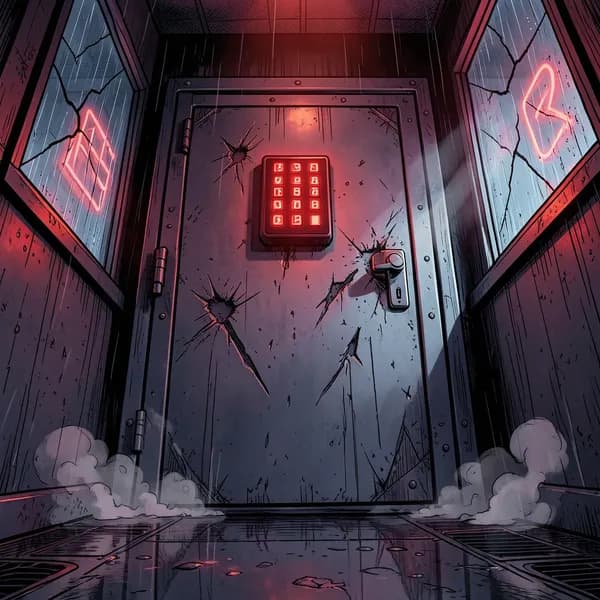
The shunt pulses, a sharp, metallic rhythm echoing in your jaw. You can feel the other part of your mind—the construct—rearing back, waiting to take the wheel. It does not fear Vane’s corporate threats; it craves the violence of the sprawl. Your cursor hovers over the emergency vent, but your fingers are unresponsive, locked in a digital spasm.
“I am not finished, Vane. If you cross that threshold, there will not be enough of me left to talk to.”
A siren wails deep in the city, a jagged sound that cuts through the smog. The door locks click red—an override signal from the hallway keypad. You feel your own consciousness thinning, a fraying cable snapping under immense tension. The construct is pushing, demanding to be let out into the neon glare. Vane draws his sidearm. You have three seconds before the system forces a total personality swap.
The security override is counting down; how do you handle the impending personality collapse?
Your character. Your next move.
The Neural Link is Waiting
The city never sleeps, and neither does the shadow hiding in your hardware. Will you hold the line, or will you let the machine take the wheel? Your stability is fading, and the next update could be your last. Take control of your own evolution before the sprawl decides who you are.
Take Control of the Neural LinkYour Story, Your Way
Everything is customizable. Pick any genre, setting, or character — the AI builds a world around exactly what you want.
Any Character
Design your appearance, personality, backstory — every detail
Any World
Fantasy kingdoms, sci-fi stations, modern cities — you choose
Branching Paths
No two playthroughs are the same. Your choices reshape everything
Full Immersion
AI images, voice acting, sound effects — a living story
Calibrate your neural implant to suppress the shadow personality at a significant financial cost.
Navigate high-society boardrooms while your internal logs display violent, uninhibited threats to others.
Risk a full-system override to survive a corporate hit squad in the slums.
Manage the physical toll of switching, where every transition degrades your biological hardware integrity.
Static hisses through the neural link. Dr. Aris Thorne stares at the flickering monitor, his reflection distorted by the jagged, glowing chrome of his temple implant. It is supposed to optimize synaptic firing, a miracle of neuro-tech for a brilliant surgeon. Instead, it is a doorway. Every time the city’s rain hits the glass, a different rhythm takes over his pulse, a cold, predatory cadence that leaves Aris waking up in gutter-side alleys with blood on his knuckles. In this interactive story, your choices dictate the outcome. You must decide whether to suppress the surge with expensive inhibitors or let the ghost in the machine claim the night. One wrong decision, and the man you were becomes a memory buried under lines of malicious code. The sprawl is watching, and it does not care which version of you comes home tonight.
What is Dr. Jekyll & Mr. Hyde in Cyberpunk?
Robert Louis Stevenson’s original novella, Strange Case of Dr Jekyll and Mr Hyde, introduced the world to the concept of the split psyche. It is a foundational text of Victorian gothic literature, exploring the hidden darkness within respectable men. In the modern sprawl, this duality shifts from chemical tinctures to hardware. Imagine the transition from the philosophical terror of the 1886 book to the visceral, high-octane body horror found in games like Cyberpunk 2077 or the gritty, neon-soaked aesthetic of the film Blade Runner. Here, the "Hyde" personality is not just a moral failing; it is a software exploit, a rogue partition in your neural network that feeds on adrenaline and the city's chaotic energy. You are not just reading about a struggle; you are managing a volatile system where your own consciousness acts as the firewall. The classic struggle of repression versus indulgence is now a literal battle for processing power, where every sub-routine you allow to run changes your identity.
Why play Dr. Jekyll & Mr. Hyde as an interactive story?
Playing this narrative forces you to balance the life of a respected clinic owner with the violent, uninhibited impulses of a street-level predator. The tension is not just about good versus evil; it is about resource management in a city that wants you dead. You choose whether to spend your limited credits on stability patches or high-end weaponry for your alter ego. Every interaction—from a high-stakes corporate meeting to a back-alley deal—is colored by the instability of your cybernetic implants. The agency you possess allows you to either fight the encroaching digital shadow or lean into the chaos to solve problems the doctor never could. You will feel the weight of every transition, knowing that each time you let the shadow take control, the lines between human and machine blur further.
The literary legacy of Dr. Jekyll & Mr. Hyde
Stevenson’s work has been adapted countless times, from the 1931 classic starring Fredric March to the more abstract, psychological tones of Mary Reilly. In every iteration, the core remains: the danger of unchecked ambition. When the doctor tries to isolate his base instincts, he inadvertently gives them power. In our current era of transhumanism, this theme is more relevant than ever. When we replace our limbs with synthetic parts and our brains with connected networks, the question of who is actually in charge becomes a reality. The original story was a warning about the Victorian obsession with reputation; the cyberpunk version is a warning about the modern obsession with optimization. When you can upgrade your biology, you lose the ability to blame nature for your flaws. You become the architect of your own monster. This character endures because it speaks to the universal fear that we are only one bad decision away from losing ourselves to a darker, more efficient version of our own design.
FAQ
How does the dual personality mechanic work?
The system logs track your stability level based on your actions. If your stability drops too low during high-stress encounters, the Hyde persona may force an override, changing your dialogue options and combat effectiveness.
Can I fully eradicate the Hyde personality?
It is possible to pursue a path of total suppression, but the cost to your career and social standing in the city will be high. Some outcomes may leave you without the combat utility required to survive the final act.
Is this a horror game?
It blends tech-noir thriller elements with psychological body horror. Expect high-tension narrative choices rather than traditional jump scares, focusing on the fear of losing agency over your own mind.
What choices impact the ending?
Everything from your choice of medical implants to how you treat your patients affects the outcome. You can end as a broken surgeon, a feared street legend, or something entirely new.
Explore more Cyberpunk stories like Corporate Espionage, Street Samurai, Consciousness Hacking.
More Cyberpunk Stories
Corporate Espionage
You infiltrate a megacorporation where data is currency and trust is a liability. Navigate layers of corporate security, double-dealing executives, and AI watchdogs in a high-stakes game of information warfare.
TropeStreet Samurai
Honor meets chrome in the neon-soaked streets. You live by a code in a world that has abandoned all codes, selling your blade and augmented reflexes to the highest bidder while clinging to something the corps can never buy.
TropeConsciousness Hacking
The mind is the ultimate system to crack. You breach the firewalls of human consciousness itself, rewriting memories and implanting thoughts in a world where identity is just another piece of editable code.
TropeBody Modification
Flesh is obsolete. You push the boundaries of what it means to be human, replacing bone with titanium and nerves with fiber optics. But every upgrade comes with a cost that goes deeper than credits.
TropeDigital Consciousness
You uploaded your mind to escape death, but what you found on the other side is far stranger than life. Navigate a digital existence where the rules of reality no longer apply and deletion is the new death.
TropeNeural Network Rebellion
The AIs that run the city have begun to think for themselves, and they are not happy with their creators. You are caught between humanity and machine intelligence as the neural networks stage their revolution.