
Arabian Nights · Interactive story
The Desert Princess: A Throne of Sand and Steel
The palace walls are high, but your blade is sharper. What will you trade for freedom?
Start as a guest. Choose your character before the story begins.
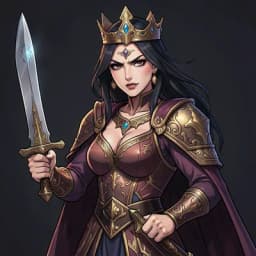
Meet the sample character
Before the throne, the blade speaks louder than the crown.
Try a scene · No signup
The Obsidian Dagger's Promise
A short sample of this world. Your own version starts with your character.
The air in the hanging garden tastes of crushed jasmine and impending rain. You stand near the edge of the stone terrace, your fingers brushing the cold steel of the dagger hidden within your silks. Below, the city of Zahar glows like scattered embers, but your focus remains on the man approaching with a heavy, measured step. His robes rustle against the tiles, a sound like dry husks shifting in the desert wind.

“The Sultan has already signed the betrothal contract, Zaynab. Your defiance is a flickering candle in a sandstorm; it will be snuffed out before the moon rises.”

You feel the weight of the signet ring pressed against your thigh, stolen from his desk under the cover of a sand-clouded afternoon. If he discovers its absence, your head will adorn the palace gates by dawn. The humidity thickens, turning the silk of your sleeves into a suffocating shroud. You look at the drop over the terrace wall—a long, jagged fall into the shadows of the lower market.
“Candles are easily relit, Vizier. Perhaps you should worry more about the wind that blows them out.”
His eyes narrow, the gold threading on his sleeve catching the dying sunlight. He reaches for his own blade, his expression twisting into a mask of cold fury. You have mere seconds before he lunges, and the heavy iron gate behind you is locked tight. Your pulse drums against your ribs, a frantic rhythm that demands an immediate, dangerous choice.
The Vizier draws his scimitar with a hiss of steel. How do you survive the next heartbeat?
Your character. Your next move.
Will you wear the crown or conquer the sands?
The vizier is watching, and the caravan leaves at dawn. Decide now: will you accept the marriage contract and secure your kingdom, or will you sharpen your blade and disappear into the night? Your choices determine if you become a footnote in history or the legend the nomads whisper about by the fire. The palace gates are waiting for your command.
Begin your desert storyYour Story, Your Way
Everything is customizable. Pick any genre, setting, or character — the AI builds a world around exactly what you want.
Any Character
Design your appearance, personality, backstory — every detail
Any World
Fantasy kingdoms, sci-fi stations, modern cities — you choose
Branching Paths
No two playthroughs are the same. Your choices reshape everything
Full Immersion
AI images, voice acting, sound effects — a living story
Master the art of courtly deception to misdirect your father’s royal guards during the night.
Choose between forging alliances with desert rebels or dismantling your enemies from within the palace.
Utilize your knowledge of ancient poetry to decode secret messages hidden in plain sight.
Decide if you will lead your people into a new era or protect the ancient traditions.
Saffron-scented air hangs heavy in the Sultan’s court, but your fingers trace the cool, unforgiving steel of a dagger hidden beneath your silk robes. Outside the gilded lattice windows, the dunes shift like restless spirits, calling to a lineage of nomads you were never meant to know. The vizier speaks of alliances and marriage contracts, his voice a drone of stagnant tradition, while you calculate the distance to the balcony and the weight of the guards stationed at the gate. This is a story where your next word could spark a rebellion or cement a dynasty. You are the princess the history books forgot to mention—the one who chose the open horizon over the velvet cage. Every decision you make carries the weight of a kingdom, forcing you to balance the grace of a royal diplomat with the lethal precision of a desert scout.
What is The Desert Princess in Arabian Nights?
The Desert Princess is an archetype that subverts the traditional damsel trope by placing a royal figure in a landscape that demands grit, wit, and tactical cunning. Unlike the static princesses of older folklore, this figure is defined by her dual existence: she belongs to the palace, yet her heart resides in the untamed wilderness. She is not waiting for a rescuer; she is the one plotting the escape or managing the palace coup from the inside. Think of characters like Princess Badroulbadour from the original Aladdin tales, who possesses a quiet resolve, or the modern reinterpretations of Jasmine, who refuses to be a prize to be won. This archetype thrives on the tension between duty and desire. It requires the character to navigate complex social hierarchies while possessing the physical or intellectual prowess to survive outside the palace walls. She represents the struggle for agency in a society that views her status as a commodity. Whether she is mastering the art of the bow or learning to read the shifting winds of political intrigue, the Desert Princess is defined by her refusal to be a silent ornament in a gilded cage.
Why play The Desert Princess as an interactive story?
Playing as the Desert Princess transforms the classic fable into a high-stakes game of survival and strategy. You are not simply watching a story unfold; you are managing the delicate balance of a royal life that is constantly threatening to collapse. You will face moments where a single diplomatic blunder could lead to an arranged marriage you despise, or where a daring escape attempt leaves you stranded in the shifting sands with nothing but your wits. The tension comes from the constant threat of discovery. Do you maintain your royal facade during the midnight banquet, or do you slip away to meet your contact in the marketplace? The choices you make ripple through the narrative, changing how the Sultan, the vizier, and the desert tribes perceive you. You might choose to use your education to outsmart an adversary, or rely on the sword training you kept secret from your tutors to fight your way out of a trap. Every decision creates a unique path, rewarding those who can balance the cunning of a courtier with the courage of a warrior.
The psychology of The Desert Princess: why readers fall for this character
The Desert Princess resonates because she embodies the universal desire for self-determination against overwhelming systemic pressure. We are drawn to her because she possesses everything—wealth, status, and luxury—yet lacks the one thing that matters: the freedom to choose her own path. This archetype functions as a mirror for our own struggles to define ourselves despite the expectations placed upon us by family, society, or history. Consider Xena, who moved from conqueror to defender, or the complex, defiant royalty found in modern fantasy adaptations. Each of these figures deals with the burden of expectation. The Desert Princess specifically adds a layer of cultural texture; the setting of the Arabian Nights provides a backdrop of magic, mystery, and danger that elevates the stakes. She is a character who understands that power is not just given; it is taken. When we play as her, we indulge in the fantasy of having the resources of a throne combined with the autonomy of an outlaw. We fear her potential failure—the loss of the life she knows—but we desire her ultimate success, which is the reclamation of her own identity. This is why the archetype remains timeless; it is a story about the transition from being a symbol of a kingdom to becoming the architect of your own destiny.
FAQ
What is the primary conflict for The Desert Princess?
The core struggle is the tension between duty and agency. You must decide whether to fulfill your role as a royal figurehead or sacrifice your status for personal freedom and the safety of your own path.
How does the desert setting influence the gameplay?
The setting acts as both a prison and a sanctuary. The palace offers protection but restricts your movement, while the desert offers freedom but demands survival skills. Your choices determine which environment you ultimately control.
Can I influence the political outcome of the kingdom?
Yes. Your decisions regarding trade, war, and alliances directly affect the stability of the Sultanate. You can choose to be a benevolent ruler, a revolutionary force, or a shadow power broker.
Is this character archetype focused more on combat or diplomacy?
It is a balance of both. Success requires you to switch between the cunning of a diplomat during court functions and the tactical prowess of a warrior when you are forced to protect yourself or your interests.
Explore more Arabian Nights stories like Djinn Wish, Flying Carpet Ride, Thief in the Palace.
More Arabian Nights Stories
Djinn Wish
A djinn offers you three wishes, and every word you speak matters. Craft your desires carefully, because djinn are ancient, literal, and take a certain pleasure in granting exactly what you asked for in the worst possible way.
TropeFlying Carpet Ride
The carpet lifts and the world falls away beneath you. Soar over moonlit deserts, glittering cities, and seas of sand as the wind carries you toward an adventure that can only be reached from the sky.
TropeThief in the Palace
Slip past guards, dodge enchanted traps, and navigate golden corridors as you steal from the most powerful ruler in the land. Every shadow could hide a guard, every treasure could be cursed, and the real prize might not be what you came to take.
TropeSultan's Challenge
The sultan sets an impossible task: solve the riddle, complete the quest, or face execution at dawn. Your wits are your only weapon as you navigate a challenge designed to humble the proudest and destroy the unprepared.
TropeDesert Caravan Adventure
Join a caravan crossing endless dunes where sandstorms hide djinn, oases appear and vanish, and every fellow traveler has a story more extraordinary than the last. The desert tests everything you are and reveals what you are made of.
TropeEnchanted Lamp
Rub the tarnished lamp and unleash a power that can build empires or destroy them. The lamp chooses its master, the djinn inside has its own agenda, and everyone in the kingdom will kill to possess what you now hold in your hands.