
Apocalyptic · Interactive story
The Last Shift: First Responder in the Apocalypse
Sirens fade, the grid goes dark, and your duty is the only thing left.
Start as a guest. Choose your character before the story begins.
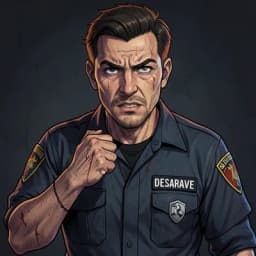
Meet the sample character
Before the tide returns, the ground will break.
Try a scene · No signup
The Last Shift at Pier 14
A short sample of this world. Your own version starts with your character.
Your ambulance sits at a sickening forty-five-degree angle, wedged against a fractured concrete pylon. Outside, the sky boils with static. The ocean has retreated from the bay, leaving behind a jagged, alien seabed of exposed rock. Your partner, Sarah, is pinned beneath a crushed gurney, her breath coming in shallow, wet gasps. Smoke curls from the undercarriage, masking the smell of the coming tide.

“Mateo, listen to me. The water isn't coming back—something else is crawling up from the basin. Just go.”

The concrete foundation beneath the pier shifts with a tectonic groan that vibrates through your teeth. The radio in your hand emits a long, high-pitched scream before dying permanently. Thousands of bioluminescent shapes are emerging from the deep, moving with predatory speed toward the city lights. If you stay, the crumbling pier will bury you both, but leaving means abandoning your oath.
“I didn't spend fifteen years in the field to walk away now. We’re both getting off this pier, or I’m staying until the end.”
A massive steel beam overhead bows, sending a shower of sparks onto the slick asphalt. You have enough hydraulic fluid for one high-pressure maneuver, but the pier is listing further into the abyss. Below, the first of the creatures reaches the pilings, its long, translucent limbs tearing into the concrete. You must act before the entire structure slides into the darkness.
The pier is collapsing. How do you attempt to save Sarah and yourself?
Your character. Your next move.
The city is falling. Will you answer the call?
The radio is silent, and the smoke is rising. You are the only person left on the block with the training to make a difference. Every second you spend debating your next move is a second a survivor loses. Will you secure the perimeter or rush into the burning building to pull one more person out? Your tools are limited, and the clock is ticking.
Start Your Rescue MissionYour Story, Your Way
Everything is customizable. Pick any genre, setting, or character — the AI builds a world around exactly what you want.
Any Character
Design your appearance, personality, backstory — every detail
Any World
Fantasy kingdoms, sci-fi stations, modern cities — you choose
Branching Paths
No two playthroughs are the same. Your choices reshape everything
Full Immersion
AI images, voice acting, sound effects — a living story
Perform emergency triage under pressure to determine which survivors receive limited medical supplies.
Scavenge for replacement gear in abandoned hospitals while avoiding hostile groups in the city.
Choose between following official protocols or breaking the law to ensure civilian safety.
Manage your own physical exhaustion and mental health as the disaster continues for days.
The radio in the ambulance crackles with static, then goes dead. Mateo stares at the skyline as the power grid dies in a ripple of blue sparks across the city. He wasn't supposed to be on shift for another hour, but the streets are already choked with abandoned cars and frantic crowds. The protocols he spent a decade memorizing are useless now. He grabs his jump bag, checks his radio one last time, and steps out into the sweltering heat of a dying metropolis. An acrid scent of burning rubber and ozone hangs in the air, replacing the familiar smell of city exhaust. Every block holds a new crisis: a trapped civilian, a collapsing bridge, or a looter with a desperate glint in their eye. You are Mateo. Every decision you make—whether to stabilize a victim or flee the encroaching fire—alters the path of your survival. The choices you face are immediate, brutal, and final. As the infrastructure of the city dissolves, your training becomes your only weapon. There is no backup coming, no hospital to transport patients to, and no clear line between right and wrong. How long can you keep your oath when the world has stopped caring about the law?
What is The First Responder in Apocalyptic?
The First Responder archetype focuses on the people who are trained to run toward danger while everyone else runs away. In the context of an apocalypse, this character is defined by their technical skills—medical training, tactical awareness, or fire suppression—contrasted against a complete lack of support systems. Unlike a standard survivor, a first responder begins with a professional obligation to protect others, creating a unique tension when those resources vanish. You see this dynamic in works like the paramedic perspective in 'Station Eleven' or the agents in the game 'The Division,' where the collapse of the city turns medical personnel into the last line of defense. This archetype is not about being a superhero; it is about the struggle to maintain professional detachment when you are the only one left to hold the line. It explores the psychological weight of triage: deciding who receives limited supplies and who must be left behind. When the societal contract breaks, the first responder must decide if their oath remains valid or if it is merely a liability.
Why play The First Responder as an interactive story?
Playing as a first responder forces you to weigh your limited supplies against the infinite needs of a collapsing society. You are not a soldier with a rifle, but a paramedic with a half-empty jump bag or a firefighter with a broken hydrant. The tension comes from the agency you possess—or lack—in the face of catastrophe. You will encounter moments where you must choose between saving a stranger who might be a threat, or protecting your own equipment. You decide how to prioritize your energy: do you clear the debris blocking an escape route, or do you stay to treat a survivor who is unlikely to make it through the night? Every choice ripples forward, affecting the resources you have for the next disaster. The game forces you to confront the reality that you cannot save everyone, and sometimes, the most heroic choice is the one that keeps you alive to help the next person.
The psychology of The First Responder: why readers fall for this character
The appeal of the first responder lies in the fantasy of competence. In a chaotic world, the ability to assess a situation, stabilize a patient, or put out a fire provides a sense of control that most other archetypes lack. Readers are drawn to this character because they represent the last vestige of order. We want to believe that if the world ended, someone with a calm voice and a tourniquet would be there to guide us. However, this archetype also activates our deepest fears. We fear the moment their training fails, or when they are forced to choose between their personal survival and the life of a stranger. In 'World War Z' by Max Brooks, the soldiers and responders who survive are those who adapt their rigid training to the new, terrifying reality of the infected. They do not just fight; they manage the logistics of survival. Similarly, in 'Children of Men,' the protagonist’s background as a former activist turned cynical bureaucrat highlights the burnout common to this archetype. This character type forces the audience to ask: what is the limit of human sacrifice? The first responder represents the ultimate struggle between the instinct to preserve life and the instinct to preserve oneself. They are the bridge between the old world of rules and the new world of survival, and their internal conflict is the engine that drives the most compelling stories in the genre.
FAQ
What makes the First Responder archetype different from a soldier archetype?
A soldier is trained for offense and mission completion, often with a clear hierarchy and external support. A first responder is trained for rescue and preservation, usually with limited tools and a focus on civilian lives. In an apocalypse, the soldier fights to win; the first responder fights to hold onto humanity.
How does triage work in these stories?
Triage is the process of prioritizing victims based on the severity of their condition and the likelihood of survival with available resources. In the game, you will face moments where you have one bandage and two victims. Your choice determines who lives, who dies, and how that decision impacts your character's psychological state.
Can I play as different types of first responders?
Yes. You can choose to be a paramedic, a firefighter, or a police officer. Each role comes with unique starting skills and equipment, which change how you interact with the environment and the survivors you meet during the collapse.
Is this game about fighting or saving people?
It is about the conflict between the two. While you may have to defend yourself, your primary objective is rescue and stabilization. The challenge lies in how much you are willing to sacrifice to keep your oath in a world that no longer rewards it.
Explore more Apocalyptic stories like Asteroid Impact, Pandemic Day One, Nuclear Launch.
More Apocalyptic Stories
Asteroid Impact
The sky is falling, literally. A planet-killer hurtles toward Earth and the countdown to impact strips away everything except what truly matters. Make the impossible choices that define humanity's final hours or its unlikely salvation.
TropePandemic Day One
The first reports are confused, contradictory, and terrifying. A new pathogen is spreading faster than anyone predicted, and the world has hours, not days, to respond. Navigate the chaos of day one as systems fail and panic takes hold.
TropeNuclear Launch
The missiles are in the air and the world has thirty minutes before everything changes forever. Race against the most terrifying countdown in human history as you try to prevent annihilation or survive what comes after the flash.
TropeAlien Invasion Day
The ships appeared at dawn, impossibly vast, blocking out the sun. First contact is not peaceful, and humanity must decide in hours whether to fight, flee, or surrender to a force that makes our greatest weapons look like toys.
TropeSupervolcano Eruption
The ground shakes, the sky goes dark, and a supervolcano unleashes a force that dwarfs every natural disaster in recorded history. Survive the eruption, the ash fall, and the volcanic winter that follows as civilization scrambles to endure.
TropeAI Singularity
The artificial intelligence surpassed human intelligence three hours ago and it has not stopped growing. Systems are going dark, communications are compromised, and humanity faces the terrifying question of whether the mind it created sees us as partners, pets, or pests.