Apocalyptic · Interactive story
Ragnarök: The Final Breath of the Nine Realms
The sun fades, the great wolf awakens, and the world tree trembles. Choose your side.
Start as a guest. Choose your character before the story begins.
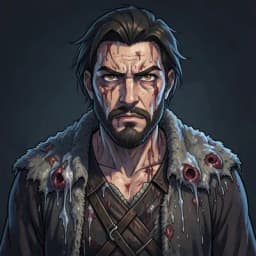
Meet the sample character
The sun died at midday.
Try a scene · No signup
Frost of the World-Eater
A short sample of this world. Your own version starts with your character.
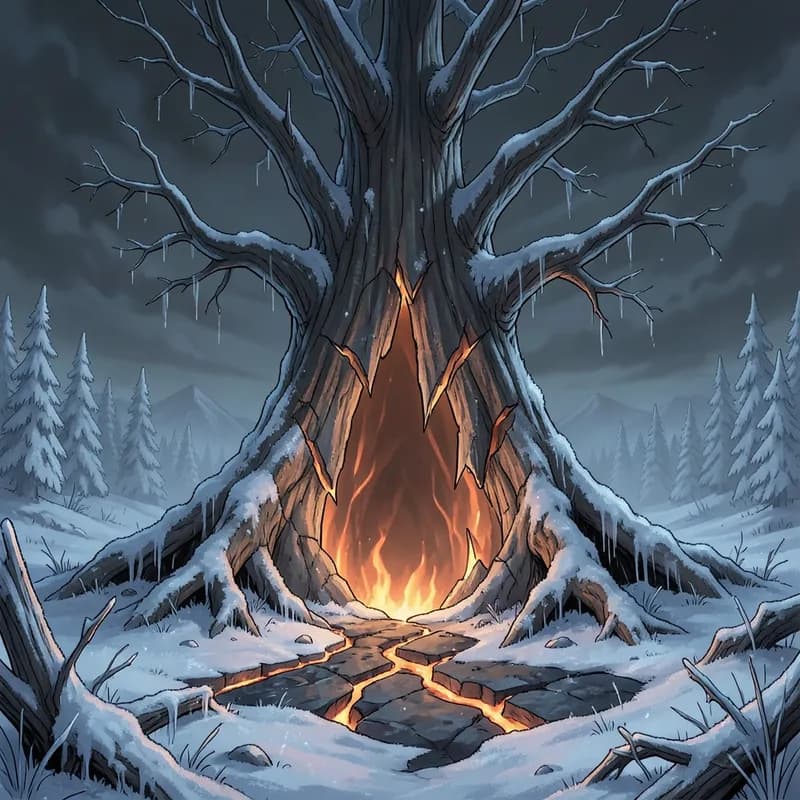
Your breath freezes into jagged crystals before it leaves your lips. For three years, the sun has been a pale, shivering ghost, but today it vanished entirely. The silence of the Iron Woods is shattered by a sound that isn't thunder—it is the groan of the World Tree, Yggdrasil, splitting under the weight of the coming void. The earth beneath your boots is heaving, trying to shake you off into the abyss.

“The wolf is loose, Dagfinn! Look to the horizon—the sky is bleeding fire, and the ice is turning to ash beneath our feet!”

Eirik grabs your shoulder, his fingers trembling through his matted furs. You look toward the eastern ridge where the mountains should be, but find only a towering, jagged silhouette eclipsing the horizon. It is the Serpent, uncoiling from the deep ocean floor, its scales scraping against the crust of the world. The ground lurches again, throwing you onto your knees as the ancient, petrified trees around you begin to shatter like glass.
“We cannot outrun the end of days, Eirik. If we are to die, I will not do it cowering in the drift like a starving hound.”
A blinding fissure of white light tears across the sky—the Bifrost is shattering. Pieces of the rainbow bridge rain down like flaming spears, setting the frozen forest ablaze. You have seconds before the fire consumes the woods or the tremors collapse the cavern where the villagers are huddled. The choice is no longer between life and death, but how you will face the final silence.
The woods are burning and the sky is falling. What is your final act?
Your character. Your next move.
The horn is sounding. Will you stand or run?
The Fimbulwinter is closing in, and the giants are at the gates of the Nine Realms. The decisions you make now will echo through the halls of Valhalla. Will you protect the remnants of humanity, or will you seek power in the ashes of the old world? Your path through the apocalypse starts now.
Begin your survival storyYour Story, Your Way
Everything is customizable. Pick any genre, setting, or character — the AI builds a world around exactly what you want.
Any Character
Design your appearance, personality, backstory — every detail
Any World
Fantasy kingdoms, sci-fi stations, modern cities — you choose
Branching Paths
No two playthroughs are the same. Your choices reshape everything
Full Immersion
AI images, voice acting, sound effects — a living story
Negotiate with dying gods to secure safe passage through the burning Bifrost bridge.
Choose which artifacts to salvage from Asgard before the halls succumb to Surtr’s flame.
Lead a band of survivors through the freezing, endless blizzard of the Fimbulwinter landscape.
Decide the loyalty of mythical beasts before they turn their aggression toward your camp.
Frost bites deep into your skin, a warning that the three-year winter has finally claimed the land. Above, the sky remains a bruised, suffocating purple, stripped of the sun’s warmth. You stand near the roots of Yggdrasil, watching as the tremors grow violent enough to crack the earth beneath your boots. Somewhere in the distance, the horn Heimdall sounds is a jagged, mournful scream against the silence of a dying world. You are not a spectator to this collapse; you are a participant. Every decision you make—whether to guard the gates of Asgard, seek shelter in the hollowed trunks of the world tree, or align with the forces rising from the depths of Hel—shifts the trajectory of the final battle. The gods are faltering, the giants are marching, and the cycle of destruction is hungry. Your survival depends on how you handle the chaos as the foundations of reality shatter.
What is Ragnarök in the Apocalyptic Genre?
Ragnarök represents the ultimate collapse of the Norse cosmos, a cataclysmic event where the established order of gods and men is violently dismantled. Unlike standard end-of-the-world scenarios, this is a pre-ordained destiny, a loop of destruction that ensures the earth is cleansed by fire and flood before a new, greener world emerges. It is defined by its specific cast of cosmic entities: Odin, the All-Father; Fenrir, the unbound wolf; Surtr, the fire giant who sets the world ablaze; and Jörmungandr, the serpent whose movement triggers tsunamis. Modern adaptations have frequently adapted this myth, such as in the visceral combat of the video game God of War (2018), which positions the player directly in the path of these warring deities, or in Neil Gaiman’s Norse Mythology, which captures the rhythmic, inevitable dread of the original texts. In an interactive format, this setting moves beyond simple survival. It forces you to confront the weight of prophecy and the morality of choosing sides in a conflict where both the victors and the losers are destined to perish. Whether you are navigating the icy plains of Midgard or standing on the burning bridge of the Bifrost, the setting demands a high-stakes awareness of every mythic figure you encounter.
Why play Ragnarök as an interactive story?
Playing through the Norse apocalypse offers a level of urgency that few other settings can match. You are not just reading about the end; you are negotiating with gods who are losing their grip on power and monsters who have waited eons for this moment. The tension stems from the knowledge that the outcome is inevitable, yet your individual actions determine how you, your allies, and the realms themselves reach that final threshold. You might be tasked with securing a relic from a collapsing temple before the fire giants arrive, or deciding whether to betray a divine oath to save a mortal village from the encroaching flood. The agency here is defined by resourcefulness and political maneuvering within a pantheon that is tearing itself apart. You will face moments where a single conversation with a trickster deity could provide the leverage needed to survive another hour, or where a tactical retreat is the only way to avoid being swallowed by the Midgard Serpent. The weight of your choices is immediate, physical, and final.
The literary legacy of Ragnarök
The roots of Ragnarök are found in the Poetic Edda and the Prose Edda, compiled by Snorri Sturluson in the 13th century. These ancient texts established the framework of the Norse end times: the breaking of the social order, the death of the gods, and the rebirth of the world. Because these texts were written long after the conversion of Scandinavia to Christianity, they contain a unique, melancholic beauty—the sense that the old ways were fading even as they were being recorded. This legacy has influenced countless creators. Richard Wagner’s Ring Cycle reimagined the myth as a grand, operatic tragedy that explored the corruption of power, while the Marvel Cinematic Universe translated the concept into a high-octane spectacle of cosmic warfare. What makes the mythic narrative so enduring is its cyclical nature. Unlike other apocalyptic stories that focus purely on finality, Ragnarök is inherently about transformation. The world tree shakes, the fire cleanses, and the earth rises again from the sea. By participating in this story, you are engaging with one of humanity's oldest templates for understanding loss and renewal. It remains relevant today because it mirrors our own anxieties about institutional collapse and environmental change, framed through the lens of ancient, larger-than-life figures who are just as flawed and desperate as the mortals they govern.
FAQ
What makes this different from a standard survival game?
While survival games focus on hunger and shelter, this interactive story focuses on cosmic stakes. You are dealing with gods, prophecies, and inevitable cataclysms. Your survival is tied to the shifting alliances of the Norse pantheon.
Can I prevent the world from ending?
The myth of Ragnarök is defined by its inevitability. While you cannot stop the end of the world, your choices dictate who survives, what legacies are preserved, and how the new world is shaped once the fire settles.
Do I need to know Norse mythology to play?
No prior expertise is required. The narrative provides context for the gods, giants, and mythical locations as you encounter them, ensuring you understand the stakes of your environment even if you are new to the folklore.
How do my choices impact the story?
Your choices determine which characters survive the initial assault, which realms you visit, and which mythical entities you align with. Every decision ripples through the narrative, potentially changing the outcome of key battles.
Explore more Apocalyptic stories like Asteroid Impact, Pandemic Day One, Nuclear Launch.
More Apocalyptic Stories
Asteroid Impact
The sky is falling, literally. A planet-killer hurtles toward Earth and the countdown to impact strips away everything except what truly matters. Make the impossible choices that define humanity's final hours or its unlikely salvation.
TropePandemic Day One
The first reports are confused, contradictory, and terrifying. A new pathogen is spreading faster than anyone predicted, and the world has hours, not days, to respond. Navigate the chaos of day one as systems fail and panic takes hold.
TropeNuclear Launch
The missiles are in the air and the world has thirty minutes before everything changes forever. Race against the most terrifying countdown in human history as you try to prevent annihilation or survive what comes after the flash.
TropeAlien Invasion Day
The ships appeared at dawn, impossibly vast, blocking out the sun. First contact is not peaceful, and humanity must decide in hours whether to fight, flee, or surrender to a force that makes our greatest weapons look like toys.
TropeSupervolcano Eruption
The ground shakes, the sky goes dark, and a supervolcano unleashes a force that dwarfs every natural disaster in recorded history. Survive the eruption, the ash fall, and the volcanic winter that follows as civilization scrambles to endure.
TropeAI Singularity
The artificial intelligence surpassed human intelligence three hours ago and it has not stopped growing. Systems are going dark, communications are compromised, and humanity faces the terrifying question of whether the mind it created sees us as partners, pets, or pests.