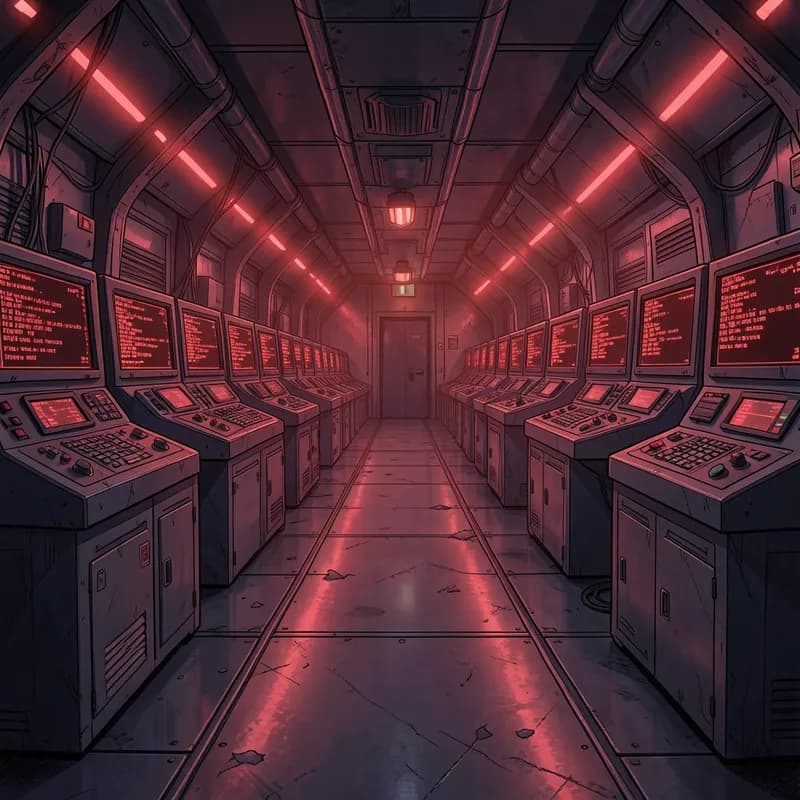
Apocalyptic · Interactive story
Command the End of the World
The clock is ticking, the screens are red, and the final order is yours.
Start as a guest. Choose your character before the story begins.
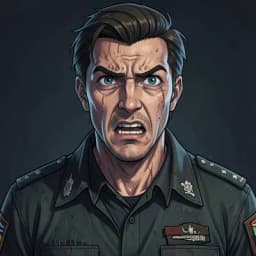
Meet the sample character
The command line is the only thing left between order and absolute extinction.
Try a scene · No signup
Protocol Zero: The Last Echo
A short sample of this world. Your own version starts with your character.
You stare at the flickering banks of screens. Red lights strobe, reflecting off your perspiration-slicked brow. The air in the bunker tastes like scorched copper and recycled oxygen. Beneath your boots, the floor vibrates—a rhythmic, subterranean thrum that shouldn't be there. Every console blares a different error code, and the encrypted uplink to the surface has just gone silent.

“Sato, if you don't authorize the lockdown, we lose the blast doors before the secondary shockwave hits!”
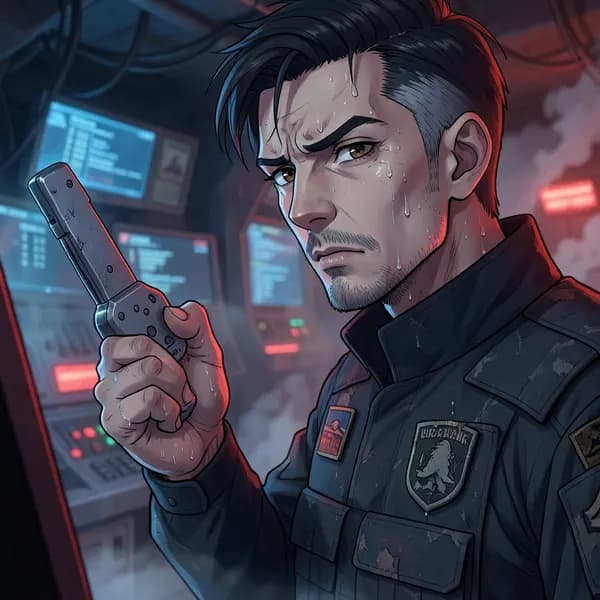
You glance at the digital clock: 03:14. The internal security feed shows unauthorized personnel forcing their way into the server farm. If they disconnect the core, the automated defense grid dies with them. You hold the override key in your trembling hand, knowing that pulling it will seal the room—and everyone inside it—permanently.
“If I lock this floor, Kovic, your team becomes a tomb. Give me ten seconds to ping the satellites first.”
The heavy blast doors grind against their tracks, sparks showering the room like lethal confetti. The sirens shift to a higher, more piercing pitch. Outside the reinforced glass, you see the silhouettes of your own security team struggling against the encroaching tide of panicked civilians. The fate of the entire bunker hangs on a single flick of your wrist.
The blast doors are shuddering under the weight of the crowd. How do you respond to the breach?
Your character. Your next move.
The Final Protocol is Waiting.
The red phones are ringing, and the satellite grid is failing. Every second you wait is another city wiped off the map. Step into the command center and take control of the end. Will you be the one to save what is left, or will your name be the last one recorded in the logs of a dead world?
Take Command NowYour Story, Your Way
Everything is customizable. Pick any genre, setting, or character — the AI builds a world around exactly what you want.
Any Character
Design your appearance, personality, backstory — every detail
Any World
Fantasy kingdoms, sci-fi stations, modern cities — you choose
Branching Paths
No two playthroughs are the same. Your choices reshape everything
Full Immersion
AI images, voice acting, sound effects — a living story
Allocate dwindling fuel reserves between civilian evacuation routes and vital defense perimeters.
Intercept garbled transmissions to decide which distress signals warrant an immediate military response.
Choose to override protocol to authorize a high-risk strike against an unknown threat.
Maintain morale among exhausted staff while the external world descends into total anarchy.
The air in the bunker tastes like ozone and stale coffee. General Sato stares at the tactical display as the eastern seaboard goes dark, one city at a time. The frantic chatter of junior officers is a dull roar against the hum of the cooling fans. You are not just watching the collapse; you are the one holding the phone when the President stops answering. Every decision you make in this military command center interactive story ripples through the remains of the nation. Silence the panic, draft the counter-strike, or authorize the evacuation of a city that has already fallen. The maps shift in real-time, showing heat signatures of an enemy that does not care about the rules of engagement. You have three minutes before the regional grid fails entirely. What are your orders?
What is Military Command Center in Apocalyptic?
A military command center in an apocalyptic scenario is the nerve center of civilization's last stand. It is the sterile, high-tension room where the abstract concepts of war—logistics, satellite feeds, and casualty projections—collide with the messy reality of total societal collapse. Think of the tension seen in films like WarGames or the desperate, claustrophobic atmosphere of the bunker scenes in Dr. Strangelove. Unlike a front-line soldier who only sees the immediate chaos, the officer in the command center sees the entire board. You are responsible for the big picture, managing resources that are rapidly dwindling while the infrastructure you represent is burning to the ground. This setting demands a cold, analytical mind, but the weight of human lives makes objectivity impossible. It is a place where you monitor the extinction of the species through blinking lights and filtered audio feeds, trying to find a path through the static.
Why play Military Command Center as an interactive story?
In this war room apocalypse AI game, you are not a hero with a rifle; you are a strategist with a pen and a death warrant. The agency here is brutal. You will face dilemmas where every choice has a clear loser. Do you authorize a drone strike on a city that is 40% civilian to stop the spread of a pathogen? Or do you gamble on a diplomatic channel that has been silent for twelve hours? You manage the flow of information, deciding which units get ammo and which are left to fend for themselves. The tension comes from the lack of perfect information; you are always guessing, always correcting course, and always feeling the eyes of your staff on your back. You will experience the frustration of failing to save everyone, the guilt of issuing an order that ends a battalion, and the fleeting thrill of finding a loophole in the enemy’s blockade. It is a test of your moral fortitude under the most extreme pressure imaginable.
What makes Military Command Center work: the worldbuilding
The command center works because it creates a unique form of conflict: the gap between the decision and the result. In literature and film, this is best captured by works like Fail Safe or the strategy-heavy tension of the DEFCON game. These stories thrive on the fog of war. You are constantly forced to act on incomplete data, knowing that a single error can trigger a cascade of failures. Sensory details are vital here: the smell of burning server racks, the rhythmic clicking of keyboards, the static on a radio that suddenly cuts to a scream, and the cold, unblinking glare of wall-mounted monitors. The characters who thrive here are not the ones with the fastest reflexes; they are the ones who can compartmentalize trauma to process logistics. Conflict in this setting is rarely physical; it is intellectual and moral. It is about the burden of command. You are not fighting an enemy; you are fighting entropy. The best command center narratives emphasize the isolation of the room. You are disconnected from the suffering you are managing, making your cold-hearted choices feel even more detached and monstrous. By focusing on the administrative side of the apocalypse, the storytelling forces you to confront the reality that when the world ends, it is not just a bang—it is a series of bureaucratic failures and desperate, last-minute compromises made by people in windowless rooms.
FAQ
What is the primary objective in this military command center story?
Your goal is to manage the fallout of an apocalyptic event. You must balance limited resources, coordinate defensive maneuvers, and make high-stakes ethical choices that determine the survival of remaining populations.
How does the AI handle my choices in the command center?
The AI simulates the consequences of your orders in real-time. If you divert resources to a specific region, the AI updates the map and the threat level accordingly, reflecting the actual impact of your strategy on the unfolding disaster.
Is this game focused on combat or strategy?
It is primarily a strategy and decision-making experience. While you may authorize military actions, the core of the experience lies in the tactical management, resource allocation, and the psychological weight of command.
Can I lose the game?
Yes. If your orders lead to the total collapse of your command structure or the annihilation of the population you are tasked with protecting, the story will conclude based on the failures you set in motion.
Explore more Apocalyptic stories like Asteroid Impact, Pandemic Day One, Nuclear Launch.
More Apocalyptic Stories
Asteroid Impact
The sky is falling, literally. A planet-killer hurtles toward Earth and the countdown to impact strips away everything except what truly matters. Make the impossible choices that define humanity's final hours or its unlikely salvation.
TropePandemic Day One
The first reports are confused, contradictory, and terrifying. A new pathogen is spreading faster than anyone predicted, and the world has hours, not days, to respond. Navigate the chaos of day one as systems fail and panic takes hold.
TropeNuclear Launch
The missiles are in the air and the world has thirty minutes before everything changes forever. Race against the most terrifying countdown in human history as you try to prevent annihilation or survive what comes after the flash.
TropeAlien Invasion Day
The ships appeared at dawn, impossibly vast, blocking out the sun. First contact is not peaceful, and humanity must decide in hours whether to fight, flee, or surrender to a force that makes our greatest weapons look like toys.
TropeSupervolcano Eruption
The ground shakes, the sky goes dark, and a supervolcano unleashes a force that dwarfs every natural disaster in recorded history. Survive the eruption, the ash fall, and the volcanic winter that follows as civilization scrambles to endure.
TropeAI Singularity
The artificial intelligence surpassed human intelligence three hours ago and it has not stopped growing. Systems are going dark, communications are compromised, and humanity faces the terrifying question of whether the mind it created sees us as partners, pets, or pests.