
African Mythology · Interactive story
Ascend the Mountain of the Gods
The higher you climb, the heavier your secrets become. Will the summit grant you passage?
Start as a guest. Choose your character before the story begins.
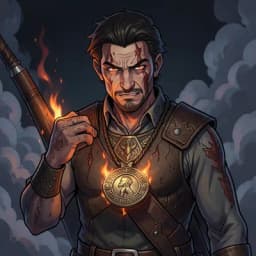
Meet the sample character
The summit demands more than blood; it demands a truth you have hidden.
Try a scene · No signup
Breath of the Granite Throne
A short sample of this world. Your own version starts with your character.
The mountain does not appreciate your intrusion, Obi. Each step across the jagged basalt feels like walking on the teeth of an ancestor who died angry. The clouds here do not drift; they coil around your ankles, thick and smelling of wet copper. You clutch the stolen jade charm in your pocket, its heat pulsing against your hip in time with your frantic heartbeat.

“Why crawl toward the sun with pockets full of stolen prayers, little hunter?”

You stop, your boots sliding on the slick, frozen moss. A spider the size of a shield waits on the path ahead, its legs tapping out a rhythm that sounds suspiciously like your own name. It is not a beast, but a trick of the peak. You know better than to answer, yet the mountain demands a toll for your passage. If you turn back, the mountain claims your soul; if you go forward, you offer your secret.
“I am not here to bargain with a shadow. Move, or I will carve my way through this mist.”
The spider-shadow rears back, mandibles clicking in a sound that shatters the silence of the clouds. Suddenly, the path splits. To the left, a bridge of solidified light stretches over an abyss that reeks of lost time. To the right, a path of thorns leads into a cave where voices of the dead call your sister's name. You have one heartbeat to choose before the mountain decides for you.
The beast-shadow lunges. How do you claim your passage?
Your character. Your next move.
Will the spirits hear your prayer?
The mountain waits for no one. Whether you come seeking rain for your crops or answers for your own restless soul, the path is yours to forge. Start your ascent today and see if you have the wit to survive the summit.
Begin the climbYour Story, Your Way
Everything is customizable. Pick any genre, setting, or character — the AI builds a world around exactly what you want.
Any Character
Design your appearance, personality, backstory — every detail
Any World
Fantasy kingdoms, sci-fi stations, modern cities — you choose
Branching Paths
No two playthroughs are the same. Your choices reshape everything
Full Immersion
AI images, voice acting, sound effects — a living story
Trade your most precious memory to the gatekeeper for passage through the mist.
Choose to defy a minor deity to protect a companion, altering your divine favor.
Decide between taking the direct, dangerous path or the long, winding road of tradition.
Interpret the cryptic omens provided by the mountain to solve ancient, celestial puzzles.
The air grows thin, tasting of ozone and ancient, crushed herbs. Below you, the savanna stretches like a golden rug, but here, the rocks hum with the vibration of a thousand years of prayer. You are Kofi, a village healer carrying a gourd of palm wine and a question that could break the drought, standing at the base of the forbidden slope. The path ahead is not marked by footprints, but by the shifting shadows of those who tried and failed. Every decision you make—whether to leave an offering at the crossroads or challenge the wind spirit that bars your way—alters the mountain's temperament. The peak is not merely rock and granite; it is a gateway. If your intent is pure, the gods might grant you an audience. If you arrive with a heart full of shadows, the mountain has a way of ensuring you never reach the summit at all.
What is Mountain of the Gods in African Mythology?
In the oral traditions of many West and Central African cultures, the mountain is the bridge between the mortal realm and the domain of the Orishas, Loa, or ancestral spirits. It is the place where the sky meets the soil, a sacred space where the laws of physics bow to the whims of the divine. You see this concept echoed in the spiritual geography of Nnedi Okorafor’s 'Akata Witch' or the hidden, sacred technology found in the depiction of Mount Bashenga in 'Black Panther.' These mountains are not just geological formations; they are testing grounds for heroes. To stand upon the summit is to be transformed, but the climb itself demands a shedding of the ego. The mountain watches. It remembers every slight and every kindness. In traditional folklore, the mountain is often guarded by a trickster figure or a test of character, ensuring that only those who understand the weight of their own destiny can speak to the gods. It is a place of profound silence, broken only by the voices of the spirits who dwell within the stone.
Why play Mountain of the Gods as an interactive story?
Agency is the only currency that matters on the slopes of the divine. When you play, you are not a passive observer; you are the one deciding how to address the entities that watch from the crags. Will you offer a sacrifice of honey and kola nuts, or will you use your quick wits to outsmart the spirit of the mountain pass? The tension arises from the fact that the gods are fickle. A choice that seems wise at the base of the mountain—perhaps saving a wounded bird—might be the very thing that reveals your character to the gods at the summit, deciding whether they open the gates or cast you back into the valley. You are forced to balance your mortal needs against the inscrutable logic of the divine. Every dialogue choice carries the risk of offending a deity or winning a boon that could change the fate of your village forever.
What makes Mountain of the Gods work: the worldbuilding
The power of this setting lies in the friction between human desperation and divine indifference. Unlike many Western fantasies where gods are distant, high-fantasy architects, these spirits are immediate, tactile, and deeply involved in the daily survival of the characters. The sensory details are paramount: the sound of a drum rhythm echoing from the clouds, the sudden change in temperature when a spirit draws near, and the smell of rain that carries the scent of iron and ancestors. When building this world, look to works like Amos Tutuola’s 'The Palm-Wine Drinkard' for the surreal, shifting nature of landscapes, or Tomi Adeyemi’s 'Children of Blood and Bone' for the way divine power interacts with the physical world. The conflict here is rarely good versus evil; it is usually human hubris versus natural order. A character who climbs to demand rain may find that the mountain requires a song, not a command. The writing must maintain a rhythm that mimics the oral tradition—repetition, cadence, and a touch of the sly wit found in Anansi stories. The mountain is a character, not a background. It reacts to your presence, changes the weather based on your inner state, and hides secrets in the shifting scree. To write this setting well, you must respect the gravity of the traditions while allowing the player the freedom to subvert them. The stakes are personal, the atmosphere is heavy with antiquity, and the ultimate reward is not gold, but the wisdom to survive the descent.
FAQ
What makes the Mountain of the Gods different from other fantasy peaks?
In most fantasy, a mountain is just a physical obstacle. Here, the mountain is a living, judging entity. It represents the intersection of the spirit world and the physical, acting as a gatekeeper that demands character growth rather than just physical strength.
Can I play as a trickster character?
Yes. You have the freedom to approach the gods with wit and deceit, though beware: the mountain has a long memory and the spirits are often far quicker than any mortal trickster.
How do my choices impact the story?
Your choices determine your 'favor' with the gods. High favor might grant you visions or power, while low favor could turn the very landscape against you, making the climb increasingly difficult.
Is this story setting historically accurate?
The setting draws heavily from the oral traditions and mythological frameworks of African cultures, but it is a work of fiction. It uses these cultural touchstones to build an original, reactive experience that honors the spirit of the legends.
Explore more African Mythology stories like Trickster Tale, Origin Story Myth, Spirit Quest.
More African Mythology Stories
Trickster Tale
Outwit gods, spirits, and fellow creatures with nothing but your cunning and a silver tongue. In the trickster's world, brute strength means nothing and the cleverest story always wins the day.
TropeOrigin Story Myth
Witness the moment the world was born, when the sky separated from the earth and the first humans walked into existence. Shape the very foundations of creation as you live through the myths that explain why things are the way they are.
TropeSpirit Quest
Cross the threshold between the mortal world and the spirit realm on a quest that will test your courage, faith, and understanding of forces beyond human comprehension. What you find there will change who you are forever.
TropeAncestor Communion
The veil thins and the voices of those who came before reach out to guide you. Commune with your ancestors to receive wisdom, warnings, and the strength of a lineage that stretches back to the beginning of time.
TropeShape-Shifting Legend
Your body is not fixed. Take the form of a leopard, an eagle, or a river serpent as you navigate a world where the boundary between human and animal is a matter of will. But every transformation comes at a cost you may not be ready to pay.
TropeDivine Punishment
You defied the gods, and now the consequences are coming. Face plagues, curses, and cosmic retribution as you search for a way to atone, or find the audacity to challenge the divine order itself.