
African Mythology · Interactive story
The Price of the Forbidden: African Myths of Temptation
The gods left the gate locked for a reason. Do you have the key?
Start as a guest. Choose your character before the story begins.
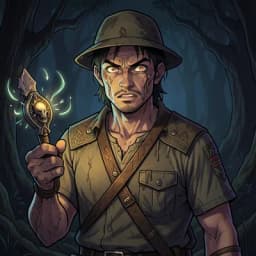
Meet the sample character
The gods hid their regrets in the soil; you are the one digging them up.
Try a scene · No signup
The Seed of Seven Whispers
A short sample of this world. Your own version starts with your character.
You stand in the Grove of Shadows, where the soil tastes of copper and the air hums with the resonance of forgotten names. Before you, the fruit hangs heavy, a pulse of molten gold against the dark, twisted branches of the Elder Tree. You were told the ancestors buried their regrets in these roots, and that to taste the fruit is to invite those same regrets into your own throat.

“It shines, does it not? Like a star that fell into the mud. Go on, take it. The ancestors are long dead; they cannot taste the sweetness you are missing.”

You reach out, your fingers trembling as the air turns thick with the scent of overripe honey and damp earth. A shiver crawls up your spine, cooling the sweat on your neck. If you take this, the gods will know your name by sunset. The silence of the forest is not empty; it is waiting, holding its breath to see if you have the stomach for what comes after the sweetness.
“The price of this knowledge is blood, Kweku. I am not ready to pay, but I am tired of living in the dark.”
The fruit shifts, its skin translucent, revealing swirling patterns of a map to a land that no longer exists. A sudden gust of wind rattles the branches, and you hear the heavy, rhythmic thud of divine footsteps approaching from the horizon. The choice to walk away is vanishing with every heartbeat, leaving you alone with the glowing harvest and the closing distance of the gods.
The ground trembles under the approach of the gods. Will you claim the forbidden fruit before they arrive, or find another way to survive the encounter?
Your character. Your next move.
Will you reach for the secret?
The fruit is ripe, the trickster is watching, and the ancestors wait to see if you have the courage to defy them. Every choice you make determines whether you become a legend or a warning to those who come after. Step into the story and decide your fate.
Begin your legend todayYour Story, Your Way
Everything is customizable. Pick any genre, setting, or character — the AI builds a world around exactly what you want.
Any Character
Design your appearance, personality, backstory — every detail
Any World
Fantasy kingdoms, sci-fi stations, modern cities — you choose
Branching Paths
No two playthroughs are the same. Your choices reshape everything
Full Immersion
AI images, voice acting, sound effects — a living story
Select which sacred taboo you dare to break to gain forbidden insight.
Negotiate with trickster spirits who want you to fail for their amusement.
Face the physical and spiritual consequences of your choices in real-time.
Decide whether to hoard your newfound power or share it with your community.
The baobab tree stands silent, its gnarled limbs stretching toward a moon that hides its face. Beneath it lies the fruit of the ancestors—a shimmering, indigo sphere pulsing with the secrets of the beginning. You were told that to touch it is to invite a silence that never ends. You were told that the spirits of the wind would strip your name from the memories of your kin. Yet, the fruit hums a melody that vibrates in your marrow, a song of power, of knowing, of becoming something more than a mere mortal. In these stories, your hands reach out, and the air grows heavy with the scent of ozone and ancient rain. Every choice you make ripples through the spirit realm, changing the landscape of the continent itself. Whether you reach for the nectar or turn your back on the temptation, the consequences are yours to bear. The gods are watching, and they have never been known for their mercy.
What is Forbidden Fruit Myth in African Mythology?
The forbidden fruit myth functions as a boundary between the mundane and the divine. It is the narrative anchor for human curiosity, representing knowledge or power that the gods deem too heavy for mortal hands to carry. In many traditions, this is not merely a piece of food; it is a catalyst for change, a test of character, or a trap set by a trickster like Anansi to see who among us values wisdom over obedience. Unlike the biblical Garden of Eden, where the fruit represents a fall from grace, many African myths treat the transgression as a difficult initiation. Consider the stories of the Yoruba pantheon, where mortals often seek to understand the secrets of Orunmila. When a character approaches a forbidden well or touches a sacred mask, they are not just breaking a rule—they are challenging the structure of the universe. Similar themes appear in works like Nnedi Okorafor’s 'Akata Witch', where the discovery of hidden, dangerous magical knowledge drives the protagonist's growth. This trope forces characters to weigh their desire for personal evolution against the safety of their community. It is a fundamental tension: does the gain of secret knowledge justify the potential destruction of the status quo? By engaging with these myths, we explore the price of enlightenment and the inevitable cost of questioning the divine order.
Why play Forbidden Fruit Myth as an interactive story?
Interactive fiction turns the passive consumption of myth into a high-stakes gamble. When you stand before the forbidden, the tension is not in the outcome, but in the decision-making process. You face the pressure of the trickster’s gaze and the weight of the ancestors’ warnings. Will you choose to sample the forbidden knowledge, knowing it might cost you your standing in the village? Or will you play the role of the humble observer, preserving the peace at the expense of your own potential? The choices you make ripple outward, affecting not just your character’s fate, but the spirits that govern the land. Perhaps you choose to share the fruit with a companion, binding your fates together, or perhaps you hide your transgression, living in the shadow of a secret that grows heavier every day. The agency provided here allows you to test the boundaries of these ancient narratives, finding out exactly what happens when you refuse to play by the rules set by the deities.
Famous examples of Forbidden Fruit Myth in books, film, and games
The forbidden fruit trope is a universal language, yet it speaks differently in every culture. In Madeline Miller’s 'Circe', the protagonist’s early exploration of forbidden witchcraft—her 'pharmaka'—mirrors the classic temptation myth. She is told she cannot possess such power, and her decision to embrace it transforms her from a timid nymph into a goddess-defying entity. The power she gains is real, but so is her isolation; the trope highlights that the 'fruit' often provides power at the expense of belonging. Similarly, in the video game 'The Witcher 3', the player encounters numerous instances where consuming forbidden knowledge or interfering with ancient, cursed entities leads to catastrophic outcomes for local villages. The game forces the player to decide if the momentary gain of a powerful weapon or secret knowledge is worth the long-term suffering of others. In film, Guillermo del Toro’s 'Pan’s Labyrinth' utilizes the trope through the feast of the Pale Man. Ofelia is explicitly warned not to eat the food, yet her hunger and curiosity override her caution. Her failure to abstain triggers a terrifying chase, illustrating the trope’s role in teaching lessons about discipline and the dangers of the unknown. Across these works, the trope endures because it speaks to a fundamental human truth: we are all curious about what lies behind the curtain, even when we know the curtain hides a monster. It is the conflict between the safety of the known and the allure of the transformative unknown that keeps these stories relevant.
FAQ
What is the role of the trickster in these stories?
The trickster, such as Anansi, serves as the catalyst for the forbidden fruit myth. They often provide the means or the temptation to break the taboo, acting as a mirror to the protagonist's own hidden desires. They do not necessarily want the protagonist to succeed or fail; they want to see what happens when the natural order is disrupted.
Can I choose not to engage with the forbidden element?
Absolutely. You have full agency in these stories. You can choose to be the cautious hero who upholds tradition, or the rebel who challenges it. Choosing to avoid the forbidden path often leads to its own unique set of narrative challenges and character developments.
How does the AI handle the consequences of my choices?
The AI tracks your decisions and adjusts the world state accordingly. If you break a sacred law, expect the spirits to react, the environment to shift, and the community's attitude toward you to change. Your actions have lasting, logical impacts on the narrative arc.
Is this content suitable for fans of historical mythology?
Yes. These stories are rooted in the rhythms and motifs of African oral traditions. While they are interactive, they respect the cultural context and the gravity of the myths they explore, making them a perfect fit for anyone who enjoys deep, lore-rich storytelling.
Explore more African Mythology stories like Trickster Tale, Origin Story Myth, Spirit Quest.
More African Mythology Stories
Trickster Tale
Outwit gods, spirits, and fellow creatures with nothing but your cunning and a silver tongue. In the trickster's world, brute strength means nothing and the cleverest story always wins the day.
TropeOrigin Story Myth
Witness the moment the world was born, when the sky separated from the earth and the first humans walked into existence. Shape the very foundations of creation as you live through the myths that explain why things are the way they are.
TropeSpirit Quest
Cross the threshold between the mortal world and the spirit realm on a quest that will test your courage, faith, and understanding of forces beyond human comprehension. What you find there will change who you are forever.
TropeAncestor Communion
The veil thins and the voices of those who came before reach out to guide you. Commune with your ancestors to receive wisdom, warnings, and the strength of a lineage that stretches back to the beginning of time.
TropeShape-Shifting Legend
Your body is not fixed. Take the form of a leopard, an eagle, or a river serpent as you navigate a world where the boundary between human and animal is a matter of will. But every transformation comes at a cost you may not be ready to pay.
TropeDivine Punishment
You defied the gods, and now the consequences are coming. Face plagues, curses, and cosmic retribution as you search for a way to atone, or find the audacity to challenge the divine order itself.