
African Mythology · Interactive story
Legends of the Golden Plains: An African Savanna Interactive Story
The sun scorches the earth; will you bring the rain or bargain with the drought?
Start as a guest. Choose your character before the story begins.
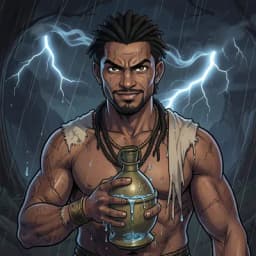
Meet the sample character
Try a scene · No signup
Dust and Stolen Rain
A short sample of this world. Your own version starts with your character.
The sun is a cruel master, baking the cracked earth until it sighs under your feet. You stand at the edge of the Great Basin, your throat tight with the thirst of a thousand sun-scorched days. The wind shifts, carrying the sharp, metallic tang of an approaching storm that exists only in your marrow. You know the price of this rain, and you know who is watching from the shadows.

“You smell of stolen clouds and foolish hope, little traveler; do you think the sky forgets who takes what belongs to the thunder?”

The shadow coalesces into a man with eyes like polished obsidian. He stands amidst the heat waves, his laughter sounding like dry stalks rubbing together in the wind. Your hand brushes the pouch at your side, feeling the impossible weight of the single droplet you dared to take. The earth trembles, not from your feet, but from the hunger of the land itself.
“The village wells are dust and bone, Oba; if the thunder wants its prize back, it must first learn to share its bounty.”
Oba smiles, a sharp, jagged expression that reveals teeth like flint. He gestures to the horizon, where a dark, unnatural cloud gathers, growing larger with every second. He offers you a choice: return the droplet and save your soul, or spill it now to break the drought and doom yourself to his eternal hunt. The sky turns a bruised, violent purple.
The cloud is descending rapidly, heavy with unfallen rain. How do you satisfy the land's hunger before Oba claims his toll?
Your character. Your next move.
The ancestors are listening; what will you tell them?
The drought is coming, and the village elders look to you for a sign. Do you seek the counsel of the trickster or the strength of the warrior? Your path through the golden plains is yours to carve. Every choice you make will echo in the songs of the next generation.
Enter the Golden PlainsYour Story, Your Way
Everything is customizable. Pick any genre, setting, or character — the AI builds a world around exactly what you want.
Any Character
Design your appearance, personality, backstory — every detail
Any World
Fantasy kingdoms, sci-fi stations, modern cities — you choose
Branching Paths
No two playthroughs are the same. Your choices reshape everything
Full Immersion
AI images, voice acting, sound effects — a living story
Negotiate water rights with the spirit of the river during a record-breaking drought.
Outwit a pride of lions by invoking the protection of an ancient ancestor.
Decide whether to share your harvest with a beggar who might be a god.
Track a spirit through the tall grass before the evening sun burns out.
The dust kicks up, coating your skin in a fine, ochre powder. Ahead, a lone acacia tree stands twisted against a sky the color of a bruised plum. You are not a stranger here, though the ancestors watch from the shifting shadows of the tall, dry grass. A low rumble vibrates through the soles of your feet—not thunder, but the heavy, rhythmic step of an elephant herd moving toward the watering hole. You hold a heavy iron staff, its surface etched with symbols that hum when the wind shifts. In this land, the line between human and spirit is as thin as a blade of grass. Your decisions ripple across these plains, changing the fate of the villages that huddle beneath the baobabs. Every word you speak to the weaver bird or the wandering hyena carries the weight of a bloodline. In this interactive story, the path you walk is defined by the choices you make under the relentless gaze of the sun.
What is African Savanna in African Mythology?
The African savanna acts as a character unto itself, a sprawling stage where life and death dance in a cycle as old as the first star. It is not merely a backdrop of grass and lions; it is a sentient entity that breathes through the dry and wet seasons. In stories like Nnedi Okorafor’s 'Akata Witch' series or the mythic sequences in 'The Lion King', the landscape influences the pulse of the narrative, dictating the pace of the hunt and the availability of resources. The savanna is defined by its vastness—a place where you can see a storm coming hours before it arrives. It is the home of the trickster, the place where Anansi might spin a web to catch the sun, or where a forgotten spirit waits for an offering of palm wine. When you engage with this setting, you are stepping into a mythic space that values cunning over brute strength. It is an environment that demands respect, for the savanna remembers every broken promise and every act of kindness. By placing your story here, you interact with the foundational elements of folklore—the scarcity of water, the power of the storm, and the wisdom of the elders who speak in riddles.
Why play African Savanna as an interactive story?
Playing in the savanna means managing the fine balance between survival and divine favor. You might encounter a drought that threatens your village, forcing you to choose between sacrificing your last goat to a fickle storm god or trekking into the forbidden territory of the leopard-men to find a hidden spring. Every interaction is a negotiation. If you are too proud, the trickster will humble you; if you are too cautious, the opportunity for greatness will pass you by like a gazelle in the tall grass. You will decide which spirits to appease and which to challenge, knowing that a single choice can turn a peaceful watering hole into a battleground. The tension comes from the weight of your decisions—one wrong word to a wandering spirit can leave your village without water for a season, while a clever bargain might bring a decade of prosperity. You are not just observing myths; you are participating in the creation of them.
What makes African Savanna work: the worldbuilding
Worldbuilding the savanna requires understanding that the environment is never neutral. The heat dictates the tension, the insects provide the rhythm, and the wildlife serves as the jury for your moral character. In the works of Amos Tutuola, the setting is a living entity that reacts to the protagonist's internal state. The savanna works because it forces a confrontation between human hubris and the raw, indifferent power of nature. To build a story here, focus on the sensory: the smell of rain on baked clay, the sound of crickets that suddenly go silent, and the way the light turns everything to gold just before the predators emerge. The conflict comes from the clash of seasonal cycles with human ambition. Characters should be archetypes who have been given human flaws—the protective matriarch, the ambitious youth, the disgraced rainmaker. By grounding the myth in the tactile reality of the savanna—the thorns that tear, the dust that blinds, the long silences of the afternoon—the supernatural elements feel earned. Writers like Chinua Achebe demonstrate how to ground high-stakes cultural conflict within the specific geography of the land, showing that every mountain and river is a witness to the character's journey. When you write for this setting, let the environment provide the consequences. If a character ignores the warnings of the wind, the savanna should respond with a dust storm. If they honor the traditions of the ancestors, the land should provide a path through the wilderness.
FAQ
What is an African savanna interactive story?
It is a narrative experience where your choices determine your survival and success on the golden plains. You interact with gods, spirits, and tricksters, using wit and strategy to navigate the challenges of the landscape.
How does mythology shape the environment in these stories?
In this setting, the savanna is alive. Mythology isn't just history; it is the current reality. A storm might be a god's anger, and a drought might be a test of your character, meaning your actions have direct, magical consequences on the world.
Is this setting suitable for fans of traditional folklore?
Absolutely. The stories are built on the rhythms of oral tradition, focusing on the wit of the trickster and the wisdom of the ancestors, providing a deep dive into the themes that define African mythology.
Can I change the outcome of the legends?
Yes. Your agency is central. Whether you choose to follow the path of the warrior or the path of the negotiator will drastically alter the fate of your village and the legends that are told about you in the future.
Explore more African Mythology stories like Trickster Tale, Origin Story Myth, Spirit Quest.
More African Mythology Stories
Trickster Tale
Outwit gods, spirits, and fellow creatures with nothing but your cunning and a silver tongue. In the trickster's world, brute strength means nothing and the cleverest story always wins the day.
TropeOrigin Story Myth
Witness the moment the world was born, when the sky separated from the earth and the first humans walked into existence. Shape the very foundations of creation as you live through the myths that explain why things are the way they are.
TropeSpirit Quest
Cross the threshold between the mortal world and the spirit realm on a quest that will test your courage, faith, and understanding of forces beyond human comprehension. What you find there will change who you are forever.
TropeAncestor Communion
The veil thins and the voices of those who came before reach out to guide you. Commune with your ancestors to receive wisdom, warnings, and the strength of a lineage that stretches back to the beginning of time.
TropeShape-Shifting Legend
Your body is not fixed. Take the form of a leopard, an eagle, or a river serpent as you navigate a world where the boundary between human and animal is a matter of will. But every transformation comes at a cost you may not be ready to pay.
TropeDivine Punishment
You defied the gods, and now the consequences are coming. Face plagues, curses, and cosmic retribution as you search for a way to atone, or find the audacity to challenge the divine order itself.